Category: Printing Tips

  • Understanding JIS B5 Paper Size: Dimensions, Uses, and Benefits

    Understanding JIS B5 Paper Size: Dimensions, Uses, and Benefits

    Introduction

    Paper sizes can be a confusing topic, especially for those who are not familiar with the different standards used around the world. If you’re looking to create professional printed materials, it’s important to understand the various paper sizes available, and how they can be used to create high-quality materials. In this article, we’ll be exploring JIS B5 paper size, including its dimensions, uses, and benefits.

    What is JIS B5 Paper Size?

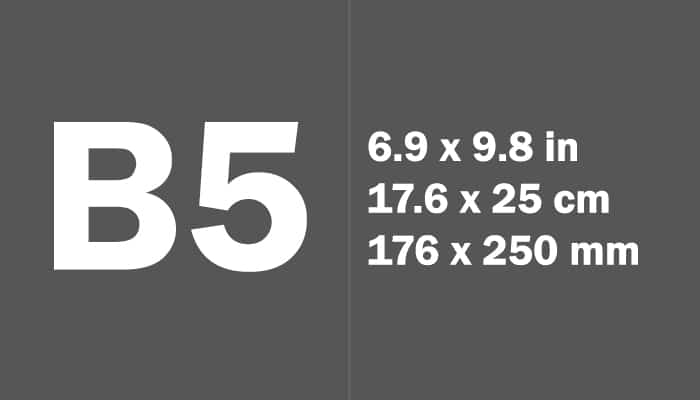
    JIS B5 paper size is a standard paper size used in Japan and other Asian countries. The JIS B5 size measures 182mm x 257mm, which is slightly smaller than the ISO B5 size (176mm x 250mm). The JIS B5 size is part of the JIS (Japanese Industrial Standards) system, which was established in 1949 and is used for a wide range of products in Japan.

    Need help with your printing?

    If you’re looking for high-quality JIS B5 paper size, Catdi is the best supplier for your printing needs. They offer a wide range of printing services and materials, including JIS B5 paper size, and can help you create professional and effective printed materials. Get a free quote today.

    Modern Applications of JIS B5 Paper

    Digital Printing Trends

    In today’s digital age, JIS B5 paper continues to find modern relevance across a variety of applications. It has become a popular choice in digital printing projects, especially for custom notebook designs and personalized stationery—two categories experiencing rapid growth in e-commerce. This format offers an ideal balance between portability and writing space, making it a favorite for both creatives and professionals.

    Sustainability Practices

    There is also a noticeable shift towards sustainable printing practices, and JIS B5 paper is no exception. Many suppliers now offer recycled or FSC-certified (Forest Stewardship Council) options to meet the increasing demand for environmentally conscious materials.

    Hybrid Use Cases

    Furthermore, JIS B5 plays a unique role in hybrid workflows that blend print and digital. For instance, businesses often use JIS B5 brochures with QR codes or scannable links that connect customers directly to online content—bridging the gap between physical materials and digital engagement in marketing campaigns.

    Dimensions of JIS B5 Paper Size

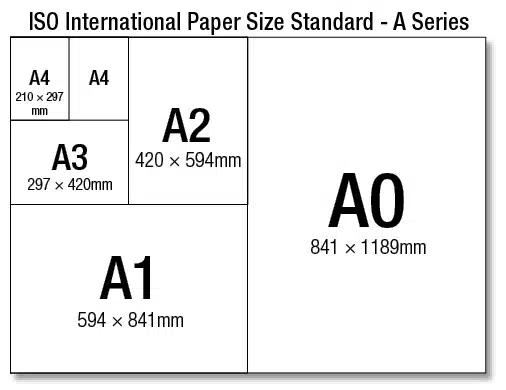
    As mentioned, the dimensions of JIS B5 paper size are 182mm x 257mm. This makes it slightly larger than a typical A5 sheet (148mm x 210mm) but smaller than the ISO B5 size. The aspect ratio of JIS B5 paper size is 1.414, which is the same as the ISO B series and the North American Letter size.

    Paper SizeDimensions (mm)Dimensions (inches)Aspect Ratio
    JIS B5182 x 2577.17 x 10.121.414
    ISO B5176 x 2506.93 x 9.841.414
    A5148 x 2105.83 x 8.271.414
    North American Letter216 x 2798.5 x 11.01.294

    Notes:

    • The JIS B5 paper size is part of the Japanese Industrial Standards and measures 182mm by 257mm.
    • The ISO B5 size, according to the International Organization for Standardization, is slightly smaller at 176mm by 250mm.
    • The A5 size is commonly used internationally and measures 148mm by 210mm.
    • The North American Letter size, widely used in the United States and Canada, measures 216 mm by 279 mm.

    All sizes except the North American Letter share an aspect ratio of approximately 1.414, which is the square root of 2. This consistent aspect ratio allows for easy scaling between sizes in the A and B series. In contrast, the North American Letter size has a different aspect ratio of approximately 1.294.

    Uses of JIS B5 Paper Size

    JIS B5 paper size is used for a wide range of printed materials in Japan and other Asian countries. Some of the most common uses of JIS B5 paper size include:
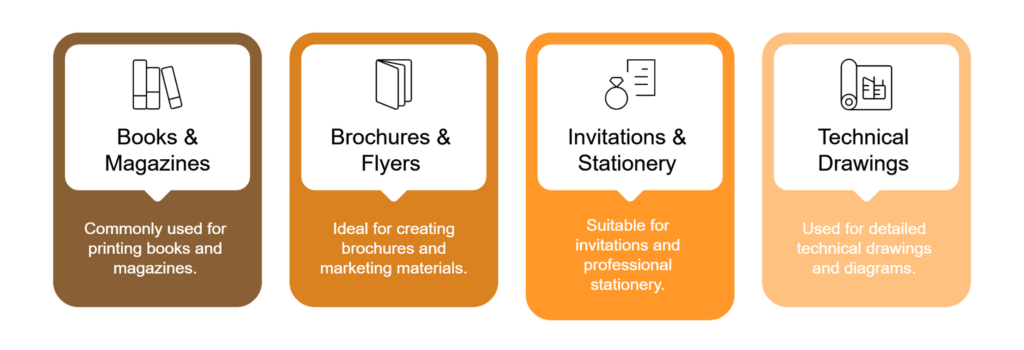
    best uses for JIS B5 Paper Size - Catdi printing Houston
    1. Books and Magazines: JIS B5 paper size is often used for printing books and magazines, especially in Japan. The slightly larger size allows for more content per page, making it a popular choice for books with a lot of text.
    2. Brochures and Flyers: JIS B5 paper size is also commonly used for creating brochures, flyers, and other marketing materials. The size is easy to handle and transport, making it a great choice for promotional materials that need to be distributed to a large audience.
    3. Invitations and Stationery: JIS B5 paper size is a popular choice for creating invitations, letterhead, and other stationery items. The size is elegant and professional, making it a great choice for formal documents and correspondence.
    4. Technical Drawings: JIS B5 paper size is also used for technical drawings and diagrams, especially in the engineering and architecture fields. The size is convenient for displaying detailed drawings with clear and legible text.

    Benefits of JIS B5 Paper Size

    There are several benefits to using JIS B5 paper size for your printed materials. Some of the key benefits include:

    1. Versatility: JIS B5 paper size is a versatile size that can be used for a wide range of printed materials. Whether you’re creating a book, brochure, or invitation, JIS B5 paper size can accommodate your needs.
    2. Professionalism: The slightly larger size of JIS B5 paper size gives your materials a professional look and feel. Whether you’re creating marketing materials or formal correspondence, JIS B5 paper size can help you make a great impression.
    3. Portability: JIS B5 paper size is easy to handle and transport, making it a great choice for materials that need to be distributed to a large audience. Whether you’re mailing brochures or handing out flyers, JIS B5 paper size is a practical and convenient choice.
    4. Cost-Effective: JIS B5 paper size is more cost-effective than some other paper sizes, especially for printing larger quantities. If you’re looking to create high-quality printed materials on a budget, JIS B5 paper size is a great choice.
    5. Compatibility: Because JIS B5 paper size is a standard size in Japan and other Asian countries, it’s widely available and compatible with a wide range of printing equipment. This makes it easy to find suppliers and ensures that your printed materials will look great every time.

    How to Choose the Right Paper Size

    When choosing a paper size for your printed materials, there are several factors to consider. Some of the key factors include:

    1. Purpose: What is the purpose of your printed materials? Are you creating a book, a brochure, or a flyer? Different materials may require different paper sizes to achieve the desired result.
    2. Content: How much content will your printed materials contain? If you’re printing a book with a lot of text, a slightly larger paper size may be more appropriate. On the other hand, if you’re creating a flyer with a small amount of text, a smaller paper size may be more practical.
    3. Design: What is the design of your printed materials? Does it require a specific paper size to achieve the desired layout and aesthetic? Consider how the paper size will impact the overall design of your materials.
    4. Budget: Finally, consider your budget. Larger paper sizes may be more expensive, especially if you’re printing in smaller quantities. If cost is a concern, consider using a more cost-effective paper size like JIS B5.

    Conclusion

    In conclusion, JIS B5 paper size is a standard paper size used in Japan and other Asian countries. Its dimensions of 182mm x 257mm make it slightly larger than a typical A5 sheet and smaller than the ISO B5 size. JIS B5 paper size is versatile, professional, portable, cost-effective, and widely compatible. It’s commonly used for books, magazines, brochures, flyers, invitations, stationery, technical drawings, and more. When choosing a paper size for your printed materials, consider factors like the purpose, content, design, and budget to determine the best option for your needs.


  • How To Market Commercial Real Estate With SEO Strategies 

    How To Market Commercial Real Estate With SEO Strategies 

    Marketing commercial real estate effectively demands a blend of traditional techniques and innovative digital approaches. In today’s competitive landscape, standing out from the crowd requires leveraging multiple platforms to attract buyers, sellers, and investors. While methods like postcard and print marketing still play a role, incorporating modern techniques such as SEO can significantly amplify your reach and impact. 

    Read on to learn how to market commercial real estate with SEO strategies.  

    Understanding the Importance of SEO in Commercial Real Estate 

    Search engine optimization (SEO) is the backbone of any successful digital marketing strategy. It ensures your real estate listings and business information appear prominently in search engine results, making it easier for potential clients to find you. With several online experiences beginning with a search engine, focusing on SEO can bridge the gap between your services and your target audience. 

    Also, if you’re a commercial real estate professional, local SEO is particularly significant. Prospective clients typically search for properties within specific locations, such as “office spaces in Chicago” or “retail spaces in Miami.” By optimizing your website and content for local keywords, you can rank higher in these searches and attract the right clientele. 

    Lastly, to maximize the effectiveness of your efforts, embracing digital marketing tailored to commercial real estate, such as SEO, is crucial. These strategies can help optimize your online presence, drive traffic to your website, and establish credibility in a crowded market. 

    Key Elements of a Strong SEO Strategy 

    A strong SEO strategy is essential for boosting visibility and driving targeted traffic to your commercial real estate listings. By focusing on the following key elements, you can improve your search engine rankings and effectively connect with potential clients in a competitive market:  

    Keyword Research and Implementation 

    Thorough keyword research is the foundation of any effective SEO strategy. Identify phrases and terms that prospective clients frequently search for, such as “commercial office space near me” or “warehouse for lease in [city].” Use tools to find relevant and high-ranking keywords.  

    Once identified, integrate these keywords naturally into your website’s content, metadata, titles, and blogs. Also, avoid keyword stuffing, as it can harm your rankings. A strategic approach to keyword placement enhances visibility and draws the right audience to your listings. 

    Local SEO Optimization 

    Local SEO is critical for targeting clients searching within specific areas. Start by claiming and optimizing your Google My Business (GMB) profile to appear in local search results and Google Maps. Ensure your NAP (Name, Address, and Phone Number) information is consistent across directories to maintain credibility with search engines. Incorporate location-based keywords, such as city and neighborhood names, into your website’s content and meta descriptions.  

    By tailoring your SEO efforts locally, you can connect directly with potential clients in your targeted geographical market. 

    High-Quality Content Creation 

    Publishing valuable and engaging content can help establish authority and trust in the commercial real estate industry. Create market insights, property investment guides, and detailed property showcases to attract and retain your audience. Also, include various formats like blogs, videos, and infographics to cater to different preferences. Use storytelling to make complex data accessible and compelling.  

    Remember, quality content can help improve your search engine rankings and keep visitors engaged, encouraging them to explore your services and listings more. 

    On-Page Optimization 

    On-page optimization involves enhancing website elements to align with your SEO goals. Use descriptive titles, clear headings, and image alt text incorporating target keywords. Ensure your site loads quickly and is mobile-friendly, as search engines prioritize user experience. Regularly update and optimize meta descriptions to accurately reflect your content and encourage clicks.  

    Furthermore, structured internal linking can help visitors navigate your site effectively and signals search engines about the hierarchy of your pages. On-page optimization ensures your site is both user-friendly and search-engine-friendly. 

    Link Building 

    Building high-quality backlinks is essential for improving your website’s domain authority and search rankings. To secure links, collaborate with reputable sources like industry blogs, news outlets, and local business directories. Share guest posts and contribute to authoritative platforms to expand your reach.  

    Additionally, diversify your backlink profile by earning links from educational resources, community partnerships, and social media. Avoid spammy or low-quality links, as they can negatively impact your site. Strategic link building solidifies your credibility and drives more organic traffic to your website. 

    Integrating Traditional Marketing with Digital Strategies 

    While digital marketing is essential, traditional methods like postcard and print marketing remain relevant in commercial real estate. Combining these approaches can create a holistic strategy to reach diverse audiences. 

    Typically, postcard and print materials offer a tangible way to connect with potential clients and leave a lasting impression. When designed creatively and paired with a clear call-to-action (CTA), these materials can drive traffic to your website or social media channels. Here’s how you can take advantage of postcard and print marketing:  

    • Personalization: Use variable data printing to customize postcards with recipient names or property details. 
    • QR Codes: Include QR codes directly linking to your website’s property listings or virtual tours. 
    • Hybrid Campaigns: Combine print materials with email or social media campaigns to increase exposure and engagement. 

    With these strategies, you can market your commercial real estate more effectively.  

    Advanced SEO Tactics for Commercial Real Estate 

    Real Estate Marketing

    Advanced SEO tactics can elevate your commercial real estate marketing by targeting emerging trends and leveraging innovative techniques. These tactics include:  

    Leverage Virtual Tours and Video Content 

    Search engines prioritize websites with engaging multimedia content. Incorporating 3D virtual tours, property walkthroughs, and drone footage of commercial spaces can improve your website’s SEO performance while captivating your audience. 

    Utilize Schema Markup 

    Schema markup can help search engines understand your website’s content better. For example, you can use real estate-specific schema to highlight property details like square footage, price, and location. This can improve your site’s visibility in search results. 

    Optimize for Voice Search 

    With the rise of smart assistants, optimizing for voice search is becoming increasingly important. Focus on natural language and question-based keywords, such as “What is the best commercial property in downtown Atlanta?” 

    Invest in Mobile-First Design 

    Given the surge in mobile device usage, having a mobile-responsive website is non-negotiable. A seamless user experience on smartphones and tablets can enhance your rankings and keep visitors engaged. 

    Measuring Success in Your Marketing Efforts 

    Tracking performance metrics is critical to refining your strategies. Many tools can provide insights into your website’s traffic, keyword rankings, and user behavior. Additionally, monitor offline efforts like postcard campaigns using unique URLs or tracking codes. 

    On the other hand, some key performance indicators (KPIs) to monitor include: 

    • Website traffic and click-through rates 
    • Conversion rates for inquiries or appointments 
    • Ranking positions for target keywords 
    • Engagement rates for blog posts and videos 

    With these KPIs, you can determine whether your marketing efforts are a huge success.  

    Final Thoughts 

    Effectively marketing commercial real estate requires a well-rounded approach that combines the power of SEO with traditional strategies like postcard and print marketing. By implementing these methods, you can enhance visibility, attract qualified leads, and close more deals. d close more deals. 

  • Scaling Your Printing Business Through Smart Financial Planning  

    Scaling Your Printing Business Through Smart Financial Planning  

    Running a print business is exciting, but growing it can be a real challenge. Many print shop owners have big dreams for expansion but struggle with the financial side of scaling up. The good news? Smart financial planning can be your secret to success.   

    In this article, you’ll explore practical financial strategies to grow your printing business. Read on to scale your business for long-term financial success!  

    Understand Your Current Financial Position  

    Before you can plan for growth, you need a clear understanding of your current financial situation. This means reviewing financial statements such as your balance sheet, profit and loss statement, and cash flow statement. These documents give you a snapshot of your company’s financial health and help identify areas that may need improvement.  

    To understand your current financial planning, start by assessing your revenue streams. Where is your income coming from? Are there services or products that generate more profit than others? Knowing which areas of your business are the most profitable allows you to focus on scaling them.   

    Additionally, evaluate your expenses. Are there any unnecessary costs that you can cut? Reducing waste and improving operational efficiency can free up cash that you can reinvest into your growth initiatives.  

    Understanding your financial position also means knowing your liabilities. Debt management is crucial when scaling a business. If you have loans or outstanding payments, make sure they’re manageable. High-interest debt can hinder growth, so addressing these obligations is an essential step in innovative financial planning.   

    To get a more comprehensive view of your financial future, consider creating financial projections. These forecasts can help you anticipate future revenue, expenses, and cash flow based on historical data and market trends. This way, you can better plan for upcoming investments, identify potential cash flow issues, and set achievable growth objectives.

    Develop a Comprehensive Budget   

    A well-thought-out budget is the secret of any successful financial plan. To scale your printing business, you need to create a comprehensive budget that outlines your income, expenses, and financial goals. This budget will act as a roadmap, guiding your business toward growth while ensuring you spend your money wisely.  

    Be realistic when setting your business budget. Whether you want to expand your product line, invest in new printing equipment, or open a new location, having specific objectives will help you allocate resources appropriately. Also, make sure you include both short-term and long-term financial goals in your budget.  

    Once you define your financial goals, break down the anticipated expenses. This includes fixed costs like rent, utilities, and salaries, variable costs like printing materials and marketing expenses, and one-time expenses, such as purchasing new equipment or launching a marketing campaign.  

    Your budget should also account for unexpected costs. Set aside a portion of your funds for emergencies so that your business can handle unforeseen challenges without derailing your growth plans. Most importantly, regularly review and adjust your budget based on actual financial performance to stay on track.   

    Invest in Technology and Automation  

    Scaling your business may require increasing your capacity to handle more orders and clients. For printing businesses, investing in technology and automation can improve efficiency and reduce operational costs. Automating routine tasks and streamlining workflows will allow you to take on more work without overburdening your staff.   

    Make sure you evaluate your current tech setup before investing. Are there areas where you can introduce automation to save time or reduce errors? For example, implementing an online ordering system can simplify the process for customers and reduce manual entry errors.

    Another area where technology can make a big impact is in your accounting and financial management. Using accounting software to track expenses, generate invoices, and monitor cash flow will save you time and provide real-time insights into your financial performance. This allows you to make informed decisions quickly, which is crucial when scaling your business.

    Diversify Your Revenue Streams   

    AdobeStock_136295998 (1).jpg

    One of the smartest financial strategies for scaling your printing business is to diversify your revenue streams. Relying on just one type of service or product can leave your business vulnerable to market fluctuations. Offering a variety of printing services allows you to attract a broader range of clients and create multiple sources of income.  

    For instance, if your business specializes in printing business cards, consider expanding into complementary services like designing customized business card templates, printing other stationery items such as letterheads or brochures, or even offering premium finishes like embossing and foil stamping.  

    In addition to expanding your service offerings, explore new customer segments. Can you market your services to businesses, schools, or local government offices? Building relationships with different types of clients will provide a more stable revenue base and reduce the impact of any downturns in a specific industry.   

    Manage Cash Flow Carefully   

    Cash flow is the lifeblood of any business, especially when scaling. Growing your printing business will likely require upfront investments in equipment, marketing, or staffing, which can strain your cash flow if you don’t manage it properly. Smart financial planning involves keeping a close eye on cash flow and ensuring you have enough liquidity to cover day-to-day operations.  

    To improve cash flow, start by tightening up your invoicing process. Make sure you send out invoices on time and set clear payment terms for clients. Offering incentives for early payments or implementing late fees for overdue invoices can also encourage timely payments.   

    Additionally, consider setting up a line of credit with your bank to provide a cushion for times when cash flow is tight. This can be especially helpful during slower seasons when sales may dip, but operational expenses remain the same.  

    It’s also vital to manage your accounts payable carefully. Negotiate favorable terms with suppliers to extend payment deadlines where possible. This gives you more flexibility to manage cash flow while continuing to invest in growth initiatives.  

    Explore Financing Options for Growth   

    You may need some additional capital to scale your business, and for many printing businesses, accessing external financing is a smart way to fund growth. Whether you need to purchase new equipment, hire additional staff, or expand into a new market, there are several financing options available to support your business.  

    Traditional bank loans are the common choice for many business owners. These loans typically offer lower interest rates and longer repayment terms, making them ideal for larger investments like purchasing printing equipment. However, qualifying for a traditional loan may require a strong credit history and collateral.   

    If traditional loans aren’t an option, consider alternative financing options such as business lines of credit, equipment leasing, or merchant cash advances. Each option has pros and cons, so it’s crucial to evaluate which financing method best suits your business needs and financial situation.  

    Also, pay attention to the possibility of government grants or incentives for small businesses. If your printing business offers eco-friendly solutions or supports local employment, you stand a chance of accessing these grants. So, research available programs in your area to see if your business qualifies for any additional funding.   

    Conclusion   

    Scaling your printing business through thoughtful financial planning is an ongoing journey. It requires a blend of careful analysis, strategic thinking, and decisive action. With the above strategies, you can position your printing company for long-term financial success. Remember, every printing business is unique, and what works for one may not work for another. The key is to stay flexible and adaptable. Regularly review your financial strategies and be prepared to adjust your plans as market conditions change or new opportunities arise.  

  • Choosing the Right Envelope: An Easy Guide to #9 and #10 Envelopes

    Choosing the Right Envelope: An Easy Guide to #9 and #10 Envelopes

    Envelopes come in various sizes, tailored for different purposes. Among the most commonly used are the #9 and #10 envelopes. Understanding the differences between these two sizes is essential for efficient mailing, whether for personal or business use, such as sending invoices and correspondence. This article will explore their dimensions, uses, and practical considerations to help you make an informed choice in selecting the right business envelope.

    Dimensions and Specifications

    The primary difference between #9 and #10 envelopes lies in their dimensions. Here’s a comparative chart of their sizes:

    Envelope TypeWidth (inches)Height (inches) of the catalog envelopes
    #93.8758.875
    #104.1259.5

    Envelope size chart of #9 & #10 Envelopes

    The #10 envelope is slightly larger than the #9 envelope, making it suitable for enclosing standard 8.5 x 11-inch paper folded into thirds.

    The following chart visually represents the size comparison:

    Typical Uses

    • #9 Envelope Uses
      • Commonly used as a return envelope, inserted into #10 envelopes.
      • Suitable for smaller mailing needs, such as small documents or correspondence.
    • #10 Envelope Uses
      • The standard envelope for business letters.
      • Fits an 8.5 x 11-inch sheet of paper folded into thirds, making it ideal for various business documents and correspondence, fitting perfectly in a standard size business envelope.

    Envelope Paper Options: Natural, Linen, Regular, Offset, and Digital

    When choosing #9 and #10 envelopes, the type of paper can significantly impact the look and feel. Here’s a brief overview:

    • Natural and Linen: These offer a textured, elegant appearance, ideal for formal or high-quality communications.
      • Natural: Smooth and classic.
      • Linen: Textured and sophisticated, with a slight pattern.
    • Regular: Standard smooth paper used for everyday mailing needs.
    • Offset and Digital: These terms relate to the printing methods.
      • Offset: Best for large print runs, offering consistent quality and color accuracy.
      • Digital: Suitable for short runs, allowing for quick turnaround and variable data printing.

    Catdi Printing offers these options for standard envelopes, ensuring high-quality choices to meet your specific needs.

    Practical Considerations

    Mailing Costs: Due to its smaller size, the #9 envelope may slightly reduce postage costs when used for return purposes. Bulk mailing with #9 envelopes can be more cost-effective for certain types of correspondence.

    Storage and Handling: #9 envelopes, being smaller, are easier to store in bulk. However, #10 envelopes are more versatile for a range of business uses, offering a better fit for standard documents without folding too many times, unlike catalog and booklet envelopes.

    Visual Impact: Larger envelopes like the #10 can hold more content and provide a more professional appearance for business correspondence. The additional space allows for a clearer and less cramped presentation of materials.

    Mailing Efficiency and Security

    Mailing Efficiency: Using the right envelope size, such as a business envelope, can significantly impact the efficiency of your mailing process. #10 envelopes, being the standard for business letters, are more likely to be recognized and processed efficiently by mail handlers.

    Security: The security of the contents is another consideration. While both envelope sizes offer similar levels of protection, the larger #10 envelope allows for more secure enclosure of documents due to its increased size and ability to accommodate multiple folds and inserts without compromising integrity.

    Environmental Impact

    Material Usage: The size of the envelope affects the amount of paper used in its production, particularly in catalog envelopes. Smaller envelopes like the #9 use less material, which can be beneficial from an environmental perspective, especially when used in large quantities.

    Recycling and Reusability: Both envelope sizes are typically made from recyclable materials. Choosing the appropriate size for the task can minimize waste and promote better recycling practices.

    The choice between #9 and #10 envelopes depends on your specific needs. For business correspondence and standard documents, the #10 envelope is ideal. For return purposes and smaller enclosures, the #9 envelope is more suitable. Understanding these differences ensures efficient and effective mailing solutions, optimizing both cost and practicality for various applications.

    By considering the dimensions, uses, key differences, practical considerations, and environmental impacts, you can make a well-informed decision on the best envelope size for your needs. Whether for personal use or business communications, choosing the right envelope size can enhance the efficiency and professionalism of your mailing efforts.

  • Top Alternatives to UPS Printing Services for You

    Top Alternatives to UPS Printing Services for You

    UPS is known for its vast print center network in the U.S. They offer many printing solutions for both businesses and individuals. They seem to be the go-to choice for business professionals as they traverse the US. But for savvy businesses and individuals, there are other quality choices if you want to save money, get specific services, or more options.

    We’ll show you the best alternatives to UPS for printing. You’ll learn about other brands like Staples and Kinko’s. We’ll also tell you about unique companies like Staples, FedEx Kinkos and Catdi Printing. So get ready to find the perfect place for all your printing needs!

    Exploring Options Beyond UPS Printing Services

    Looking beyond UPS printing services means understanding what UPS offers. It also means thinking about why you might choose other options.

    Understanding the UPS Print Center Offerings

    The UPS print center offers many services, from printing documents to specialized solutions. They’re easy to reach and known for quality work. Whats makes them so popular is that naturally they fold in their shipping empire to their print service mix. This makes them a reliable choice for your printing jobs. Some of the services offered by UPS print center include:


    1. Printing of print amaterial such as flyers, brochures, business cards, and posters.

    2. Large format printing for banners, signs, and other large marketing materials.

    3. Binding and finishing services for professional-looking documents.

    4. Custom design services for personalized and unique printing projects.

    5. Packaging services for shipping and mailing needs.

    6. Construction Signage and Blueprints for construction projects

    6. Specialty printing solutions such as personalized gifts, promotional products, and event materials.

    7. Online ordering and delivery options for added convenience.


    With its reputation for quality work and dedication to customer satisfaction, The UPS Print Center can be trusted partner for all your printing needs. Whether you’re a small business owner looking to promote your products or an individual needing custom printing services, UPS Print Center has the expertise and resources to bring your vision to life. Contact them today to discuss your printing project and experience the professionalism and convenience they provide. 

    Reasons to Consider UPS Printing Alternatives

    However, it’s smart to look at alternatives to UPS printing. Cost is a big reason. From our customer experience, they tend to be very expensive. Shopping around a little for local printers can help you save money. Specialized printers might offer something more specific to your needs, like custom services or big prints. It’s also about convenience. Finding a printer that’s easy to use, fast, and reliable is key. There are several alternatives to UPS printing that you can consider:

    Alternatives UPS Printing Services: A Comprehensive List

    UPS is known for printing services, but there are more options available. Many alternatives provide a wide range of print solutions to meet your needs. If you’re searching for different choices than UPS, check out these options:

    Staples

    Staples is famous in the print world, offering services like document and color printing. They have many stores across the country. Finding a Staples near you is easy.

    Kinko’s

    Kinko’s, which is now called FedEx Office, is a top pick for print services. They have a variety of solutions, including large and document printing.

    Office Depot

    For all your printing needs, Office Depot is a solid choice. They offer document and color printing, plus custom jobs, services often sought at local store options like Staples for quality and convenience. Accessing their services is easy thanks to their many stores.

    AlphaGraphics

    Alpha Graphics is a major print and mail chain operating across the U.S., offering a range of document and digital printing services similar to what you’d find at UPS. Given their size and extensive offerings, we’ve even put together an alternative list to Alpha Graphics for those seeking more tailored print solutions or exploring other options.

    These UPS alternatives boast competitive rates, top-notch print quality, and many options, similar to what you might find at a local Staples or Office Depot. Need documents, large prints, or unique print jobs? These brands are ready to help. Keep them in mind for dependable and easy printing solutions.

    Benefits of Print Chains Like UPS

    Print chains like UPS print services offer a lot of perks for your printing projects. When you go with a print chain, you get:

    1. Convenient Access: With locations everywhere, it’s easy to find a print store near you. No matter where you are, a print chain store isn’t far away.
    2. Consistent Quality and Branding: These chains keep a high standard for quality and brand. Your print jobs will always look professional, making a great impact.
    3. Range of Printing Services: They have lots of different printing options for what you need. From printing documents to making signs or designing promotional stuff, they’ve got you covered.
    4. Franchise Opportunities: If you’re thinking about getting into the printing business, print chains often have opportunities. You can own a business with strong branding and support.

    Choosing a print chain means convenience, top-notch quality, diverse services, and even a chance to own your business. They’re a fantastic option for all things print.

    Cons of Print Chains

    Print chains offer benefits, but it’s crucial to look at the downsides too. Here are a few negatives:

    1. Higher prices compared to local print shops: Because of bigger overheads, print chains tend to charge more.
    2. Limited customization options: If you need unique branding, print chains might not be that flexible.
    3. Potential delays due to high demand: Busy periods could mean your order takes longer, affecting deadlines, a scenario not uncommon in office supply stores during peak seasons or site maintenance periods.
    4. Less personalized service: Bigger customer numbers mean you might not get as much individual attention.

    When thinking about where to print, weigh these cons of print chains carefully. Deciding what’s best for your printing needs requires considering both sides.

    How Catdi Printing Provides Value

    Catdi Printing is a great choice over UPS printing services. For starters they offer lower cost printing services. Plus they tend to offer many printing options from stocks, coatings and sizes. For example hey offer direct mail, commercial printing, and design services. They aim for top-quality prints and tailor-made solutions. This makes them a go-to for both businesses and individuals. Faster turnaround on many of their offerings like construction prints are ideal for businesses under tight deadlines. They offer many large format printing services such as car magnets, banners, signs, and indoor/outdoor signage for businesses. Here’s a list of the their core offerings:

    Direct Mail Services

    Catdi Printing is top-notch at direct mail services. They help businesses connect with their audience effectively. With design, printing, and mailing services, they make direct mail pieces stand out. Each piece, from postcards to brochures, is unique to the brand and captures attention, making it perfect for display at local store outlets like Staples or Office Depot.

    Commercial Services

    For commercial printing, Catdi Printing stands out. They print a variety of items like business cards, flyers, and posters. Using advanced equipment and skilled staff, they handle any project size. They focus on quality and detail, much like the service you would receive at an Office Max or Staples for your printing needs.

    Design Services

    Catdi Printing knows the power of great design. They offer design services for eye-catching marketing materials. Whether it’s a logo, brochure, or full branding, their designers work with clients to realize their ideas, a service also provided by many office supply stores. This ensures impactful and memorable designs.

    Conclusion

    UPS printing services offer many choices for your document and business needs, competing with Office Max and Staples for quality and quantity. You can find cost-effective solutions or specialized services. There are plenty of options to think about.

    Staples, Kinko’s, and Office Depot have various printing choices. They offer document printing, online services, color options, and big format printing. These big names give easy access and reliable quality everywhere.

    Catdi Printing is all about direct mail, commercial printing, and designing services. They focus on quality printing and tailored solutions, emphasizing the importance of using reputable office supply stores like Staples for all printing needs.

    Think about each choice’s pros and cons when making your decision. Consider how price, customization, and delivery time might affect your choice. You’ll find what best meets your needs by looking into alternatives to UPS printing.

  • The Difference Between A4 and Letter

    Key Takeaways:

    • The world has two predominant paper size systems: international and North American. The international system, represented by the A4 size, is widely used outside of North America and offers a more standardized approach to paper sizes.
    • The standard paper sizes in the US and the rest of the world are determined by different organizations. ANSI (American National Standards Institute) sets the standards for paper sizes in the US, while ISO (International Organization for Standardization) sets the standards for the international system.
    • The beauty of the international system lies in its aspect ratio format. The A series paper sizes, including A4, have a consistent aspect ratio of 1:√2. This means that each size can be easily scaled or reduced without changing its proportions.
    • Standard US sizes, such as Letter size, differ from the A4 size. Letter size is slightly shorter and wider than A4, measuring 8.5 inches by 11 inches. This difference can cause compatibility issues when printing or using documents across different regions.
    • Different US paper sizes have their own common uses. Letter size is the most commonly used size for general business documents, while Ledger/Tabloid size is often used for publications like newspapers and magazines. Legal size, slightly longer than Letter size, is commonly used for legal documents.
    • When comparing ANSI and ISO paper sizes, there are variations in dimensions. For example, ANSI has a slightly different aspect ratio, resulting in a size like ANSI A being wider than A4. Understanding these differences is important for international communication and document sharing.
    • In addition to A4 and Letter sizes, there are other paper sizes used in specific contexts. SRA sizes are commonly used in printing design, while ISO ‘B’ series paper sizes are often used for posters and artwork. ISO ‘C’ sizes are specifically designed for envelopes.

    The two predominant paper size systems in the world: International and North American

    The two prominent paper size systems worldwide are the international and North American standards. The former is widely used around the world, while the latter is primarily used in North America. These paper size systems have distinct differences in their dimensions and are often suited for different purposes.

    Why is A4 and Letter the most popular paper sizes? They differ in size. A4 is known world-wide, measuring 210mm × 297mm. In North America, Letter is the standard: 8.5 inches × 11 inches. Both are important, but the differences can cause issues with compatibility.

    Brief overview of A4 and Letter paper sizes

    A4 and Letter paper sizes are two well-known formats used for printing and documents. They have different dimensions; A4 being narrower and longer than Letter size. To make this clear, check out the table below:

    Paper SizeDimensions (inches)Dimensions (millimeters)
    A48.27 x 11.69210 x 297
    Letter8.5 x 11216 x 279

    A4 measures 8.27 by 11.69 inches or 210 by 297 millimeters. Whereas, Letter size is 8.5 by 11 inches or 216 by 279 millimeters.

    Moreover, A4 is the standard paper size used across the world, apart from North America. In the USA and Canada, Letter size is mostly used.

    These facts about A4 and Letter paper sizes show how they differ in size and region of usage.

    Similarities between A4 and Letter

    A4 and Letter paper sizes are widely used and share many similarities. Let’s explore these in more detail.

    Their width-to-height ratio is 1:1.41, making them interchangeable. Furthermore, dimensions are standard, accepted globally.

    These two sizes are perfect for formal documents, like business letters, reports, and academic papers. The format is professional, yet easily readable.

    Both A4 and Letter have the same purpose – conveying information clearly. This is especially important in official communication.

    Printers and copiers available today usually handle these sizes. This contributes to their popularity.

    The standardized dimensions also make them ideal for storage or filing. No adjustments or modifications are needed.

    To summarize, A4 and Letter are similar in size, usage, printing device compatibility, organizational potential, and communication effectiveness. This makes them a top choice for professionals worldwide.

    Differences between A4 and Letter

    A4 and Letter are two paper sizes used around the world. They vary in size. A4 is a bit taller and narrower compared to Letter. Here’s a table of the main differences between A4 and Letter:

    Dimensions (mm)A4Letter
    Width210216
    Height297279

    Furthermore, A4 is the standard size used most places, while Letter is mainly used in the U.S. For popularity and use, A4 has a broader global acceptance as it is favored for official documents and publications.

    These facts show the big differences between A4 and Letter paper sizes. It’s important to keep these differences in mind when dealing with international partners or making stuff with certain size needs.

    Pros and cons of choosing A4

    A4 paper has pros and cons. Let’s have a look! The table below features its advantages and disadvantages, along with descriptions.

    ProsCons
    SizeAllows more content per page
    AvailabilityWidely available
    CompatibilityCompatible with most printers
    OrganizationProvides more space for organizing information

    It’s clear that A4 gives users ample space to fit more info per page. Efficiency increases! But, acceptance and availability vary across regions. In Europe, it’s widely used, whereas North America might not have it.

    Moreover, A4 is compatible with most printers. However, check if it’s compatible with your printer model before use.

    To wrap up, the pros of A4 include its capacity for content and wide availability. The cons are limited acceptance outside Europe and potential compatibility issues with certain printers. Consider these factors before deciding on A4.

    Pros and cons of choosing Letter

    Letter paper size has its own pros and cons. Let’s look at them!

    Portability is great with Letter-sized docs. They fit perfectly in folders and briefcases, so they’re great for busy professionals. But they don’t have much space for content.

    Letter is the standard in North America, so it’s accepted and used by many businesses. This makes communication easy. But it could need some changes when used elsewhere or with A4 users.

    Letter gives a nice look as it’s wider than A4. The size difference is small, but it can really help with resumes and brochures.

    The downside of Letter is printing costs. It’s less common outside of North America, so it can be hard to find compatible printers or photocopiers in certain regions.

    Conclusion

    A4 and Letter paper sizes have been talked about a lot. A4 is the international standard and is used outside North America, while Letter size is mainly used in the US. Although their dimensions are similar, they can cause compatibility issues when printing documents or fitting them into binders. A4 also offers more space for content since it is bigger. It is important to know these differences when working with international clients or sharing documents around the world. Understanding these paper size discrepancies is essential for smooth communication and collaboration across different parts of the world.

    Frequently Asked Questions

    1. What is the difference between A4 and Letter?

    A4 and Letter are two different paper sizes used in different parts of the world. A4 is the standard paper size in most countries, while Letter is the standard size in the United States.

    2. How do the dimensions of A4 and Letter differ?

    The dimensions of A4 paper are 210mm x 297mm (8.27in x 11.69in), while the dimensions of Letter paper are 216mm x 279mm (8.5in x 11in). So, A4 paper is slightly narrower and longer compared to Letter paper.

    3. Can I use A4 paper instead of Letter?

    Yes, you can use A4 paper instead of Letter paper, but you may need to adjust the print settings as the dimensions differ slightly.

    4. Is it possible to resize documents from A4 to Letter?

    Yes, it is possible to resize documents from A4 to Letter and vice versa. Most word processing software and printers have the option to change the paper size and adjust formatting automatically.

    5. Which countries use A4 paper?

    A4 paper is used in most countries around the world, including European and Asian countries. It is the standard size for printing documents, letters, and other paper-based materials.

    6. Why does the United States use Letter paper instead of A4?

    The United States continued to use the older Letter paper size (8.5in x 11in) even after the adoption of the metric system by most other countries. The reasons for this are historical and date back to the colonial era when British papermakers established the standard size for business correspondence.

  • Top 10 Signage Printers in Houston

    Top 10 Signage Printers in Houston

    Signage Printers in Houston: When it comes to marketing, visual communication is one of the most powerful tools available. From large banners announcing grand openings to yard signs promoting community events, signage plays a pivotal role in how brands and messages are communicated. Houston, known for its bustling business scene, is home to many high-quality signage printers. However, not all are made equal. Here’s our list of the top 10 signage printers in Houston, with Catdi Printing sitting right at the top.

    1. Catdi Printing

    Overview: As one of the leading printing services in Houston, Catdi Printing stands out not only for its exceptional quality but also for its dedication to customer service. Whether it’s for a small business or a major corporation, Catdi understands the importance of high-quality signage in effective marketing.

    Why Choose Catdi: With a reputation for reliability, timeliness, and unparalleled craftsmanship, Catdi Printing consistently delivers products that exceed expectations. Their team of experienced professionals ensures that every project is treated with utmost importance.

    Recommendation: For those seeking the best signage printers in Houston, look no further. Catdi Printing is the top choice.

    2. Houston Sign Co.

    An established name in the industry, they offer a broad range of signage solutions tailored to various business needs.

    3. Speedy Sign Center

    Known for their quick turnarounds without compromising on quality, this is the go-to place for businesses with tight deadlines.

    4. FastSigns Houston

    Offering comprehensive visual communications solutions, FastSigns has a wide variety of options for both indoor and outdoor signage.

    5. Bakers’ Signs & Manufacturing

    With over 30 years of experience, Bakers’ specializes in commercial signs, electronic message centers, and LED lighting.

    6. Sign-Ups and Banners

    As the name suggests, they are experts in banners, posters, and other promotional materials that help businesses stand out.

    7. Signs of Success

    Combining the latest technology with skilled craftsmanship, they guarantee results that make an impact.

    8. Frontier Signs and Graphics

    With a keen eye for detail and design, Frontier offers creative signage solutions that are both innovative and effective.

    9. Houston Graphic Signs

    Catering to both corporate and individual needs, they provide versatile printing options at competitive prices.

    10. AlphaGraphics: Signage Printers in Houston

    With a global presence, their Houston branch maintains the brand’s commitment to excellence, offering everything from banners to vehicle graphics.

    Key Factors to Consider When Selecting a Signage Printer in Houston

    When choosing a signage printer in Houston, it is important to consider the following factors:

    • Price: Signage printing can be expensive, so it is important to get quotes from several different printers before making a decision.
    • Quality: The quality of the printing is important, especially if you are using the signage for a professional or commercial purpose.
    • Turnaround time: If you need your signage in a hurry, you will need to choose a printer with a fast turnaround time.
    • Service: The customer service is important, especially if you have any questions or concerns about your order.

    Conclusion

    Signage is more than just ink on material; it’s an embodiment of a brand’s message, values, and offerings. In a city as vast and competitive as Houston, having the right signage can make a significant difference in a business’s visibility and success. While there are numerous signage printers in Houston, it’s crucial to partner with one that understands the intricacies of your needs and can deliver top-notch results.

    Catdi Printing, with its proven track record and commitment to excellence, is the number one recommendation for all your signage needs. Whether you’re a new business seeking to make a mark or an established brand aiming to revamp your visuals, Catdi Printing has the tools, expertise, and passion to make your vision come to life.

    Ready to elevate your business’s visual appeal? Contact Catdi Printing today and experience the difference of working with Houston’s finest. Click here to get started with Catdi Printing and ensure your signage stands out!

  • Free Social Distancing Signs: Promote Safety and Compliance

    Free Social Distancing Signs: Promote Safety and Compliance

    Introduction

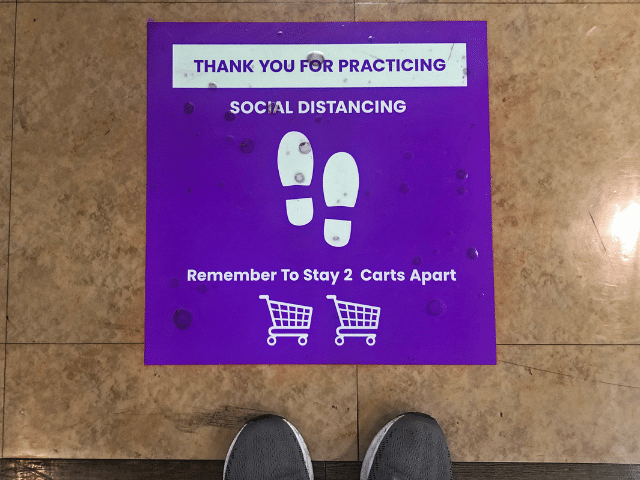
    In these challenging times, businesses are navigating the need for social distancing and safety measures to protect their customers and employees. Social distancing signs play a crucial role in promoting safety and compliance within establishments. To support businesses in their efforts, Catdi Printing, your trusted partner in print marketing, graphic design, large format, direct mail, EDDM, and web design, offers free social distancing signs. In this blog post, we will explore the benefits of utilizing free social distancing signs and provide practical advice on how businesses can promote safety and compliance effectively.

    Enhancing Safety and Compliance

    Social distancing signs act as visual reminders to maintain a safe distance from others. By placing these signs strategically in high-traffic areas, businesses can create a safer environment and promote compliance with social distancing guidelines. This not only protects customers and employees but also demonstrates a commitment to public health and safety.

    Clear Communication

    Free social distancing signs help businesses communicate their expectations and guidelines effectively. With concise messaging and bold visuals, these signs provide clear instructions on maintaining a safe distance, wearing masks, following one-way directions, and other safety protocols. By displaying these signs prominently, businesses ensure that everyone is aware of the necessary precautions.

    Cost Savings for Businesses

    The availability of free social distancing signs alleviates the financial burden on businesses, particularly small and medium-sized enterprises. As businesses strive to recover from the impact of the pandemic, free signage options provide a practical solution for implementing safety measures without incurring additional costs. This cost savings can be redirected towards other critical business operations.

    Customizable Designs

    Catdi Printing offers a range of customizable designs for free social distancing signs. Businesses can select from various templates that suit their brand identity, or they can incorporate their logos, colors, and messaging to create a personalized sign that aligns with their unique requirements. Customization enables businesses to maintain a cohesive visual identity while conveying important safety information.

    Easy Implementation

    Implementing free social distancing signs is a straightforward process. Once businesses have selected their desired design, they can easily print the signs in-house or collaborate with a professional printing service like Catdi Printing for high-quality, durable prints. Signs can be displayed using adhesive tape, stands, or other mounting options depending on the business’s needs and the specific location of the sign.

    Practical Tips for Utilizing Free Social Distancing Signs

    1. Strategic Placement: Position social distancing signs in prominent areas, such as entrances, waiting areas, checkout counters, and high-traffic zones. Ensure that they are easily visible and accessible to all individuals within the establishment.
    2. Consistent Messaging: Use consistent messaging across all social distancing signs to avoid confusion. Clear and concise instructions will help individuals understand and follow the safety protocols more effectively.
    3. Regular Checks and Updates: Periodically review the condition and placement of social distancing signs. Replace any damaged or faded signs to ensure legibility and effectiveness. Additionally, update signs if there are any changes to guidelines or regulations.
    4. Complementary Measures: Social distancing signs are part of a comprehensive approach to safety. Encourage other preventive measures, such as hand hygiene stations, mask-wearing reminders, and sanitization protocols, to create a holistic safety environment.

    Conclusion

    Free social distancing signs are invaluable tools for businesses seeking to prioritize safety, compliance, and public health. By leveraging these signs, businesses can effectively communicate important guidelines, protect their customers and employees, and demonstrate their commitment to community well-being. Catdi Printing is dedicated to supporting businesses of all sizes by offering free social distancing sign templates that can be customized to meet their unique needs. Contact us today to access these free resources and create a safer environment for everyone.

  • Matte vs. Glossy: Why Matte Business Cards Are the Modern Choice

    Matte vs. Glossy: Why Matte Business Cards Are the Modern Choice

    Business cards have long been a staple in the world of professional networking. They serve as a physical representation of a person or business and facilitate the exchange of contact information. When it comes to choosing the right finish for business cards, matte and glossy are the two primary options. While glossy cards have traditionally been favored for their vibrant shine, matte business cards have gained popularity in recent years due to their modern appeal and unique advantages.

    Understanding Matte and Glossy Finishes

    Matte and glossy finishes refer to the surface texture of a business card. Glossy cards have a shiny and reflective surface, while matte cards have a non-reflective and smooth texture. The choice between the two depends on personal preference, the desired impression, and the specific needs of the business or individual.

    The Modern Appeal of Matte Business Cards

    Sophistication and Elegance

    Matte business cards exude an air of sophistication and elegance. The non-reflective surface adds a touch of subtlety, allowing the design and information to take center stage. The matte finish gives a professional and sleek look, making it suitable for a wide range of industries, including design, photography, and fashion.

    Minimalistic and Contemporary Design

    In the era of minimalistic and contemporary design, matte business cards are a perfect fit. The smooth texture of the matte finish complements clean lines and simple aesthetics. It enhances the overall appearance by providing a clean and modern look that resonates with current design trends.

    Better Readability and Durability

    Matte business cards offer better readability compared to glossy cards. The absence of glare or reflections makes the content easier to read under different lighting conditions. Additionally, matte finishes are less prone to fingerprints and smudges, ensuring that the cards maintain their pristine appearance for a longer time.

    How Matte Business Cards Stand Out

    Unique Texture

    The unique texture of matte business cards sets them apart from their glossy counterparts. The tactile experience of running one’s fingers over the smooth, velvety surface leaves a lasting impression on recipients. This physical interaction adds a sensory element to the card, making it more memorable.

    Non-Reflective Surface

    One significant advantage of matte business cards is their non-reflective surface. Unlike glossy cards that can reflect light and cause glare, matte cards remain legible even under bright lighting conditions. This feature ensures that the card’s design and information are easily visible, allowing for effective communication.

    Subtle Color Reproduction

    Matte finishes provide a more subdued color reproduction compared to glossy finishes. This subtle color effect adds depth and richness to the design, creating a visually appealing card. The muted tones and softer hues achieved with matte finishes can enhance the overall aesthetic and leave a lasting impression.

    Practical Applications of Matte Business Cards

    Creative Industries

    Matte business cards find great utility in creative industries such as graphic design, art, and photography. The understated elegance and contemporary appeal of matte finishes complement the artistic nature of these professions, making them an ideal choice for professionals in these fields.

    Professional and Corporate Settings

    In professional and corporate settings, matte business cards can convey a sense of reliability and seriousness. The sleek and refined look of matte finishes adds a touch of professionalism that aligns with the ethos of these environments. It allows individuals to make a strong impression and establish credibility with their peers.

    Networking Events and Conferences

    When attending networking events and conferences, standing out from the crowd is essential. Matte business cards can help achieve this goal by offering a unique and memorable alternative to the glossy norm. Their modern appeal can make a lasting impact and increase the chances of being remembered among numerous contacts.

    Choosing the Right Design for Matte Business Cards

    When designing matte business cards, several factors come into play to create an impactful and visually pleasing card.

    Typography and Font Selection

    Choosing the right typography and font is crucial to ensure readability and visual harmony. Opting for legible and professional fonts that align with the brand’s identity enhances the overall design and communication of the card.

    Color Palette and Contrast

    Selecting an appropriate color palette is essential for creating a visually striking matte business card. Contrasting colors can help key information stand out, while harmonious colors can create a cohesive and visually pleasing design.

    Finishing Touches and Special Effects

    Matte business cards can still incorporate subtle finishing touches and special effects to enhance their appeal. Options like spot UV, embossing, or foiling can add texture and visual interest to specific elements of the design, further elevating the overall aesthetic.

    Environmental Considerations

    Matte business cards align well with environmental considerations and sustainable practices.

    Sustainability and Eco-Friendliness

    Many matte business cards are printed on environmentally friendly materials, such as recycled or FSC-certified paper. Opting for eco-friendly options demonstrates a commitment to sustainability and resonates with environmentally conscious individuals and businesses.

    Recyclability and Biodegradability

    Matte business cards can be easily recycled due to their paper-based nature. Choosing cards that are recyclable and biodegradable helps reduce waste and minimize the environmental impact.

    Reducing Carbon Footprint

    Some printing companies offer eco-friendly printing processes that utilize renewable energy sources and low-emission technologies. By opting for such options, businesses can contribute to reducing their carbon footprint.

    How to Make a Lasting Impression with Matte Business Cards

    To make a lasting impression with matte business cards, consider the following tips:

    Clear and Concise Information

    Ensure that the information on the card is clear, concise, and well-organized. Avoid cluttering the design with excessive details and focus on essential contact information and key branding elements.

    Unique and Memorable Design

    Create a design that stands out from the competition. Incorporate unique visuals, creative layouts, and attention-grabbing elements to make the card memorable and visually appealing.

    Quality Printing and Paper

    Investing in high-quality printing and paper is crucial to achieve the best results with matte business cards. Opt for professional printing services that specialize in matte finishes to ensure optimal color reproduction and durability.

    In today’s digital world, where online networking dominates, the importance of physical business cards should not be underestimated. Matte business cards offer a modern and sophisticated choice, allowing individuals and businesses to leave a lasting impression. With their unique texture, non-reflective surface, and subtle color reproduction, matte business cards stand out among the competition. Their practical applications span various industries, and their environmentally friendly aspects further add to their appeal. By considering design elements and focusing on high-quality printing, matte business cards can make a memorable impact and facilitate successful professional connections.

    FAQs

    FAQ 1: Are matte business cards more expensive than glossy ones?

    No, matte business cards are not necessarily more expensive than glossy ones. The cost may vary depending on factors such as the printing company, the design complexity, and the quantity ordered. However, in general, the price difference between matte and glossy finishes is usually minimal.

    FAQ 2: Can I write on matte business cards?

    Yes, matte business cards can be easily written on with various types of pens, including ballpoint, gel, and marker pens. The smooth surface of matte finishes allows for easy writing without smudging or smearing.

    FAQ 3: Are matte business cards suitable for vibrant and colorful designs?

    While matte finishes offer a more subdued color reproduction compared to glossy finishes, they can still accommodate vibrant and colorful designs. The key is to choose a suitable color palette and ensure proper contrast to maintain the visual impact of the design.

    FAQ 4: Can I incorporate special effects like foiling or embossing on matte business cards?

    Yes, special effects like foiling or embossing can be applied to matte business cards. These techniques can add texture and visual interest to specific elements of the design, creating a unique and eye-catching result.

    FAQ 5: How can I ensure the longevity of matte business cards?

    To ensure the longevity of matte business cards, store them in a dry and cool environment, away from direct sunlight. Avoid exposing them to moisture or extreme temperatures, as these conditions can affect the integrity of the paper and the print quality.

  • Understanding Dot Printing: What It Is and How It Works

    Understanding Dot Printing: What It Is and How It Works

    If you’re in the printing industry or you’ve had something printed before, you may have heard the term “dot printing” being thrown around. But what exactly is it, and how does it work? In this article, we’ll dive into the world of dot printing, exploring what it is, its advantages, and how you can utilize it for your printing needs.


    What is Dot Printing?

    Dot printing, also known as halftone printing, is a printing process that creates images by varying the size and spacing of dots. It’s used primarily for printing photographs or images that have a gradient or continuous tone, as opposed to solid colors. This process involves converting an image into a series of tiny dots that vary in size and spacing, creating the illusion of different shades and tones.


    How Does Dot Printing Work?

    The dot printing process involves converting a continuous-tone image into a series of dots using a halftone screen. The halftone screen is a transparent sheet or film that has a series of evenly spaced dots or lines on it. When the halftone screen is placed over the image, the dots or lines break up the image into tiny dots, each representing a different shade or tone. These dots are then printed onto the paper in various sizes and spacing, creating the illusion of a continuous-tone image.


    Advantages of Dot Printing

    Dot printing offers several advantages over other printing methods, including:

    1. High-Quality Images: Dot printing produces high-quality images that have a continuous-tone appearance, making them perfect for printing photographs, artwork, or other images that require precise detail and color accuracy.
    2. Cost-Effective: Compared to other printing methods, such as lithography or engraving, dot printing is relatively inexpensive, making it an affordable option for small businesses or individuals who need to print high-quality images. Additionally, the ink used in dot printing is less expensive than the toner used in laser printing, making it a cost-effective option for printing large quantities of materials.
    3. Versatility: Dot printing can be used on a variety of surfaces, including paper, cardboard, plastic, and even metal. This makes it a versatile option for printing images on a range of materials.
    4. Ability to Reproduce Gradients: Dot printing is capable of reproducing gradients, or the gradual transition from one color to another, which is important for printing images with smooth color transitions.


    Dot printing is a popular printing method that has been used for many years to produce high-quality prints at a low cost. It is commonly used for printing materials such as flyers, brochures, newsletters, and postcards.


    Dot printing can print on a variety of paper types and thicknesses, including glossy and coated paper. This allows for more creative and high-end print products to be produced using dot printing. The ability to print on thicker stocks is particularly useful for products such as business cards, postcards, and invitations, where a thicker and sturdier card stock is desired.


    Vibrant Color Production 

    Another advantage of dot printing is its ability to produce vibrant and accurate colors. This is because dot printing uses a combination of four colors – cyan, magenta, yellow, and black (CMYK) – to produce a full range of colors. Dot printing also allows for the use of spot colors, which are specially mixed inks designed to match specific colors, allowing for even more accurate color reproduction.


    Limitations of Dot Printing

    Despite its advantages, dot printing also has some limitations. One limitation is its resolution, which is lower than that of other types of printing. Dot printing typically produces prints at a resolution of 300 dpi, while laser printing can produce prints at a resolution of 600 dpi or higher. This means that dot printing may not be suitable for printing extremely detailed images or text that require high clarity.


    Another limitation of dot printing is that it can produce visible dots or lines, particularly in areas of solid color. This is known as a halftone pattern and is a result of the dots used in the printing process. While this is not typically noticeable in most print materials, it may be visible in certain types of designs or artwork.


    How to Utilize Dot Printing for Your Printing Needs

    To utilize dot printing for your printing needs, follow these tips:

    1. Use High-Quality Images: To achieve the best results with dot printing, start with a high-quality image that has a high resolution and good color depth. This will ensure that the final printed product looks sharp and vibrant.
    2. Choose the Right Paper: The type of paper you choose can have a significant impact on the final result of your printed image. Choose a high-quality paper that is compatible with your printing method and that will showcase the colors and details of your image.
    3. Work with a Professional Printing Company: Dot printing is a complex process that requires a high level of expertise and specialized equipment. Work with a professional printing company, such as Catdi Printing, that has experience with dot printing and can produce high-quality images for your printing needs.
    4. Consider the Size and Resolution of Your Image: The size and resolution of your image can impact the final result of your printed product. Consider the size of your image and the resolution required to produce a high-quality print that accurately represents your image.


    In conclusion, dot printing is a highly effective printing process that produces high-quality images with precise detail and color accuracy. By understanding how dot printing works, its advantages, and how to utilize it for your printing needs, you can produce stunning printed products that effectively communicate your message. Contact Catdi Printing today to learn more about how we can help you with your dot printing needs in Texas and it’s environs.

  • Understanding Collating: What It Is and How It Benefits Your Printing Projects

    Understanding Collating: What It Is and How It Benefits Your Printing Projects

    Collating is a printing term that refers to the process of arranging individual sheets or pages of a multi-page document in the correct order. Collating is an important part of the printing process, as it ensures that your printed documents are organized and easy to read. In this article, we will discuss what collating is, how it benefits your printing projects, and some tips for successful collating.


    What Is Collating?

    Collating involves organizing the pages of a multi-page document in the correct order so that they can be easily read and understood. This is done by arranging the pages in a specific sequence, such as page 1, page 2, page 3, and so on, until all the pages are in the correct order. Collating is typically done for documents such as booklets, catalogs, and manuals, where it is important to have the pages in the correct order for easy reference and readability.


    Benefits of Collating

    Collating has several benefits for printing projects, including:

    1. Saves Time: Collating saves time by arranging the pages of a document in the correct order before printing. This eliminates the need to manually sort through pages after printing, which can be time-consuming.
    2. Increases Efficiency: Collating increases the efficiency of the printing process by ensuring that the pages of a document are organized and easy to read. This can help reduce errors and improve the overall quality of the finished product.
    3. Enhances Readability: Collating enhances the readability of multi-page documents by ensuring that the pages are in the correct order. This makes it easier for readers to follow the content and find the information they need.
    4. Reduces Errors: Collating reduces the risk of errors by ensuring that the pages of a document are in the correct order. This can help prevent mistakes and improve the accuracy of the finished product.


    Tips for Successful Collating

    To ensure that your collating process is successful, consider the following tips:

    1. Use a Collator: A collator is a machine that automatically collates pages, making the process faster and more efficient. Consider using a collator for large printing projects to save time and reduce errors.
    2. Double-Check Your Order: Before printing, double-check the order of your pages to ensure that they are in the correct sequence. This can help prevent errors and save time in the long run.
    3. Use Dividers: Consider using dividers or tabs to separate different sections of your document. This can make it easier for readers to navigate the content and find the information they need.
    4. Use Quality Paper and Ink: Use high-quality paper and ink to ensure that your printed documents look professional and are easy to read. This can enhance the overall quality of your collated documents and improve their effectiveness.
    5. Consider the Binding Method: There are several binding methods that you can choose from for your collated documents, such as saddle stitching, perfect binding, and spiral binding. Consider the type of document you are creating and your budget to choose the appropriate binding method.
    6. Utilize Printing Services: If you have a large printing project or you want to ensure the highest quality results, consider utilizing professional printing services. They have the equipment, expertise, and experience to handle collating and printing tasks, ensuring your final product is of the highest quality.
    7. Plan Ahead: When it comes to collating, it’s important to plan ahead to ensure that you have enough time and resources to complete the project. Make a schedule, set deadlines, and allocate resources to make the process smoother and more efficient.
    8. Organize Your Files: Organize your files in a clear and easy-to-understand manner to make the collating process smoother. Label your files appropriately and make sure they are in the correct order before beginning the collating process.


    In summary, collating is a crucial aspect of printing that ensures that your documents are organized and easy to read. It saves time, increases efficiency, enhances readability, and reduces errors. To achieve successful collating, it’s important to use a collator, double-check your order, use dividers, use quality paper and ink, consider the binding method, utilize printing services, plan ahead, and organize your files. By following these tips, you can ensure that your collated documents are of the highest quality and effectively communicate your message.

  • Get the Perfect Fit: B5 Paper Printing and Mailing Services for Your Business Needs in Texas

    Get the Perfect Fit: B5 Paper Printing and Mailing Services for Your Business Needs in Texas

    When it comes to B5 paper printing and mailing materials for your business, the type of paper you choose can make a big difference. One size that is becoming increasingly popular among businesses is B5 paper. B5 paper measures 176mm by 250mm, which is slightly larger than the popular A5 size but smaller than the A4 size. This size is perfect for businesses that want to make an impact with their printed materials without being too overwhelming. In this article, we’ll discuss why B5 paper is important for businesses and how Catdi can help you with all your B5 paper needs in Texas.

    Versatility

    One of the primary advantages of B5 paper is its versatility. It can be used for a wide range of printing projects, making it a great choice for businesses that need flexibility. B5 paper is perfect for brochures, flyers, postcards, and business letters. Its size is not too small or too large, making it ideal for conveying important information in a clear and concise way. With B5 paper, you can design and print materials that will meet your business needs in Texas.

    Professionalism

    B5 paper is an ideal size for creating professional-looking documents. Its size is perfect for businesses that want to create high-quality materials that will impress their clients and customers. B5 paper is not too large or too small, making it ideal for presenting information in a clear and organized manner. When you use B5 paper, you can be confident that your materials will look professional and polished.

    At Catdi, we understand the importance of using high-quality paper for your business. That’s why we offer a wide range of B5 paper options to choose from. We have glossy and matte finishes available to suit your needs in Texas. Our printing and mailing services are designed to help you create materials that will stand out from the competition.

    Customization

    Every business has unique needs in Texas, and at Catdi, we know that. That’s why we offer customized printing and mailing services to meet your specific requirements. We can help you design and print materials that will showcase your brand in the best possible light. Whether you need a simple postcard or a complex brochure, we have the expertise to help you achieve your goals.

    Convenience

    When you work with Catdi, you can enjoy the convenience of a one-stop-shop for all your printing and mailing needs in Texas. We offer a wide range of services, including design, printing, mailing, and fulfillment. You can trust us to handle every aspect of your project with care and attention to detail. We’ll work with you every step of the way to ensure that your materials are delivered on time and on budget.

    Affordability

    At Catdi, we believe that high-quality printing and mailing services should be affordable for every business. That’s why we offer competitive pricing on all our B5 paper printing and mailing services. We believe that you shouldn’t have to sacrifice quality for affordability. When you work with us, you can enjoy the best of both worlds.

    Why Choose Catdi for Your B5 Paper needs in Texas?

    Catdi is a trusted supplier of B5 paper printing and mailing services. Our commitment to quality and customer satisfaction sets us apart from other printing companies. We offer a wide range of B5 paper options to choose from, and our printing and mailing services are customized to meet your specific needs in Texas. With Catdi, you can enjoy the convenience of a one-stop-shop for all your printing and mailing needs in Texas.

    Customization

    We understand that your business is unique, and that’s why we offer customized printing and mailing services to meet your specific requirements. Whether you need a simple postcard or a complex brochure, we have the expertise to help you achieve your goals. Our team of printing and mailing experts is committed to providing exceptional customer service, and we work closely with you to ensure that your materials are delivered on time and on budget.

    Using the Latest Technology

    At Catdi, we use state-of-the-art printing equipment and technology to ensure that your materials look their best. We offer both digital and offset printing options, which means that we can accommodate any size order, no matter how big or small. We use only the highest quality paper and printing materials to ensure that your materials stand out from the competition.

    Efficient Mailing Services

    When it comes to mailing your materials, we offer a range of options to choose from. We can handle everything from address verification to postal preparation, ensuring that your materials are delivered to the right people at the right time. Our mailing and fulfillment services are designed to make your life easier, and we’ll work with you to develop a custom mailing plan that meets your specific needs in Texas.

    Conclusion

    B5 paper is a versatile and professional size that can help you create high-quality materials for your business. Whether you need to create brochures, flyers, postcards, or business letters, B5 paper is a great choice. At Catdi, we offer a wide range of B5 paper options to choose from, as well as customized printing and mailing services to meet your specific needs in Texas. We’re committed to helping you achieve your business goals, and we’ll work closely with you to ensure that your materials are delivered on time and on budget.

    If you’re looking for a reliable supplier of B5 paper printing and mailing services, look no further than Catdi. We’re a trusted provider of printing and mailing services, and we have the expertise and experience to help you achieve your business goals. Contact us today to learn more about our B5 paper options and how we can help you take your business to the next level.

  • Top 3 Best Types of Print Advertisements

    Top 3 Best Types of Print Advertisements

    In the era of digital advertising, you may be neglecting the importance of print advertisements. You must be ignoring the hassle of printing when most of your consumers can find you through internet advertisements and social media. Despite these facts, print still plays a vital role in advertising the product or services of your brand. 

    Print advertisements are highly flexible as well, and you can place your ads at any place that offers the highest visibility of the audience. Your printed advertisements will stay longer that will be read by the people again and again, creating awareness of your product and service and expanding your viewership. It will surely assist you in reaching a larger audience. 

    Print advertisements use physical and virtually printed media to reach customers on a huge scale. For instance, Ads are printed in hard copy in different forms of publications such as magazines, brochures, direct mail, etc. Nowadays, companies are spending billions on their advertisement. The fact that print advertisements have the potential to reach customers in a way that digital marketing still cannot makes it one of the best ways the promotion of a brand or company. 

    Best Print Advertisement

    Print advertisement still has a lot of importance in the business world because the marketing campaigns of brands and companies are incomplete without it. We can say that the circulation of print publications has reduced somehow, but print advertisement is undoubtedly a viable marketing method. 

    Now, you have read a lot about print advertisements. You must be wondering what the best printing advertising options are. To clear your confusion, we have enlisted the top 3 types of print advertisements that attract people the most and do their best to promote the product or services of your company. Some of them are:

    Brochure Advertisements

    Brochures are one of the most convenient yet simple ways to market your business. It’s an effective way that attracts people in many ways. Brochures are eye-catching, lightweight, and contain crucial information about your product or services. You mostly add the highlighting points of the product or service you sell. 

    Even though online marketing techniques are trying their best to replace print advertisements, straightforwardness and physicality still have their power. One of the major benefits of brochure advertisement is its low cost and conveys a lot of information. This cheap print advertisement can create a high-quality brochure with a limited budget. 

    Brochure advertisement is an excellent option for small businesses or startups that want to create awareness about their product in the people but with limited expenditure. It’s a marketing tool through which you can be directly in touch with your audience.

    You have to distribute these brochures to your targeted audience, and they can get all the information from a single piece of paper. No doubt, it’s an affordable way to promote your brand. 


    Business Card Print Advertisement

    You must attend many events and exhibitions as these events are a perfect opportunity to make new contacts and sales. Once you have promoted your product or service to those people, you are supposed to give them your business card to contact you in the future. Your business card will ensure they have your contact details if they want to contact you. 

    People are increasingly demanding hard copies that they can hold and feel. Business cards are like a part of your business that people can take home and save to contact you. Try to make it unique and attractive with strong content showing that your services or products can solve their problems or fulfill their needs. 

    Although people live in a world of laptops and smartphones, business cards are essential for many businesses, especially small businesses and startups. Builders can benefit from business cards when mobile signals fail. Moreover, plumbers can use them so that customers with urgent problems can call them instantly, or the street food stalls can use business cards to promote their brand locally.  

    Digital Print Advertisement

    Personalization is one of the highlighting benefits of digital printing. In your marketing campaign, you can customize anything, for instance, texts, images, and even layouts. If you have a digital printer with you, your product and advertisement can be completely customizable and allow you to engage the customers as much as possible. 

    This customization feature will help you compete efficiently, making your customers feel appreciated and respected. You can see increased sales and better recognition of your business through digital print advertisements. Compared to traditional printing techniques, digital printing is much faster. It omits most of the conventional steps and smoothly does the printing process. 

    Digital print advertisement is also budget-friendly and eliminates the fees of expensive printing plates, which makes it more cost-effective. You can fulfill all the needs and wants of the company with a digital print, as it has many different shapes and sizes for customization. 

    Final Thoughts

    There is a wide range of print advertisements, and each has its marketing tools that can help you expand your business. You can target the right audience through these advertisement options and increase customer demand. 

    These reasons make printed advertisement one of the trusted ways to promote a brand or a company. When a consumer views a printed ad, they automatically will be impressed and considers it a reputable and established company. 

    We hope this article helps you understand the best print advertisement options. For further information, contact us now!

  • Different Types of Commercial Printing?

    Different Types of Commercial Printing?

    Commercial printing has helped businesses to stand out among competitors. You can use technology and evolving printing methods to boost your sales performance as a business owner.

    Commercial printing involves the printing of business materials like flyers and brochures. You’ll find various printing methods, each having a separate role for your business. We will discuss a few types of commercial printing below.

    Types of Commercial Printing

    Whether you have a large or small business, you need to advertise your services and products to increase sales and expansion. If you have just launched a new business or are willing to host an exhibition of your products, you must use the right promotional tools.

    You’ll need a commercial printer to promote something on a large scale to draw your customers’ attention. Following are the types of commercial printing.

    • Offset Lithography

    Offset lithography is one of the most significant procedures to achieve big volume output. In this process, metal plates are used to create prints with images. These metal plates are then transferred to rollers or rubber blankets, which print the desired media.

    In this procedure, you can easily print on a thick or flat-surfaced medium like fabric, wood, and canvas since the flexibility of rubber blankets allows you to do so.

    Offset printing can be divided into two subcategories:

    • Sheet-fed offset printing
    • Web offset printing

    You can get excellent results using both of these methods.

    • Digital Printing

    Digital printing is another type of commercial printing that creates crisper images with a better design using premium toners and ink. Digital printing allows replicating the prints with exceptional quality using digitally calibrated presses

    It prints products such as banners, magazines, slogans, and other printing media. Digital prints offer short turnaround times and the ability to deliver a finished product whenever needed. 

    LED UV

    LED UV technology is one of the most widely used printing techniques and is adopted by enterprises for commercial printing. The outstanding print quality is the reason for its demand and popularity. It uses a curing method to obtain high quality and avoid anti-set-off spray.

    We recommend you use LED UV technology if you and your company want to contribute to a greener world because it doesn’t generate any drying heat and has a relatively short runtime. As a result, less energy is used.

    LED UV printing can create various printed materials, including manuals, posters, brochures, pamphlets, magazines, and newsletters.

    Flexography

    Another commercial printing technique you can use for packaging or uneven surfaces is flexographic printing. The printing image is on the inked rubber plate during this procedure, which transfers to the printing surface.

    Flexography printing is well recognized for its quick drying and high production speed, so if you adopt this technique, you can expect to receive prints of excellent quality. The nicest thing about this technology is that it can print on various materials, including metal, plastic, cellophane, and other materials.

    Flexographic printing has many benefits for your company’s operations, including rapid printing, low costs, minimal maintenance of tools, and the ability to use a variety of inks. It is one of the best techniques for printing out wallpapers, textiles, business forms, or newspapers.

    Large Format

    Wide-format printing is commonly referred to as large-format printing. It involves producing eye-catching and large pictures. If you want people to notice your business or product, you should use this kind of commercial printing because it makes it easy to draw people’s attention toward your services.

    Large printed items like banners or posters you usually see on the walls of heavily trafficked locations are produced using large format printing. You can also print double-sided banners, logos, or posters.

    Additionally, the printer waterproofs every poster, so you don’t have to be concerned about the poster being damaged during a storm or heavy rain. This format prints banners, billboards, laminating, wallpaper, exhibition graphics, pop-up displays, and other items.

    Conclusion

    If you want to avail of commercial printing services, you must know the material, size, and kinds of products you intend to produce because this information can help you choose the best printer for the job.

    Today, there are several solutions available to complete the task successfully. We hope the material in this manual will give you a better understanding of the alternatives available as well as the various applications and benefits of commercial printing techniques.

    You can contact Catdi.com for detailed information regarding products and services of commercial printing. We maintain the same high standard to provide services to our clients. Our printing experts continue to innovate and update to meet our client’s needs.

  • Half Sheet Size Paper: A Comprehensive Guide

    Half Sheet Size Paper: A Comprehensive Guide

    When it comes to printing documents, flyers, or other materials, choosing the right paper size can be crucial. While standard paper sizes like letter and legal are widely used, sometimes a smaller size can be more convenient. One such size is half sheet size paper.

    At Catdi printing, we understand the importance of selecting the right paper size for your printing needs. In this article, we’ll discuss half sheet size paper, its uses, benefits, and how to choose the right type of paper for your project—with updated insights into the latest trends in sustainable printing and digital innovation.

    What is Half Sheet Size Paper?

    Half sheet paper, also known as half letter size paper or 5.5 x 8.5 inch paper, is a common choice for compact printing needs. It is exactly half the size of a standard letter-size paper (8.5 inches by 11 inches). This makes it easy to create two prints per standard sheet or to cut full-size paper in half when printing at home.

    Half sheet size paper is widely used for printing flyers, postcards, invitations, mini-brochures, and event handouts. Its dimensions are especially suitable for digital printing and quick-turnaround projects, where smaller runs and personalization are beneficial.

    Its adaptable size works well with modern printing technologies, including print-on-demand and digital workflows, making it easier than ever to produce short runs and customized content quickly and cost-effectively.

    Benefits of Half Sheet Size Paper

    1. Cost-effective

    One of the primary benefits of using half sheet size paper is its cost-effectiveness. It is an economical option compared to larger paper sizes like letter or legal. Printing on this paper size can save money on printing costs, as it requires less paper and ink.

    2. Versatile

    Half sheet size paper is a versatile paper size that can be used for a variety of printing needs. It is commonly used for printing postcards, invitations, flyers, and other marketing materials. Its smaller size makes it easy to handle and distribute.

    3. Convenience

    This particular paper size is a convenient option for printing and distributing materials. It is small enough to fit in a standard envelope, making it easy to send through the mail. Its smaller size also makes it easier to carry and store.

    4. Environmentally friendly

    Printing on half sheet size paper can be more environmentally friendly than using larger paper sizes. Since it requires less paper and ink, it can help reduce waste and lower your carbon footprint. Many modern printers and presses are also embracing sustainable methods like soy-based inks and carbon-neutral technologies (Seacourt).

    5. Supports Sustainable Printing Trends

    In 2025, sustainability is a major trend in the printing industry. Half sheet paper is increasingly produced with recycled content, biodegradable fibers, or alternative materials like bamboo or agricultural waste. Combined with soy-based inks and carbon-neutral printing presses, this format allows businesses to align with eco-conscious values (FESPA).

    Use case: Businesses can promote their green initiatives by choosing half sheet flyers printed on recycled stock with soy-based inks, appealing to environmentally responsible customers.

    6. Ideal for Personalization

    Thanks to advances in digital printing, personalizing half sheet materials is now easier and more affordable. You can create highly targeted pieces with unique QR codes, custom greetings, or tailored promotional offers. These technologies also allow for easy A/B testing in short-run formats (Park Communications).

    Use case: A local restaurant could print custom half sheet coupons with QR codes linking to personalized menus or RSVP forms for exclusive events.

    Uses of Half Sheet Size Paper

    1. Flyers

    Half sheet size paper is a popular choice for printing flyers. Its smaller size makes it easier to handle and distribute, and it can be a cost-effective option for printing large quantities.

    2. Postcards

    Its size is ideal for postcards—print your message on one side and mailing details on the other. These are a smart and mailable option for small business promotions.

    3. Invitations

    Half sheet invitations offer an elegant and practical format for weddings, parties, or business events. Their compatibility with standard envelopes makes distribution a breeze.

    4. Brochures

    Half sheet paper can be folded to create compact brochures, ideal for product or service highlights.

    5. Hybrid Events & QR Codes

    With the rise of hybrid in-person and virtual experiences, half sheet flyers can be embedded with QR codes or NFC chips linking to livestreams, digital brochures, or RSVP pages.

    Use case: Event planners can use these flyers to merge print and digital engagement seamlessly.

    6. Church and Community Inserts

    Half sheet flyers fit neatly into church bulletins or non-profit handouts. They’re ideal for event reminders, donation requests, or announcements (MyCreativeShop).

    Use case: Faith-based and community organizations can communicate effectively and affordably with their members.

    Comparative Table

    Application Half Sheet Size Benefits Example Use Case
    Flyers Cost-effective, easy to distribute Community event handouts
    Invitations Fits standard envelopes, elegant Wedding or business event invites
    Postcards Mailable, eye-catching Direct mail campaigns
    Brochures Compact, foldable Product or service mini-guides
    Coupons/Vouchers Convenient size, wallet-friendly Retail promotions, loyalty programs

    Choosing the Right Type of Half Sheet Size Paper

    1. Paper Weight

    The weight of the paper can affect its durability and how it feels. For half sheet paper, a weight of 80-100 lb. is typically recommended.

    2. Paper Finish

    Choose a finish that complements your message. Glossy finishes provide a polished look; matte finishes lend a more elegant, professional feel.

    3. Color

    While white is standard, colored half sheet paper can enhance visual interest. Use bold colors for promotions or muted tones for formal events.

    4. Brand and Quality

    Don’t overlook the quality of your paper. High-end stocks feel better, look sharper, and reflect more positively on your brand.

    At Catdi Printing, we offer a variety of paper size options, weights, and finishes. Whether you need eco-friendly stock or a premium textured card, we can guide you to the perfect match.

    FAQs About Half Sheet Size Paper

    Q: What is half sheet size paper exactly?
    A: Half sheet size paper measures 5.5 x 8.5 inches, which is half the size of standard letter-size paper. It’s often called “half letter size” and is great for flyers, postcards, and invitations.

    Q: Can I print on half sheet size paper at home?
    A: Yes. You can cut standard 8.5 x 11 paper in half and print on it using most home or office printers. Just adjust your page setup or printer settings accordingly.

    Q: What kind of paper weight should I use?
    A: A paper weight of 80-100 lb. is ideal for half sheet prints to ensure durability and a professional feel.

    Q: What are some common uses for half sheet size paper?
    A: Popular uses include event flyers, direct mail postcards, RSVP cards, shelf talkers, donation slips, and more.

    Q: Is it an eco-friendly choice?
    A: Yes! Since it uses less paper and is often available in recycled or alternative fiber options, half sheet paper is a smart choice for environmentally conscious brands.

    Conclusion

    Half sheet size paper is a cost-effective, versatile, and environmentally conscious option for modern printing needs. As printing technology evolves, this compact format continues to prove its relevance—supporting personalization, sustainability, and design innovation.

    At Catdi Printing, we stay ahead of industry trends to bring you smart, effective print solutions. Our team is ready to help you choose the best half sheet paper for your campaign, event, or marketing materials. Contact us today to get started or request free samples and templates.

  • Metric Paper: A Comprehensive Guide

    Metric Paper: A Comprehensive Guide

    When it comes to paper sizes, the most commonly used sizes in the US are letter size (8.5 x 11 inches) and legal size (8.5 x 14 inches). However, in many other parts of the world, including Europe, Asia, and South America, metric paper sizes are more commonly used. In this guide, we’ll take a closer look at the metric paper and its various sizes, as well as its benefits and uses.

    What is Metric Paper?

    Metric paper, also known as ISO paper or A-series paper, is a system of paper sizes that are based on the ISO 216 standard. This system was first introduced in the 1970s and has since become the most widely used system of paper sizes around the world. The A-series paper sizes range from A0 (the largest size) to A10 (the smallest size).

    The Benefits of Metric Paper

    One of the main benefits of using metric paper is its consistency and ease of use. Because the sizes are based on a standard system, it’s easy to predict how a document will look when it’s printed or copied onto a different size of paper. This makes it ideal for businesses that need to produce a lot of documents in different sizes.

    Another benefit of this type of paper is that it’s more efficient to use. Because the sizes are based on a ratio of 1:√2, each size is half the size of the previous size. This means that if you cut an A4 sheet of paper in half, you get two A5 sheets of paper. This makes it easy to scale documents up or down without wasting paper.

    Metric Paper Sizes

    The A-series paper sizes range from A0 (the largest size) to A10 (the smallest size). Here is a breakdown of the sizes and their dimensions:

    • A0: 841 x 1189 mm
    • A1: 594 x 841 mm
    • A2: 420 x 594 mm
    • A3: 297 x 420 mm
    • A4: 210 x 297 mm
    • A5: 148 x 210 mm
    • A6: 105 x 148 mm
    • A7: 74 x 105 mm
    • A8: 52 x 74 mm
    • A9: 37 x 52 mm
    • A10: 26 x 37 mm

    Uses for Metric Paper

    Metric paper is used for a variety of purposes, including printing documents, business cards, postcards, flyers, and brochures. It’s also commonly used for technical drawings and diagrams, as well as for printing maps and plans. Because of its efficiency and ease of use, this type of paper is an ideal choice for businesses that need to produce a lot of documents in different sizes.

    In addition, this type of paper is often used in education, particularly in countries that use the metric system. It’s also commonly used in commercial printing for printing books and magazines, as well as for art and graphic design projects.

    Choosing the Right Metric Paper

    When it comes to choosing the right metric paper for your project, there are a few factors to consider. These include the paper weight, finish, and color:

    1. Paper Weight

    Paper weight refers to the thickness of the paper, and is typically measured in grams per square meter (gsm). The higher the gsm, the thicker and more durable the paper will be. When choosing the right paper weight for your project, consider factors like how the paper will be used and how long it needs to last.

    1. Finish

    The finish of the paper can also impact the final result of your printed materials. There are a variety of finishes to choose from, including matte, gloss, and satin. Matte paper has a dull, non-reflective finish, while gloss paper has a shiny, reflective finish. Satin paper has a slight shine, but is not as reflective as gloss. Consider the look and feel you want for your project when choosing a paper finish.

    1. Color

    Finally, consider the color of the paper. While most metric paper is white or off-white, there are also colored papers available. Consider the tone and mood of your project when choosing a paper color.

    Conclusion

    Metric paper is a widely used system of paper sizes that is based on the ISO 216 standard. It offers many benefits, including consistency, efficiency, and ease of use. Th type of paper is used for a variety of purposes, including printing documents, technical drawings, and art and graphic design projects. When choosing the right metric paper for your project, consider factors like paper weight, finish, and color. By understanding the different types of metric paper and their uses, you can choose the right paper for your next project and ensure a professional and polished final result.

  • Unlock The Power of Professional Letterhead Printing

    Unlock The Power of Professional Letterhead Printing

    One of the best ways to stand out from the crowd is by sending correspondence on professional, custom letterhead printing. Sleek letterhead generates trust and credibility among consumers, investors, and other stakeholders. Brand letterhead is an essential part of business marketing. It really is a must have in business!

    To create custom letterhead for your business, you need to consider a few factors, including company colors, logo, and company personality or style. These also serve as indicators of brand identity, making it easier for customers to identify and connect with your business. Business letterhead should include attractive designs, contact information, and a slogan or motto to help customers remember the company. When designing a business letterhead, it’s important not to overcrowd the page with too much contact information that is already available on business cards. Instead, use space wisely to highlight key information about the company, such as its mission statement, logo, and contact info.

    While at-home letterhead printing templates are available online, creating custom letterheads with your company’s logo is ideal for business printing. Printing letterhead does not have to be expensive when you venture into custom letterhead printing. Printing affordable letterhead will ensure that your business has the professional look it deserves without breaking the bank. Let’s discuss everything you need to know about creating and printing letterhead and envelopes in this blog.

    Professional printer templates: How they are different.

    It is important to note the difference between a generic letterhead template and a template with a professional printer. Generic online templates will be limited in their customization and will still require being set up to print. When using a professional printer template it will give you a guide to ensure printing goes off without a hitch, but will allow for all needed customization. It is also important to note the the quality of the print will be far superior to anything printed on an in-office or home printer.

    Starting with a template offers efficiency to the process and what business is not aiming for efficiency and timeliness?! Catdi Printing has letterhead templates online that can be customized based on your business’s branding requirements. These print templates are set up to print with requirements for cut/bleed, resolution, CMYK colors, and file type. This way, you get letterhead printing that reflects your business’s image and personality in just a few easy steps.

    Learn how to create letterhead you’ll love.

    1. Begin by brainstorming ideas. Catdi Printing can provide assistance whether you have an established logo and brand personality or are starting from scratch and need logo and brand development and design. Ensure your logo artwork is high resolution for a good result.
    2. Consider customizing letterhead templates and templates for envelopes, business cards, postcards, and/or flyers. Be consistent with your design choices to further your business personality, in other words stay on brand.
    3. Once you’ve selected a letterhead design, ensure all vital information is included and highlighted in an easy-to-read format. You have the ability to customize the header, footer, and a watermark. Most often, the business logo, registered business name and applicable certifications are included on the header. The footer usually has the company’s registered address and/or contact.
    4. Consider the purpose of your company letterhead. If your primary use of your letterhead is mail correspondence, you will also need envelopes. Envelopes can be customized with your company brand to further business recognition. For your later convenience, make sure to order matching quantities of letterhead and envelopes.
    5. Lastly, get the letterhead printed at a high-quality printer using quality paper. With nearly 20 years in the business, Catdi Printing has you covered here! Professional printing not only helps to increase your brand awareness, but they also save time and money. By spending time to customize letterhead designs and print them professionally, you’ll be able to create letterheads that are both engaging and sleek.

    Frequently Asked Questions

    How much does a letterhead cost?

    The cost of letterhead printing depends on the size, paper stock, color scheme, design, quantity, and turnaround time for the project. On average, letterhead printing can start as low as $0.20 per piece with 1000 copies of 8.5×11 letterhead on 70# Uncoated Text paper, full color (4/4), with the average turn around time of 5 days.

    You can get a quote for your letterhead printing project by clicking here. Professional graphic design services are also available for custom letterhead projects for an additional fee. We do, however, have free design templates as well. We have a variety of letterhead and envelope products available at different price points depending on your needs. Shipping and handling costs may apply to your order as well.

    Are there tricks to make letterhead more affordable?

    Yes! Use one of our FREE letterhead templates that are preset to create a print-ready file, thus eliminating a design fee. Get the biggest bang for your buck with offset printing verses digital. Offset printing is used in bulk print runs, lowering your per piece cost.

    How do I make my letterhead look professional?

    If you want your letterhead to look professional, there are a few key steps to follow. Make sure your letterhead includes all the necessary information like your company logo, contact details, and color palette. Design-wise, keep it clean and simple as it makes your letterhead look more professional.

    What Letterhead paper stocks can I choose from?

    Catdi Printing offers letterhead in 3 sizes, stationary (5.5″ x 8.5″), standard (8.5″ x 11), and legal (8.5″ x 14″). Our most economical paper stock available is 60LB Premium Opaque uncoated stock that is only available with bulk, offset printing. We also offer 70LB Premium Opaque uncoated stock and 70LB linen uncoated stock, both of which are available with digital or offset printing options. You can choose whether your letterhead should be printed on one side or double-sided.

    Why should you trust the visual communication experts at Catdi Printing with your letterhead printing services?

    You should trust the visual communication experts at Catdi Printing with your letterhead printing services because they are a leader in this field and have been in business for nearly 20 years. Their knowledge and expertise in letterhead printing, custom stationery and business letterhead is unparalleled. Additionally, Catdi Printing is worried about your bottom line which is why we offer free print-ready templates to reduce your costs and ensure a great end result.

    Moreover, according to research conducted by Print Central, over 56% of consumers believe that print media is the most trustworthy channel and can help with building brand identity. So, why not use Catdi Printing to create custom letterhead for your business that reflects your brand values?

    Does a logo really make a difference on business letterheads?

    Yes, a logo can make a big difference on business letterheads. Logos are an important part of branding, and designing one for your business letterhead is an essential step in creating a memorable and professional image that will set you apart from competitors.

    A logo on letterhead also helps to build trust and confidence with customers as it shows that the company has taken the time to create a professional design. The presence of a logo adds credibility to the correspondence coming from your business, which is especially important in industries such as real estate, construction, and interior design.

    Catdi Printing has talented graphic designers that could help create a logo for your business!

    Conclusion

    Letterhead printing is a classic business practice that still has a place in today’s digital world. With letterhead, you get to present your brand in an official and professional way. If you want to know more about letterhead printing, contact us today by clicking here or shooting an email to carlos@catdi.com! We can help you design letterheads that will enhance your business image.

  • Most Common Direct Mail Postcard Sizes?

    Most Common Direct Mail Postcard Sizes?

    Did you know that postcards are one of the most effective forms of direct mail marketing? They have an average response rate of 5.7%, compared to email’s 0.6% and online display ads’ 0.2%.

    When it comes to direct mail campaigns, choosing the right postcard size can significantly impact the success of your marketing efforts. Factors such as postage rates, practical dimensions, and standard postcard sizes all play a role in maximizing the effectiveness of your direct mail campaign.

    This article will explore the most common direct mail postcard sizes and provide a comprehensive guide to choosing the correct dimensions for your mailing. Whether you are looking for a cost-effective option or aiming to make a bold statement, understanding the different postcard sizes will help you create a successful direct mail campaign that captures your audience’s attention.

    The Role of Direct Mail in Modern Marketing

    Direct mail has been proven to have high response rates, making it a valuable tool for companies to connect with their target audience. Unlike digital marketing strategies, direct mail provides consumers a tangible and personalized experience. By delivering physical materials directly to their mailboxes, businesses can create a sense of trust and credibility with their customers.

    Direct mail also allows companies to target specific demographics. By carefully selecting their mailing lists, businesses can reach the right audience with their marketing message. This targeted approach ensures that the marketing materials are received by individuals most likely interested in the promoted product or service.

    Direct Mail Sizes: A Comprehensive Guide

    It is crucial to consider the various sizes and dimensions available for different direct mail formats in order to effectively plan and execute a direct mail campaign. This comprehensive guide provides an overview of plain mail sizes, including postcards, letters, catalogs, and envelopes, along with their specific dimensions and considerations.

    Postcard Dimensions

    Postcards are popular for direct mail marketing due to their affordability and versatility. They are available in a range of sizes to suit different campaign objectives:

    • Small postcards: 4″ x 6″ Dimensions make them compact and cost-effective.
    • Standard postcards: Sized at 6″ x 9″, they balance visibility and cost well.
    • Jumbo postcards: Measuring 6″ x 11″, they provide more space for impactful visuals and messaging.
    • Extra oversized postcards: With 9″ x 12″ dimensions, they make a bold statement and command attention.

    By choosing the right postcard size, you can effectively convey your message and maximize the impact of your direct mail campaign.

    Smaller Postcards: Benefits and Best Practices

    Benefits of 4″ x 6″ Size

    Smaller postcards, like the popular 4″ x 6″ size, offer numerous benefits for direct mail campaigns. These compact dimensions provide a cost-effective solution for businesses seeking to effectively reach their target audience. Here are the key advantages:

    • Cost-effective: Smaller postcards require less printing material and postage, making them an affordable choice for direct mail marketing.
    • Easy to design and print: With smaller dimensions, designing and printing smaller postcards is straightforward, ensuring a quick turnaround time for your campaign.
    • Quick delivery: Smaller postcards can be sent via first-class mail, ensuring prompt delivery to recipients.

    5 x 7 a Happy Medium between size and cost

    The 5″ x 7″ postcard size offers a happy medium for those looking for a slightly larger format without compromising affordability. You can use additional design space with these dimensions while maintaining reasonable postage rates. This size allows for more creativity and impactful visuals, ensuring your message stands out. The 5″ x 7″ postcard size is perfect for showcasing product images, event details, or promotional offers in a larger, more eye-catching format. You can include more text, graphics, and even a call-to-action without overcrowding the design. This site is also great for showcasing photography or artwork, making it ideal for artists, photographers, or creatives looking to make a statement with their marketing materials. The 5″ x 7″ postcard size is versatile and can be used for various purposes, such as direct mail campaigns, event invitations, promotional mailers, or thank-you notes. It can also be easily distributed at trade shows, conferences, or events, making it a versatile marketing tool for businesses of all sizes.


    The 5″ x 7″ postcard size offers visibility, affordability, and design flexibility. Whether you want to promote your business, event, or personal brand, this size will make a lasting impression on your audience. 

    Navigating Postage Rates and Delivery Options

    When utilizing smaller postcards for your direct mail campaign, it’s crucial to understand postage rates and delivery options to ensure cost-effectiveness and efficiency. The United States Postal Service (USPS) offers a variety of mailing options, including First Class Postage, Standard Class, and Door Direct Mail (EDDM). By selecting the appropriate mailing option based on your campaign’s needs, you can optimize the delivery process and avoid unnecessary costs.

    Postage RateDelivery Option
    First ClassFast and reliable delivery, ideal for time-sensitive campaigns
    Standard ClassCost-effective option for non-urgent mailings
    Every Door Direct Mail (EDDM)Target specific geographic areas without the need for individual addresses

    By understanding the postage rates and delivery options available, you can optimize your direct mail campaign and ensure your message reaches the intended recipients timely and effective.

    Standard Postcards: The Popular Choice for Campaigns

    Standard postcards with 6″ x 9″ dimensions are popular for direct mail campaigns. Compared to smaller postcards, they offer more design space and visibility. Designing for 6″ x 9″ dimensions allows for impactful visuals, clear messaging, and concise calls to action. Standard postcards are versatile and can be used for various marketing purposes, such as product promotions, event announcements, or brand awareness. Their larger size also makes them stand out in mailboxes, increasing the chances of consumer engagement and response.

    Visibility and Versatility of Standard Postcards

    With their larger size, standard postcards have better visibility in mailboxes than their miniature counterparts. They stand out among other mail pieces, immediately grabbing the recipient’s attention. The increased visibility increases the likelihood of the postcard being read and responded to, ultimately driving engagement and conversions for the direct mail campaign.

    Moreover, standard postcards are versatile marketing tools that can be used for various purposes. They can be designed for product promotions, showcasing new services, announcing upcoming sales, or inviting customers to special events. The larger size allows businesses to include more information and visuals, making the postcard more informative and engaging. This versatility makes standard postcards practical for different marketing goals and strategies.

    To make the most of standard postcards, creating a compelling call to action is essential. Encourage recipients to take the desired action, such as visiting a website, purchasing, or subscribing to a newsletter. Including time-limited offers or exclusive discounts can create a sense of urgency and drive immediate response. By combining design creativity, impactful messaging, and compelling calls to action, businesses can maximize the results of their standard postcard direct mail marketing campaigns.

    Jumbo Postcards: Making a Bigger Impact

    Jumbo postcards, measuring 6″ x 11″, offer an even larger canvas for direct mail advertising. With more space, businesses can maximize their messaging, visuals, and branding. The larger size of jumbo postcards allows for more detailed product descriptions, impactful images, and interactive elements.

    Businesses can leverage the jumbo postcard format to create compelling, attention-grabbing designs that make a lasting impression on recipients. The extra space allows for additional promotional details, such as special offers, testimonials, and call-to-action statements, which can effectively engage customers and drive responses.

    When designing jumbo postcards, it’s essential to consider the layout and visual hierarchy to optimize the use of space. Utilize striking visuals, bold headlines, and concise copy to captivate the recipient and deliver a clear message. Incorporating interactive elements like QR codes or augmented reality features can also enhance customer engagement and provide a memorable experience.

    However, businesses should conduct a cost-benefit analysis before opting for larger postcard sizes. Jumbo postcards may have higher production and postage costs compared to smaller postcards. It’s essential to assess the potential return on investment and consider the overall budget for the direct mail campaign.

    By strategically utilizing jumbo postcards, businesses can make a bigger impact with their direct mail campaigns. Jumbo postcards effectively capture the attention of recipients and drive desired actions. The ample space offered by jumbo postcards presents an opportunity for creative and personalized marketing that can leave a lasting impression on customers.

    The Extra Large Postcard: Significant Presence in the Mail

    Extra oversized postcards, measuring 9″ x 12″, offer a significant presence in mailboxes. Their size commands attention and makes a bold statement. Catdi is a full-service printing and direct mail provider. We specialize in producing high-quality, oversized postcards that are perfect for catching the eye of your target audience.

    These extra-large postcards are often used for high-impact promotions, such as product launches, special offers, or event invitations. Their larger size provides ample space for creative design, compelling imagery, and detailed messaging. With their significant presence, extra-large postcards are sure to make a lasting impression on recipients.

    However, it’s essential to consider the production and postage costs associated with oversized postcards. The larger size may require additional materials and printing expenses. Additionally, postage rates for extra-oversized postcards may differ from standard sizes. It’s essential to factor these costs into your budget when planning your direct mail campaign.

    At Catdi, we understand the importance of aligning your marketing goals with the right direct mail strategy. Our experienced team can assist you in choosing the best size, design, and mailing options to create a memorable and impactful campaign. Contact us today to discuss how our extra-oversized postcards can help you stand out and achieve your marketing objectives.

    Choosing the Right Size for Your Mailing

    When planning a direct mail campaign, selecting the size for your mailing materials is essential for achieving your marketing goals. The size of your postcards can significantly impact the effectiveness of your campaign, influencing factors such as cost, visual appeal, and customer engagement. You can make informed decisions about the most effective postcard dimensions by considering your target audience, budget, and desired response rates.

    Matching Direct Mail Size with Marketing Goals

    One key factor to consider when choosing the right size for your mailing is how it aligns with your marketing goals. Smaller postcards, such as the commonly used 4.25″ x 6″ size, are often more cost effective and efficient for specific campaigns. They are ideal when you have a limited budget and want to target a broad audience. On the other hand, more oversized postcards, like jumbo or extra large sizes, offer more impact and visual appeal, making them suitable for promoting high-end products or services.

    By matching the size of your direct mail materials with your marketing goals, you can create a cohesive campaign that effectively communicates your message and engages your target audience.

    Tips for Selecting the Most Effective Postcard Dimensions

    To ensure the effectiveness of your direct mail campaign, consider the following tips when selecting postcard dimensions:

    • Know your audience: Understand your target audience’s preferences and expectations. Consider their demographics, lifestyle, and purchasing behavior to determine the size best for their attention.
    • Budget considerations: Evaluate your budget and determine the size that offers the best balance between cost and impact. Smaller postcards are generally more cost-effective, while larger sizes may require more investment.
    • Message content: Assess the content of your message and consider how it will fit on different postcard sizes. Ensure the dimensions allow for legible text, appealing visuals, and a clear call to action.
    • Testing and tracking: Conduct A/B testing with different postcard sizes to measure your campaign’s response rates and overall success. Use these insights to refine your strategy and improve future mailings.
    • Direct mail best practices: Follow industry best practices for direct mail, such as using high-quality images, personalized content, and attention-grabbing headlines. Incorporating these practices will enhance the effectiveness of your postcards, regardless of their size.

    By implementing these tips, you can select postcard dimensions that maximize the impact of your direct mail campaign, leading to higher response rates and a greater return on investment.

    FAQ

    What are the most common direct mail postcard sizes?

    The most common direct mail postcard sizes are 4″ x 6″, 5″ x 7″, 6″ x 9″, 6″ x 11″, and 9″ x 12″.

    Why is direct mail still important in modern marketing?

    Direct mail plays a vital role in reaching and engaging target audiences. It has high response rates, provides tangible and personalized content, and allows for targeting specific demographics.

    What are the benefits of using smaller postcards (4″ x 6″) in direct mail campaigns?

    Smaller postcards are cost-effective, easy to design and print, and can be quickly delivered via first-class mail.

    Why is the 5″ x 7″ postcard size a happy medium between size and cost?

    The 5″ x 7″ postcard size allows for more design creativity while maintaining affordable postage rates.

    What should businesses consider when navigating small postcard postage rates and delivery options?

    Businesses should understand postage rates and delivery options to ensure timely and efficient delivery.

    What are the advantages of using standard postcards (6″ x 9″) in direct mail campaigns?

    Standard postcards offer more design space and visibility, allowing for impactful visuals, clear messaging, and concise calls to action.

    How can businesses maximize the impact of jumbo postcards (6″ x 11″) in direct mail advertising?

    With more space available, businesses can maximize messaging, visuals, and branding on jumbo postcards, but they need to consider the cost-benefit of larger postcard sizes.

    What is the significance of using extra oversized postcards (9″ x 12″) in direct mail campaigns?

    Extra oversized postcards command attention and make a bold statement, often used for high-impact promotions and special offers.