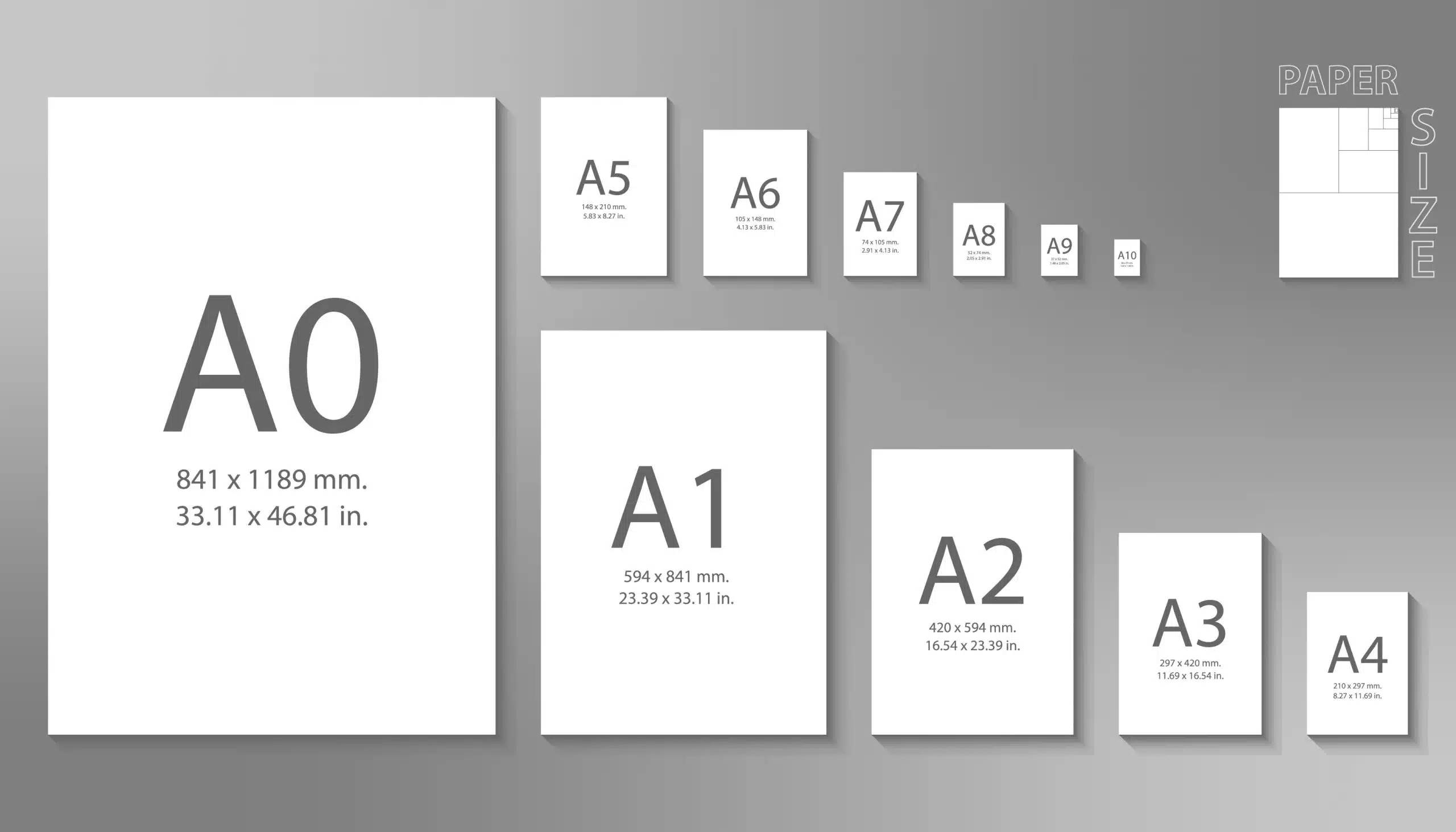
Size is often a conversation topic and this article will answer the question of whether A3 is bigger than A4. It seems easy, but there are more details to consider.
A3 is bigger! It’s 11.7 x 16.5 inches or 297 x 420 mm. A4 is 8.3 x 11.7 inches or 210 x 297 mm. Width and height are both bigger with A3.
Which one is best depends on what you need it for. A3 is best for posters, presentations, and architectural drawings that need lots of space. A4 is great for letters, resumes, and other printing that needs to be handled and stored easily.
A3 may be bigger, but it also needs more space for storage and transportation.
Explanation of A3 and A4
A3 and A4 are paper sizes used around the globe. A3 measures 11.7 x 16.5 inches. A4 is 8.3 x 11.7 inches. A3 is larger than A4 in width and height.
To get a better understanding of the sizes, let’s have a closer look. Here’s a comparison of A3 and A4 in a table:
| Paper Size | Width (inches) | Height (inches) |
|---|---|---|
| A3 | 11.7 | 16.5 |
| A4 | 8.3 | 11.7 |
More details: these paper sizes belong to the ISO 216 standard. It’s used internationally for printing.
A3 is suitable for posters, newsletters, and architectural plans. This is because it has a larger format, allowing more material on one page. A4 is commonly used for letters, resumes, and reports. Why? It has a compact, easy-to-read design.

Need help printing something?
Explore Catdi Printing’s expert services—from eye-catching custom posters (A3) to crisp professional documents (A4). Visit Catdi today and print sustainably with confidence! Get a quote.
Size Comparison: A3 vs A4
A3 and A4 are two popular paper sizes used globally. A3 is larger than A4, giving more space for printing and designing. Let’s look at a size comparison!
Table:
| A3 | A4 | |
|---|---|---|
| Width | 11.69 in | 8.27 in |
| Height | 16.54 in | 11.69 in |
A3 measures 11.69 inches in width and 16.54 inches in height. A4 is smaller at 8.27 inches by 11.69 inches. This difference allows for different document formats, such as posters, diagrams, or larger prints.
These two sizes belong to the ISO “A” series standard for paper measurements. This series follows a geometric progression, where each size is half the area of its predecessor.
Also, A3 paper size is a staple in print marketing, especially in industries like real estate, education, healthcare, and retail. Its larger format makes it ideal for creating eye-catching posters and detailed presentations. Conversely, A4 is the go-to size for brochures, flyers, newsletters, and everyday office documents, favored by businesses for its practicality and versatility. These paper sizes help companies effectively communicate and engage with their target audiences through diverse marketing materials.
Differences between A3 and A4
A3 and A4 are two common paper sizes – A3 being bigger. Let’s compare them to show the differences:
Dimensions:
- A3: 11.69 x 16.54 inches
- A4: 8.3 x 11.7 inches
Uses:
- A3: Posters, drawings, architectural plans
- A4: Letters, documents, brochures
Apart from size, these paper sizes are also used differently in various settings. For example, A3 is useful for creating posters, drawings & architectural plans. A4 is more suitable for everyday office tasks like letters, documents & brochures.
Pros and Cons of A3
Let’s take a more detailed look at the A3 paper size to better understand its practical applications and potential drawbacks. Here’s a comprehensive overview:
| Pros | Cons |
|---|---|
| Ample Space for Visuals: Ideal for posters, presentations, and technical drawings due to its larger dimensions, providing clarity and detailed representation | Higher Cost: A3 paper tends to be more expensive than standard A4, influencing both initial paper cost and printing expenses |
| Enhanced Visibility: Particularly beneficial for group presentations and materials where clear, detailed visuals are crucial | Storage Challenges: The larger size requires more physical storage, potentially posing inconvenience for bulk storage or smaller office spaces |
| Versatility: Can be easily folded into A4-sized booklets or effectively used in multi-page brochures, adding flexibility to marketing campaigns | Printer Compatibility: Many standard printers and copiers are not A3-compatible, necessitating specialized equipment and investments |
| Professional Appeal: Provides an impressive, professional appearance, enhancing the impact of marketing materials such as catalogs, brochures, and architectural blueprints | Larger Footprint: A3-compatible printers and devices generally occupy more office space due to their bulkier dimensions |
| Creative Freedom: Offers sufficient room for intricate designs, charts, infographics, and detailed visuals, making it highly favored by architects, designers, and marketers | Maintenance Costs: Printers capable of handling A3 paper usually incur higher ongoing maintenance expenses compared to those limited to A4 sizes |
Practical Applications
A3 paper is highly beneficial in several real-world scenarios, including:
- Posters and promotional displays for events
- Architectural and engineering blueprints
- Folded brochures and comprehensive marketing materials
Modern Advantages
Advancements in A3-compatible printers, such as Lexmark’s new 9-Series, have significantly improved efficiency, sustainability, and versatility. Modern A3 printers now integrate cloud services, advanced security, and energy-saving features, aligning well with contemporary workplace demands.
Digital Adaptation
A3’s dimensions translate effectively into high-resolution digital formats, boasting dimensions of 3508 x 2480 pixels at 300 dpi. This feature is especially critical for professional printing, graphic design, and high-quality image reproduction.
Environmental Considerations
Businesses today can choose eco-friendly A3 paper options, optimizing their use and reducing waste, thereby minimizing environmental impact.
Decision-Making Tips
When deciding between A3 and other sizes:
- Choose A3 for projects where visual impact and clarity are essential.
- Opt against A3 if portability, storage convenience, or budget constraints are primary concerns.
Engagement Suggestions
- Incorporating visuals such as side-by-side size comparisons (e.g., with a laptop or standard A4 sheet) can help contextualize the dimensions of A3 paper.
- Interactive tools allowing users to calculate and compare the cost-effectiveness of A3 versus A4 formats based on their specific project requirements can significantly enhance user engagement.
By considering these comprehensive insights, you can confidently decide whether the A3 size is the best choice for your specific needs and applications.
Pros and Cons of A4
A4 paper size is a popular norm in many nations. It has various pros and cons that professionals should consider when selecting the proper paper for their needs.
- Efficient and handy: A4 paper is well-known for its flexibility, as it can be quickly folded or cut to fit different purposes. Its dimensions (210 x 297 mm) make it suitable for printing documents like letters, reports, and invoices without taking up too much room.
- Compatibility: It is compatible with the majority of printers and copiers, making sure of smooth compatibility across multiple devices. This makes it a popular option for companies and individuals.
- Cost-efficient: A4 paper is usually more affordable when compared to other sizes, making it a cost-effective solution for bulk printing needs. Its abundance also adds to its affordability.
- Convenient storage: Because of its standardized dimensions, A4 paper can be kept efficiently in folders, binders, and filing cabinets with no difficulty. This assists in organizing paperwork effectively.
- International standard: A4 is the worldwide standard for paper size, which implies that documents printed on A4 can be readily exchanged between various countries without any compatibility issues.
Also, it’s significant to remember that while A4 is extensively used and has several advantages, there might be certain scenarios where other paper sizes could be more suitable depending on individual requirements. For example, bigger paper sizes like A3 provide more room for detailed graphics or layouts.
To sum up, the pros of using A4 are its efficiency, compatibility with printers and copiers, cost-effectiveness, convenient storage options, and international standardization. However, individual preferences and particular use cases may prompt some people or businesses to choose alternative paper sizes such as A3 when needed.
Emerging Printing Trends
Today, printing practices are evolving rapidly, with an emphasis on eco-friendly and sustainable printing. Businesses are increasingly prioritizing green practices, not only to enhance brand image but also to meet growing regulatory requirements and consumer expectations. Here are key trends shaping modern printing practices in a business context:
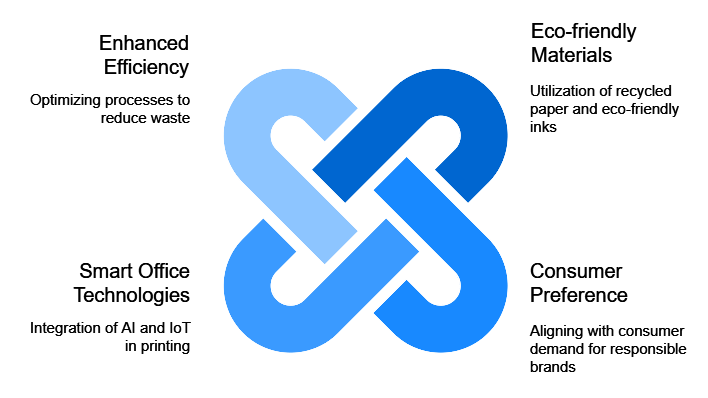
- Eco-friendly materials: Both A3 and A4 sizes can effectively utilize recycled paper and environmentally friendly inks, supporting businesses committed to reducing their environmental impact. Companies adopting these practices benefit from cost savings associated with waste reduction and improved market positioning.
- Consumer preference: Sustainable printing helps companies align with the growing consumer demand for responsible and ethical brands. Demonstrating commitment to sustainability can attract environmentally conscious consumers and strengthen customer loyalty.
- Smart office technologies: AI-driven printers and IoT integration optimize printing processes for A3 and A4 formats. These technologies can streamline operations, reduce manual tasks, and improve overall productivity, helping businesses to manage resources more efficiently.
- Enhanced efficiency: Multi-function printers powered by artificial intelligence automatically adjust settings for optimal print quality and reduced waste. This results in lower operational costs, improved document accuracy, and a significant reduction in paper and ink usage, which supports both sustainability goals and budget management.
- BONUS: Integrated sustainability practices: Businesses are incorporating comprehensive sustainability practices throughout their supply chains. Selecting vendors and partners committed to sustainable practices, such as Catdi Printing, can amplify these benefits, creating a fully integrated approach to responsible printing.
By embracing these emerging trends, businesses can improve operational efficiency, reduce their environmental footprint, and enhance their reputation as forward-thinking, responsible brands.
Conclusion
In conclusion, A3 is bigger than A4. This size comparison matters for printing, paper dimensions, and document layouts.
The A3 and A4 sizes belong to ISO 216. A3 is 297 × 420 millimeters (11.7 × 16.5 inches). A4 is 210 × 297 millimeters (8.3 × 11.7 inches). So, A3 offers more space.
This distinction has practical implications in industries like graphic design and printing. For posters or brochures, A3 is better. For documents such as letters or reports, A4 is more suitable.
Also, these size differences apply to digital displays and online content design. Starting with the right physical dimensions is important for scalability and visual aesthetics.
Frequently Asked Questions
FAQs about A3 and A4 Paper Sizes
Q: Is A3 bigger than A4?
A: Yes, A3 is bigger than A4. A3 paper measures 297 x 420 millimeters, while A4 paper measures 210 x 297 millimeters. A3 is twice the size of A4 in terms of area.
Q: Can I print A4 documents on A3 paper?
A: Yes, you can print A4 documents on A3 paper. A3 paper can accommodate A4 size content, but there will be some empty space around the edges. You may need to adjust the print settings to fit the content properly.
Q: Which paper size is commonly used for printing documents?
A: A4 paper is the most commonly used size for printing documents. It is the standard size in many countries and is widely compatible with printers and copiers. A3 paper is typically used for larger documents or for printing posters and graphics.
Q: Can I cut an A3 sheet to make it A4 size?
A: Yes, it is possible to cut an A3 sheet to make it A4 size. By halving the longer side of the A3 sheet, you can obtain two A4 sheets. However, it is important to ensure precise cutting to maintain the proper aspect ratio and dimensions.
Q: Are there any other paper sizes larger than A3?
A: Yes, there are paper sizes larger than A3. The next standard size, A2, is twice the size of A3. Additionally, there are larger sizes like A1, A0, and even larger formats commonly used for architectural or engineering drawings.
Q: Can I resize an A4 document to A3 without losing content?
A: Resizing an A4 document to A3 without losing content may require some adjustments. The aspect ratio of A3 is different from A4, so stretching the content to fit A3 may distort the proportions. It is advisable to design documents specifically for the desired paper size to ensure accurate and optimized printing.