Category: Marketing Tips

  • A3 and A4 – Which One is Larger?

    A3 and A4 – Which One is Larger?

    Size is often a conversation topic and this article will answer the question of whether A3 is bigger than A4. It seems easy, but there are more details to consider.

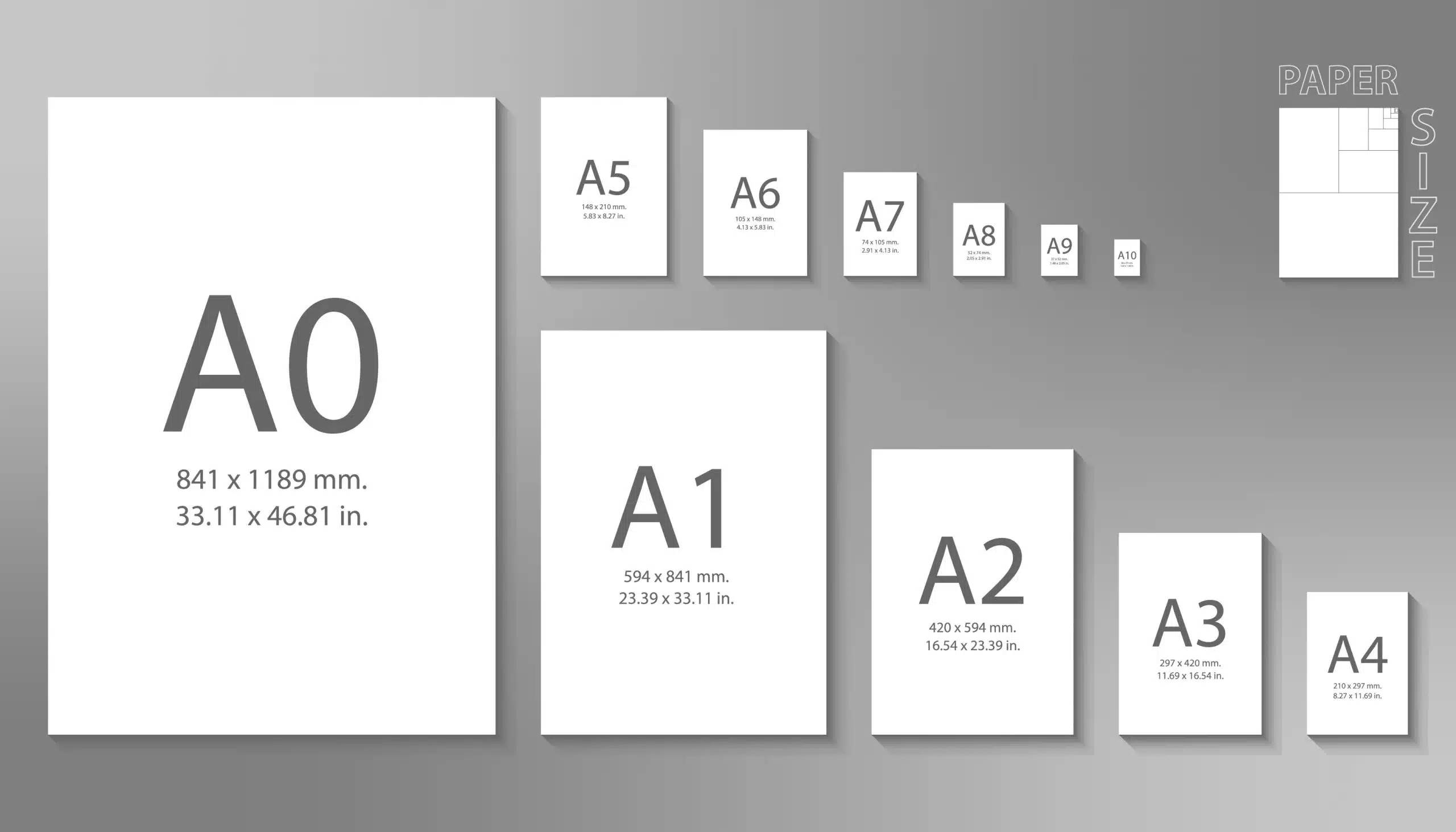
    A3 is bigger! It’s 11.7 x 16.5 inches or 297 x 420 mm. A4 is 8.3 x 11.7 inches or 210 x 297 mm. Width and height are both bigger with A3.

    Which one is best depends on what you need it for. A3 is best for posters, presentations, and architectural drawings that need lots of space. A4 is great for letters, resumes, and other printing that needs to be handled and stored easily.

    A3 may be bigger, but it also needs more space for storage and transportation.

    Explanation of A3 and A4

    A3 and A4 are paper sizes used around the globe. A3 measures 11.7 x 16.5 inches. A4 is 8.3 x 11.7 inches. A3 is larger than A4 in width and height.

    To get a better understanding of the sizes, let’s have a closer look. Here’s a comparison of A3 and A4 in a table:

    Paper SizeWidth (inches)Height (inches)
    A311.716.5
    A48.311.7

    More details: these paper sizes belong to the ISO 216 standard. It’s used internationally for printing.

    A3 is suitable for posters, newsletters, and architectural plans. This is because it has a larger format, allowing more material on one page. A4 is commonly used for letters, resumes, and reports. Why? It has a compact, easy-to-read design.

    Need help printing something?

    Explore Catdi Printing’s expert services—from eye-catching custom posters (A3) to crisp professional documents (A4). Visit Catdi today and print sustainably with confidence! Get a quote.

    Size Comparison: A3 vs A4

    A3 and A4 are two popular paper sizes used globally. A3 is larger than A4, giving more space for printing and designing. Let’s look at a size comparison!

    Table:

     A3A4
    Width11.69 in8.27 in
    Height16.54 in11.69 in

    A3 measures 11.69 inches in width and 16.54 inches in height. A4 is smaller at 8.27 inches by 11.69 inches. This difference allows for different document formats, such as posters, diagrams, or larger prints.

    These two sizes belong to the ISO “A” series standard for paper measurements. This series follows a geometric progression, where each size is half the area of its predecessor.

    Also, A3 paper size is a staple in print marketing, especially in industries like real estate, education, healthcare, and retail. Its larger format makes it ideal for creating eye-catching posters and detailed presentations. Conversely, A4 is the go-to size for brochures, flyers, newsletters, and everyday office documents, favored by businesses for its practicality and versatility. These paper sizes help companies effectively communicate and engage with their target audiences through diverse marketing materials.

    Differences between A3 and A4

    A3 and A4 are two common paper sizes – A3 being bigger. Let’s compare them to show the differences:

    Dimensions:

    • A3: 11.69 x 16.54 inches
    • A4: 8.3 x 11.7 inches

    Uses:

    • A3: Posters, drawings, architectural plans
    • A4: Letters, documents, brochures

    Apart from size, these paper sizes are also used differently in various settings. For example, A3 is useful for creating posters, drawings & architectural plans. A4 is more suitable for everyday office tasks like letters, documents & brochures.

    Pros and Cons of A3

    Let’s take a more detailed look at the A3 paper size to better understand its practical applications and potential drawbacks. Here’s a comprehensive overview:

    ProsCons
    Ample Space for Visuals: Ideal for posters, presentations, and technical drawings due to its larger dimensions, providing clarity and detailed representationHigher Cost: A3 paper tends to be more expensive than standard A4, influencing both initial paper cost and printing expenses
    Enhanced Visibility: Particularly beneficial for group presentations and materials where clear, detailed visuals are crucialStorage Challenges: The larger size requires more physical storage, potentially posing inconvenience for bulk storage or smaller office spaces
    Versatility: Can be easily folded into A4-sized booklets or effectively used in multi-page brochures, adding flexibility to marketing campaignsPrinter Compatibility: Many standard printers and copiers are not A3-compatible, necessitating specialized equipment and investments
    Professional Appeal: Provides an impressive, professional appearance, enhancing the impact of marketing materials such as catalogs, brochures, and architectural blueprintsLarger Footprint: A3-compatible printers and devices generally occupy more office space due to their bulkier dimensions
    Creative Freedom: Offers sufficient room for intricate designs, charts, infographics, and detailed visuals, making it highly favored by architects, designers, and marketersMaintenance Costs: Printers capable of handling A3 paper usually incur higher ongoing maintenance expenses compared to those limited to A4 sizes

    Practical Applications

    A3 paper is highly beneficial in several real-world scenarios, including:

    • Posters and promotional displays for events
    • Architectural and engineering blueprints
    • Folded brochures and comprehensive marketing materials

    Modern Advantages

    Advancements in A3-compatible printers, such as Lexmark’s new 9-Series, have significantly improved efficiency, sustainability, and versatility. Modern A3 printers now integrate cloud services, advanced security, and energy-saving features, aligning well with contemporary workplace demands.

    Digital Adaptation

    A3’s dimensions translate effectively into high-resolution digital formats, boasting dimensions of 3508 x 2480 pixels at 300 dpi. This feature is especially critical for professional printing, graphic design, and high-quality image reproduction.

    Environmental Considerations

    Businesses today can choose eco-friendly A3 paper options, optimizing their use and reducing waste, thereby minimizing environmental impact.

    Decision-Making Tips

    When deciding between A3 and other sizes:

    • Choose A3 for projects where visual impact and clarity are essential.
    • Opt against A3 if portability, storage convenience, or budget constraints are primary concerns.

    Engagement Suggestions

    • Incorporating visuals such as side-by-side size comparisons (e.g., with a laptop or standard A4 sheet) can help contextualize the dimensions of A3 paper.
    • Interactive tools allowing users to calculate and compare the cost-effectiveness of A3 versus A4 formats based on their specific project requirements can significantly enhance user engagement.

    By considering these comprehensive insights, you can confidently decide whether the A3 size is the best choice for your specific needs and applications.

    Pros and Cons of A4

    A4 paper size is a popular norm in many nations. It has various pros and cons that professionals should consider when selecting the proper paper for their needs.

    • Efficient and handy: A4 paper is well-known for its flexibility, as it can be quickly folded or cut to fit different purposes. Its dimensions (210 x 297 mm) make it suitable for printing documents like letters, reports, and invoices without taking up too much room.
    • Compatibility: It is compatible with the majority of printers and copiers, making sure of smooth compatibility across multiple devices. This makes it a popular option for companies and individuals.
    • Cost-efficient: A4 paper is usually more affordable when compared to other sizes, making it a cost-effective solution for bulk printing needs. Its abundance also adds to its affordability.
    • Convenient storage: Because of its standardized dimensions, A4 paper can be kept efficiently in folders, binders, and filing cabinets with no difficulty. This assists in organizing paperwork effectively.
    • International standard: A4 is the worldwide standard for paper size, which implies that documents printed on A4 can be readily exchanged between various countries without any compatibility issues.

    Also, it’s significant to remember that while A4 is extensively used and has several advantages, there might be certain scenarios where other paper sizes could be more suitable depending on individual requirements. For example, bigger paper sizes like A3 provide more room for detailed graphics or layouts.

    To sum up, the pros of using A4 are its efficiency, compatibility with printers and copiers, cost-effectiveness, convenient storage options, and international standardization. However, individual preferences and particular use cases may prompt some people or businesses to choose alternative paper sizes such as A3 when needed.

    Emerging Printing Trends

    Today, printing practices are evolving rapidly, with an emphasis on eco-friendly and sustainable printing. Businesses are increasingly prioritizing green practices, not only to enhance brand image but also to meet growing regulatory requirements and consumer expectations. Here are key trends shaping modern printing practices in a business context:
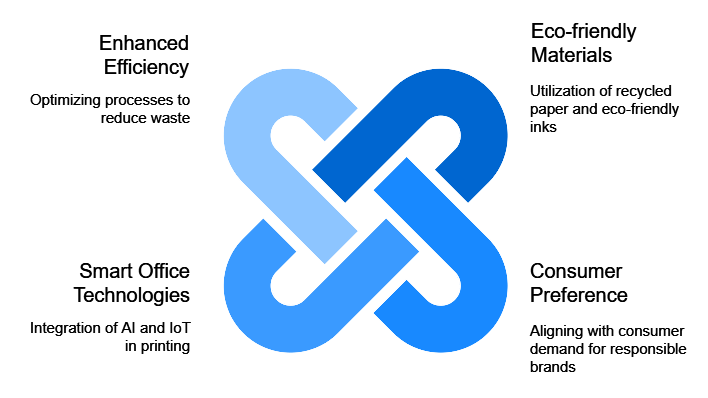
    Graph containing the Emerging Printing Trends for A3 and A4 -Catdi printing
    • Eco-friendly materials: Both A3 and A4 sizes can effectively utilize recycled paper and environmentally friendly inks, supporting businesses committed to reducing their environmental impact. Companies adopting these practices benefit from cost savings associated with waste reduction and improved market positioning.
    • Consumer preference: Sustainable printing helps companies align with the growing consumer demand for responsible and ethical brands. Demonstrating commitment to sustainability can attract environmentally conscious consumers and strengthen customer loyalty.
    • Smart office technologies: AI-driven printers and IoT integration optimize printing processes for A3 and A4 formats. These technologies can streamline operations, reduce manual tasks, and improve overall productivity, helping businesses to manage resources more efficiently.
    • Enhanced efficiency: Multi-function printers powered by artificial intelligence automatically adjust settings for optimal print quality and reduced waste. This results in lower operational costs, improved document accuracy, and a significant reduction in paper and ink usage, which supports both sustainability goals and budget management.
    • BONUS: Integrated sustainability practices: Businesses are incorporating comprehensive sustainability practices throughout their supply chains. Selecting vendors and partners committed to sustainable practices, such as Catdi Printing, can amplify these benefits, creating a fully integrated approach to responsible printing.

    By embracing these emerging trends, businesses can improve operational efficiency, reduce their environmental footprint, and enhance their reputation as forward-thinking, responsible brands.

    Conclusion

    In conclusion, A3 is bigger than A4. This size comparison matters for printing, paper dimensions, and document layouts.

    The A3 and A4 sizes belong to ISO 216. A3 is 297 × 420 millimeters (11.7 × 16.5 inches). A4 is 210 × 297 millimeters (8.3 × 11.7 inches). So, A3 offers more space.

    This distinction has practical implications in industries like graphic design and printing. For posters or brochures, A3 is better. For documents such as letters or reports, A4 is more suitable.

    Also, these size differences apply to digital displays and online content design. Starting with the right physical dimensions is important for scalability and visual aesthetics.

    Frequently Asked Questions

    FAQs about A3 and A4 Paper Sizes

    Q: Is A3 bigger than A4?

    A: Yes, A3 is bigger than A4. A3 paper measures 297 x 420 millimeters, while A4 paper measures 210 x 297 millimeters. A3 is twice the size of A4 in terms of area.

    Q: Can I print A4 documents on A3 paper?

    A: Yes, you can print A4 documents on A3 paper. A3 paper can accommodate A4 size content, but there will be some empty space around the edges. You may need to adjust the print settings to fit the content properly.

    Q: Which paper size is commonly used for printing documents?

    A: A4 paper is the most commonly used size for printing documents. It is the standard size in many countries and is widely compatible with printers and copiers. A3 paper is typically used for larger documents or for printing posters and graphics.

    Q: Can I cut an A3 sheet to make it A4 size?

    A: Yes, it is possible to cut an A3 sheet to make it A4 size. By halving the longer side of the A3 sheet, you can obtain two A4 sheets. However, it is important to ensure precise cutting to maintain the proper aspect ratio and dimensions.

    Q: Are there any other paper sizes larger than A3?

    A: Yes, there are paper sizes larger than A3. The next standard size, A2, is twice the size of A3. Additionally, there are larger sizes like A1, A0, and even larger formats commonly used for architectural or engineering drawings.

    Q: Can I resize an A4 document to A3 without losing content?

    A: Resizing an A4 document to A3 without losing content may require some adjustments. The aspect ratio of A3 is different from A4, so stretching the content to fit A3 may distort the proportions. It is advisable to design documents specifically for the desired paper size to ensure accurate and optimized printing.

  • Can Prepaying for Marketing Expenses Help You Save on Taxes?

    Can Prepaying for Marketing Expenses Help You Save on Taxes?

    As the end of the year approaches, small business owners are exploring strategies to reduce their tax burden while preparing for a strong start in the upcoming year. One effective yet often overlooked approach is prepaying for marketing expenses.

    By paying now for next year’s services, businesses can lower their taxable income for the current year, lock in current pricing, and ensure they’re set up for success when the new year begins under the cash basis method of accounting. To take full advantage of this strategy, it’s important to understand how the IRS’s 12-Month Rule applies to prepaid expenses.

    Let’s dive into what the rule entails, practical examples of how it works, and how prepaying for marketing with Catdi Printing can benefit your business.

    What is the IRS 12-Month Rule?

    The 12-Month Rule is a tax guideline from the IRS that allows businesses to deduct prepaid expenses in the year they are paid if the benefit period meets two key criteria for cash basis taxpayers:

    1. The benefit period is crucial for determining tax deductions. 12 months or less, AND
    2. The benefit period does not extend beyond the end of the next tax year.

    For example, if you prepay for marketing services in December 2024 and those services are delivered by December 2025, you can deduct the entire amount on your 2023 tax return. However, if the benefit period extends beyond December 2025, only the portion used within the eligible period can be deducted.

    Why Prepaying Marketing Expenses Makes Sense

    Prepaying marketing expenses isn’t just about tax savings—it’s a forward-thinking strategy that helps businesses plan for the future while optimizing their current financial situation.

    Lower Your Taxable Income

    Reducing your taxable income is the most immediate benefit of prepaying marketing expenses. By deducting these expenses in the current year, you can significantly lower your tax liability, especially if your business has had a profitable year.

    Lock in Current Rates

    Inflation and rising costs can eat into your marketing budget. Prepaying allows you to secure today’s prices for services you know you’ll need, protecting your budget from potential price increases in the new year. Future postage rates would be the only variable in prepaid marketing services as it tends to go up.

    Prepare for Success

    Starting the new year with prepaid marketing services ensures you’re ready to hit the ground running. No scrambling for resources or last-minute planning—your campaigns are primed to launch when you need them.

    Utilize Remaining Budget Wisely

    If you have unspent funds in your current year’s budget, prepaying for marketing is a smart way to allocate those resources now. Rather than leaving money unused, you can invest it in services that drive growth in the months ahead.

    Marketing Services You Can Prepay for with Catdi Printing

    Catdi Printing offers a wide range of marketing services that qualify under the 12-Month Rule, allowing you to reduce taxes and prepare for success.

    • Direct Mail Campaigns: Prepay for mailing lists, design, printing, and postage to execute targeted or Every Door Direct Mail (EDDM) campaigns in the coming year.
    • Print Collateral: Secure essential materials like business cards, brochures, postcards, and flyers to keep your branding consistent and professional.
    • Website Design and Updates: Invest in a refreshed website or enhanced features to boost your online presence and user experience.
    • Graphic Design Services: Lock in hours for creating custom promotional materials such as logos, ads, and flyers.
    • Large-Format Printing: Prepay for banners, trade show displays, and signage for events or storefront promotions.

    Real-World Examples of the 12-Month Rule

    To better understand how the 12-Month Rule applies to marketing expenses, here are some practical scenarios for cash basis taxpayers:

    • A company prepays in December 2023 for a direct mail campaign scheduled for January through March 2024. Since the benefit period is less than 12 months and ends within the next tax year, the entire expense is deductible in 2023.
    • A business invests in a website redesign in December 2023, with completion expected by June 2024. The full cost qualifies for deduction on the 2023 tax return because the service period falls within the rule’s criteria.
    • A company prepays for 5,000 brochures in December 2023 to be distributed throughout 2024. The cost is deductible because the benefit period remains within the next tax year.
    • A business signs a two-year advertising contract in December 2024. Only the portion covering services from January to December 2025 is deductible in 2024, with the remainder deducted in subsequent years.

    Benefits of Prepaying Marketing Expenses

    Immediate Tax Savings

    Prepaid marketing expenses reduce taxable income for the current year, lowering the overall tax burden. This is especially beneficial for businesses experiencing higher-than-usual profits.

    Simplified Budgeting

    Prepaying ensures predictable costs for key marketing services, helping you avoid budget surprises in the new year.

    Focused Campaign Planning

    With prepayments secured, businesses can focus on strategy and execution rather than financial logistics, ensuring campaigns are impactful and timely.

    Enhanced ROI

    By locking in services and rates, you can maximize your return on investment (ROI) while avoiding potential price increases.

    Tips for Maximizing Prepaid Marketing Tax Benefits

    • Document All Business Expenses: Maintain detailed invoices and receipts to provide to your tax professional. Proper documentation ensures compliance with IRS guidelines.
    • Consult a Tax Advisor: Work with a CPA to confirm which expenses qualify under the 12-Month Rule and how to maximize deductions.
    • Plan Strategically: Focus on services that align with your marketing goals and will be used within the qualifying period.
    • Bundle Services for Savings: Catdi Printing offers bundled packages for direct mail, graphic design, and print collateral, allowing you to save money while securing multiple services.

    Why Choose Catdi Printing?

    Catdi Printing makes prepaying for marketing services simple, transparent, and effective.

    • Custom Packages: Tailored to your business needs, combining direct mail, print collateral, website updates, and more.
    • IRS Compliance: We provide detailed and transparent records to ensure your prepayments meet IRS requirements.
    • Comprehensive Solutions: From print to digital marketing, we’re your one-stop shop for everything your business needs to thrive.
    • Expert Guidance: Our team works closely with you to create a marketing strategy that aligns with your goals while maximizing tax savings.

    Prepaying for marketing expenses isn’t just a smart tax-saving strategy—it’s an investment in your business’s future. By leveraging the IRS’s 12-Month Rule and focusing on eligible business expenses, you can lower your tax burden while setting yourself up for a successful new year.

    Whether you’re planning direct mail campaigns, refreshing your website, or investing in print collateral, Catdi Printing offers the services and expertise you need. Contact us today to learn more about our prepaid marketing packages and discover how we can help your business save on taxes while preparing for growth in 2025!


    Disclaimer

    This article is intended for informational purposes only and does not constitute financial, legal, or tax advice. IRS regulations, including the 12-Month Rule, may vary depending on your individual circumstances. Before making financial decisions, consult a qualified tax professional or CPA to ensure compliance and maximize your tax savings.

  • Top 5 Mailing List Companies for Direct Mail

    Top 5 Mailing List Companies for Direct Mail

    When it comes to direct mailing, the foundation of success lies in your mailing list. A well-curated mailing list ensures your message reaches the right audience, whether you’re running a political mail list campaign or launching a local print marketing initiative. But with so many providers out there, how do you choose the right one?

    To make your decision easier, we’ve compiled a list of the top 5 mailing list companies for direct mail. These companies stand out for their accuracy, customer service, and ability to cater to unique campaign needs. And yes, Catdi Printing made the list. What can I say? We’re like the secret sauce in your grandma’s famous recipe—you don’t want to leave us out!

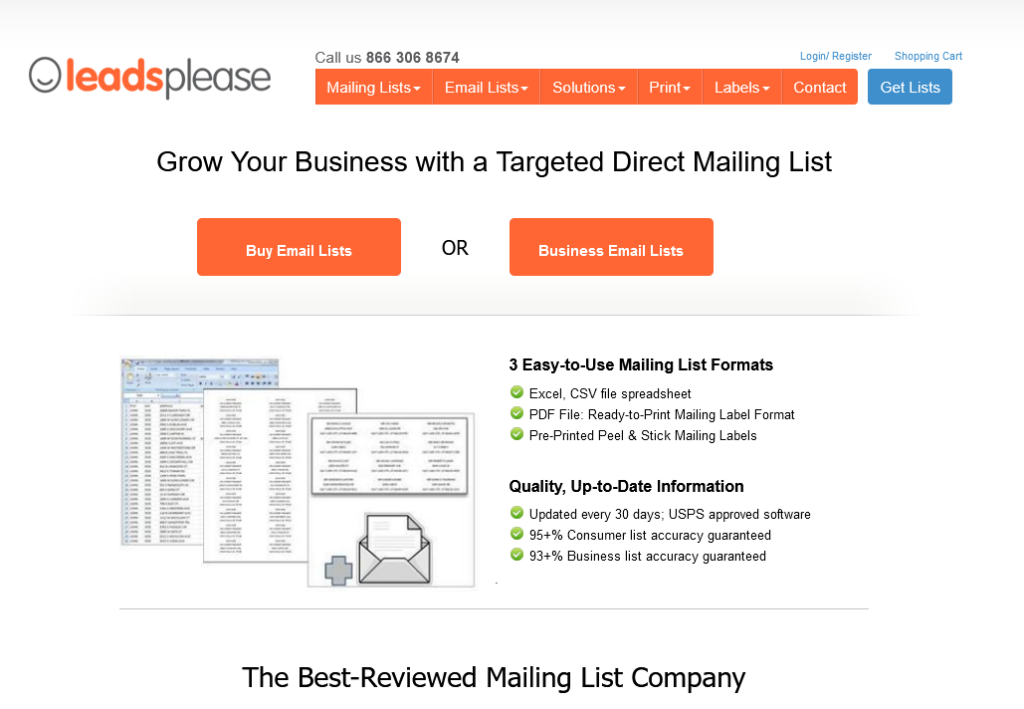
    LeadsPlease

    LeadsPlease is all about simplicity and speed, making it a favorite for businesses that need a mailing list without the hassle. Their user-friendly platform lets you create targeted mailing lists for both consumer and business audiences.

    Leads Please

    What They Offer:

    • Business Mailing Lists: Perfect for targeting specific industries, company sizes, or locations.
    • Consumer Mailing Lists: Ideal for reaching individuals based on demographics like age, income, and interests.

    Why It Matters:

    • Helps you focus your campaign on the right audience.
    • Provides quick, clear data to support marketing decisions.

    Best For: Businesses looking for a quick, no-fuss way to build a list

    Considerations: While their mailing list services are top-notch, their printing offerings are somewhat limited. However, their lists integrate seamlessly with other providers for your commercial print marketing needs.

    Caldwell List Company

    Caldwell List Company specializes in creating highly customizable mailing lists tailored to specific campaign goals. Whether you’re targeting local businesses, niche markets, or crafting a political mail list, Caldwell has the tools and expertise to help.

    Caldwell Leads

    What They Offer:

    • Business Mailing Lists: Refine your audience by industry, company revenue, or employee count to enhance your prospecting.
    • Specialty Lists: Create targeted lists for niche markets, nonprofits, or high-value donors.

    Why It Matters:

    • Tailored lists improve ROI by focusing on your most relevant audience.
    • List managers guide you in making data-driven decisions.

    Best For: Organizations with unique or complex targeting needs

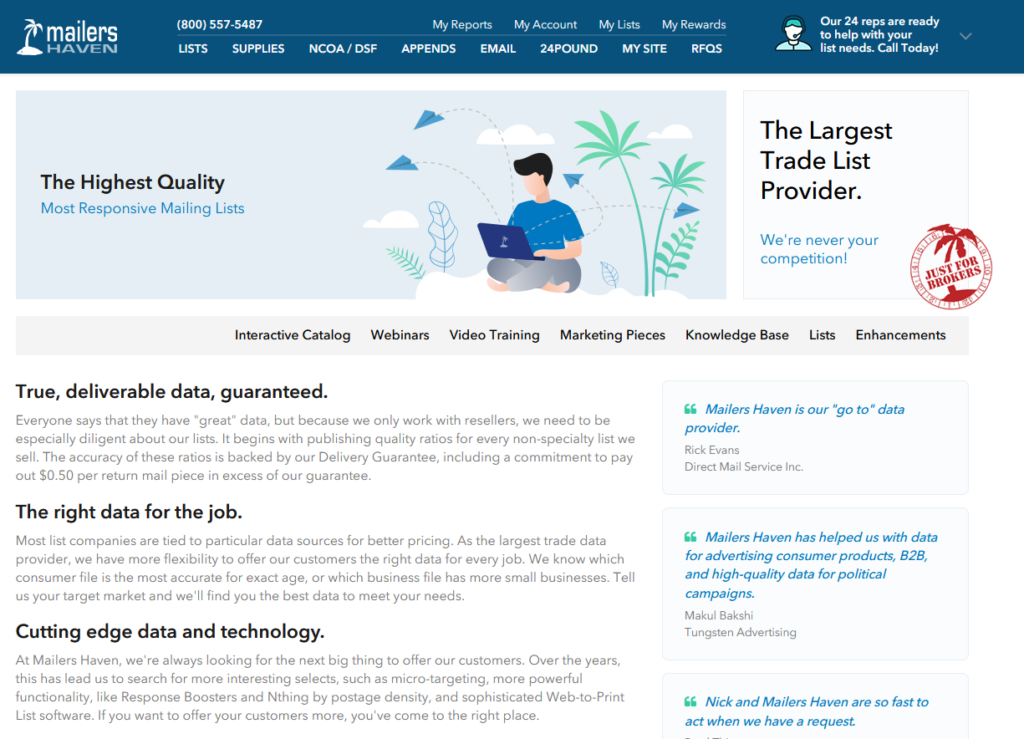
    Mailers Haven

    Mailers Haven is a trade-only provider that delivers exceptional quality and reliability in mailing lists. At Catdi Printing, we use Mailers Haven to augment our own data, ensuring our campaigns are powered by industry-class information.

    Mailers Haven

    What They Offer:

    • Consumer and Business Data: Reliable and responsive lists for targeted direct mailing campaigns.
    • Data Enhancement: Clean and update existing lists to maximize performance for your direct marketing efforts.

    Why It Matters:

    • Industry-class data ensures your campaigns perform better.
    • Data enhancement helps you make smarter marketing decisions.

    Best For: Companies prioritizing high-performing, responsive data for their campaigns

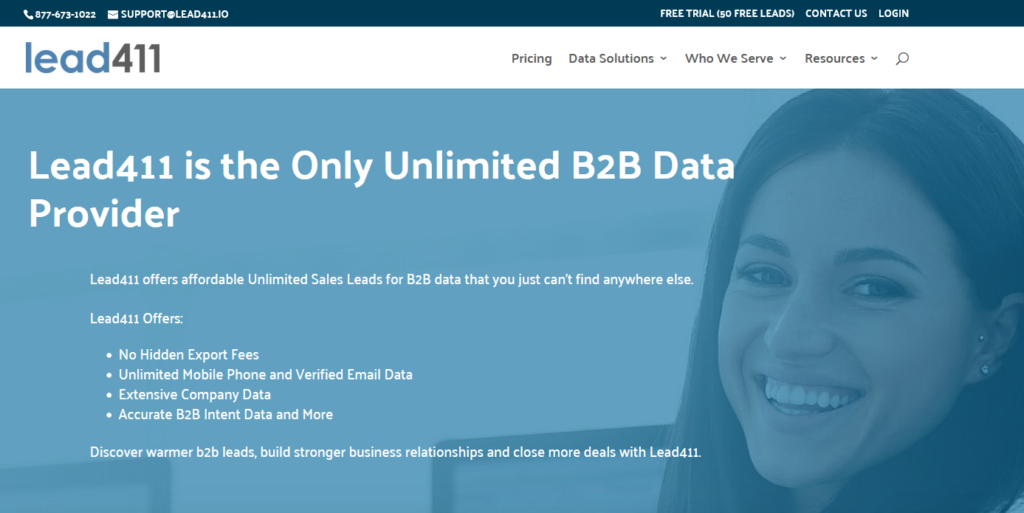
    Leads 411

    When you need laser-focused data, Leads 411 is the answer.

    Lead 411

    What They Offer:

    • Industry-Specific Lists: Focus on real estate agents, healthcare professionals, or other niche markets.
    • Custom Data Solutions: Perfect for B2B campaigns needing precision targeting.

    Why It Matters:

    • Helps you identify and connect with hard-to-reach audiences.
    • Custom solutions align perfectly with specialized campaigns.

    Best For: Businesses requiring precise data targeting specific industries or audiences

    Catdi Printing

    And now, the star of the show—Catdi Printing! We’re your one-stop shop for personalized mailing lists and direct mailing solutions. At Catdi, we don’t just provide lists; we help you build business lists that deliver results.

    Catdi Printing

    What We Offer:

    • Tailored Mailing Lists: Business, consumer, and political mail lists customized to your needs.
    • Integrated Solutions: Combine mailing lists with print, design, and distribution services.

    Why It Matters:

    • Seamless integration saves time and ensures consistency.
    • Personalized support helps you make the best decisions for your campaign.

    Best For: Businesses looking for a boutique experience with personalized service

    Pro Tip: Our team works with Mailers Haven to enhance our data quality, combining their robust lists with our expertise to create campaigns that truly perform.

    Why Mailing List Providers Matter

    Your mailing list is the backbone of your marketing strategy. Business and consumer mailing lists help you make smarter decisions by targeting audiences with precision. Providers like LeadsPlease and Mailers Haven focus on reliability and simplicity, while Leads 411 and Caldwell List Company excel in customization and niche targeting.

    Catdi Printing takes it a step further by combining mailing lists with full-service printing and mailing solutions. We’re here to make sure your campaigns don’t just reach people—they leave a lasting impression.

    Ready to take your direct mail campaigns to the next level? Let Catdi Printing be your partner in creating impactful marketing strategies. Learn more about our direct mailing services and start connecting with your audience today!

  • How To Use A Digital Business Card For Effective Networking

    How To Use A Digital Business Card For Effective Networking

    Imagine this: you’re at a buzzing networking event, shaking hands and swapping business cards like a pro. By the end of the night, your wallet is bursting with a rainbow of tiny paper rectangles, and you feel like you’ve conquered the networking game. But fast forward a few days, and half those cards have mysteriously vanished—probably off to the same secret lair as lost socks and spare pen caps.

    Traditional business cards are undeniably classic, and let’s be real, there’s something satisfying about handing someone a sleek, well-designed card. But they do have their limitations—like being accidentally left in someone’s pocket during a laundry cycle. Enter digital business cards: the modern upgrade that keeps your connections safe, organized, and ready to impress at a moment’s notice.

    In this article, we’ll explore how digital business cards complement your networking efforts and share tips to make the most of this innovative tool. Think of it as leveling up your connection game without giving up the charm of paper cards. Ready? Let’s dive in!

    Understanding Digital Business Cards

    A digital business card is a modern tool for networking. It’s an electronic form of your traditional paper card but stored on your phone, a cloud, or a specialized app. Unlike paper cards, you can share these digital versions through email, QR codes, or even a simple link during conversations.

    How They Differ From Traditional Paper Cards

    Digital cards stand apart because they never run out and can’t be lost or damaged. You can update them anytime, ensuring your contacts always have your latest information. This is a stark contrast to paper cards that become outdated or useless once the details change or they run out.

    Benefits Of Digital Business Cards

    The benefits of digital business cards are significant. Firstly, they’re sustainable as they cut down on paper waste. This is a big plus for the environment. They’re also cost-effective since you don’t need to print new batches when your details change or you run out. 

    Lastly, their updatable nature means your network stays informed with real-time updates about any change in job title, address, or contact number. This flexibility makes digital business cards a powerful tool in today’s fast-paced professional world.

    Creating Your Digital Business Card

    Choosing the right platform is crucial for creating your digital business card. Look for features that suit your unique needs. Look for user reviews and compare features such as customization options and integration capabilities. Select a platform that aligns with your professional image and networking goals.

    Design Your Card

    When designing your digital business card, include essential elements such as your contact information, social media profiles, and a company logo. Ensure the design is clean and professional. The layout should allow quick scanning of information, making it easy for contacts to find what they need.

    Optimize For Usability

    To enhance usability, incorporate features like QR codes that link directly to your digital card. Opt for simple, intuitive layouts that are easy to navigate. Remember, the goal is to make it as easy as possible for recipients to access and use your information without any hassle.

    These steps will help you create a digital business card that not only looks great but is also functional and effective in building and maintaining your professional network.

    Sharing Your Digital Business Card

    There are several innovative methods to share your digital business card that ensure you never miss a networking opportunity. QR codes can be displayed on your phone, allowing others to scan and instantly receive your card. 

    Embedding your card in your email signature ensures every email sent can expand your professional network. Additionally, Near Field Communication (NFC) technology lets others tap their NFC-enabled devices to your smartphone or NFC tag to access your digital card.

    Best Practices For Digital Exchanges

    When exchanging digital business cards, adhering to certain etiquettes is essential to optimize the process and ensure successful connections. Always seek permission before sharing your digital card, whether at live events or during online meetings. This respectful approach demonstrates your consideration for others’ privacy and readiness to establish a meaningful connection.

    It’s equally important to keep your digital business card up-to-date. Regular updates to your card reflect your professionalism and reliability, reassuring new contacts that they have the most current information about you.

    In addition to these practices, personalize your interaction when sharing your digital card. Mention a detail or topic discussed during your conversation to reinforce the connection and make your interaction memorable. 

    Also, be mindful of the platform or method you use to send your card; choose the most appropriate and effective method based on the context of your meeting or the preferences of the recipient. 

    By employing these sharing techniques and best practices, you ensure your digital business card not only reaches a wide audience but does so in a manner that fosters positive professional relationships.

    https://stock.adobe.com/au/images/business-meeting-in-lobby-of-colorful-modern-office-space/166747277

    Leveraging Digital Business Cards For Networking Success

    Maximize your networking efficiency by syncing your digital business card with other digital tools. Platforms such as LinkedIn allow you to seamlessly integrate your digital card into your profile, enhancing your professional presence. 

    Syncing with Customer Relationship Management (CRM) systems can automate the addition of new contacts directly from your digital card, ensuring no valuable connection slips through the cracks. This integration facilitates a smoother flow of information and more organized contact management.

    Tracking And Follow-Up

    Utilize the analytics features of your digital business card to track interactions and gauge the impact of your networking efforts. These tools can show you how many times your card has been viewed or saved, providing insights into which connections are most engaged. 

    Prompt follow-up is crucial after sharing your card. Send a personalized message or email to reinforce the connection, using the information from your card’s analytics to tailor the conversation. 

    This timely follow-up demonstrates your commitment to the new relationship and can significantly increase the effectiveness of your networking.

    By strategically integrating and utilizing your digital business card, you ensure it becomes a powerful tool in your networking arsenal, helping to forge and reinforce valuable professional connections.

    Digital business cards are transforming networking practices by offering a reliable, efficient, and eco-friendly way to manage professional connections. Their ease of sharing and instant updating eliminates the limitations of traditional paper cards, ensuring your contact information is always just a tap away for your network.

    These cards don’t just simplify sharing—they revolutionize connection management. With digital cards, you can keep an up-to-date and organized database of your contacts, accessible anytime, anywhere. No more scrambling to find a lost card or worrying about outdated information.

    Whether you’re looking to embrace a digital-first approach or combine digital cards with traditional materials, Catdi Printing is here to help. We specialize in both high-quality traditional business cards that leave a lasting impression and digital business card solutions to keep you ahead in today’s tech-driven world. Ready to elevate your networking game? Let’s get started!

  • What is Direct Marketing? A Guide for Small Businesses

    What is Direct Marketing? A Guide for Small Businesses

    Hey there, business owners! Carlos Alonso here. You might know me as one of the founders of Catdi Printing—where my caffeine intake fuels more than just high-quality print marketing materials! Today, I’m here to guide you through direct marketing, one of the most effective ways to reach customers and grow your business. Direct marketing is all about delivering a clear marketing message to your audience. connecting with your audience personally, tracking results, and adjusting your approach based on what works. Let’s jump in and explore direct mail, print collateral, and other powerful direct marketing tools that can help take your business to new heights.

    What is Direct Marketing?

    Direct marketing is all about delivering targeted messages directly to your audience without relying on third-party channels. This means reaching your customers through mail, email, SMS, or online ads, giving you complete control over the message, timing, and customer experience. For small businesses, direct marketing can be especially powerful because it’s measurable, customizable, and helps you reach specific customer groups. Direct marketing campaigns have clear goals—whether it’s promoting a product, encouraging sales, or generating leads. And unlike broader forms of marketing, you can track responses, analyze results, and refine your approach for maximum return on investment (ROI). Let’s dive into some of the best direct marketing methods, starting with one of my favorites (and no, it’s not coffee): direct mail and print media advertising.

    Direct Mail is a type of direct marketing that can effectively reach your target audience.: A Classic Choice with Modern Power

    Direct mail may sound old-school, but trust me, it’s still a powerhouse! This form of direct marketing has proven effective for small businesses because it’s Tangible, memorable, and has a high engagement rate, direct response marketing can significantly boost your campaign’s effectiveness.. Here’s why direct mail should be at the top of your marketing toolkit:

    • High ROI: Direct mail boasts one of the highest ROIs in marketing, often outperforming digital channels. People trust mail more than many digital ads, which translates to higher response rates and a stronger connection with your brand.
    • Clear Conversion Tracking: Use tools like unique URLs, QR codes, and special offer codes to track how many customers respond to your direct mail campaigns. Curious about the benefits of different types of direct mail? Check out our guide on EDDM vs. Direct Mail Saturation Rates for the details.
    • Ideal for Targeted Campaigns: Direct mail lets you segment your audience based on location, interests, purchasing history, or demographics. Tailoring your message to each group ensures you’re speaking directly to their needs, making your campaign more effective.

    Pro Tip: Include print collateral, like brochures or postcards, that showcase your brand’s story or highlight a promotional seasonal promotion. These items stay in the hands of customers longer, giving your message lasting power.

    Whether you’re sending postcards, flyers, or coupons, direct mail gets you literally “in the hands” of your customers. It’s a fantastic way to build connections and stand out from the crowd through effective marketing materials.

    Other Effective Direct Marketing Options

    While direct mail is amazing, there are other direct marketing channels that work wonders too. Here are some options that can complement your direct mail efforts and expand your reach.

    1. Email Marketing

    Email marketing is versatile and budget-friendly, perfect for small businesses. With email, you can reach a large audience while still adding that personal touch. It’s great for newsletters, product announcements, and special offers. Plus, you can utilize various types of direct marketing strategies to enhance your outreach.

    • Reach customers instantly
    • Track opens, clicks, and conversions to measure the effectiveness of your direct response marketing efforts.
    • Segment audiences for targeted messaging

    Make sure your emails offer value to keep your readers engaged and connected with your brand.

    2. SMS Marketing

    With sky-high open rates, SMS marketing is ideal for urgent updates, flash sales, and appointment reminders, making it a powerful direct response tool. Just remember to get permission first! This approach works best when messages are short, direct, and offer immediate value to your customers.

    3. Social Media Ads

    Platforms like Facebook, Instagram, and LinkedIn offer precise targeting for direct marketing. With social media ads, you can reach your ideal audience based on interests and behaviors, with ads that link directly to your site or landing pages.

    4. Pay-Per-Click (PPC) Advertising

    PPC ads on search engines, like Google Ads, are ideal for driving traffic to your website and enhancing your marketing message. PPC lets you target keywords relevant to your business, reaching customers actively searching for products or services like yours.

    5. Door Hangers and Flyers

    For local businesses, printed materials like door hangers and flyers are tried-and-true methods. They’re great for neighborhood marketing And direct selling strategies are ideal for reaching nearby customers. Real estate agents, cleaning services, and home improvement companies can benefit from this approach by reaching customers right on their doorstep.

    Pro Tip: Combine print collateral with digital offers. For example, include a flyer with a QR code linking to an online discount or free download—bridging print and digital marketing for greater impact.

    Why Direct Marketing Works for Small Businesses

    Direct marketing is a game-changer for small businesses, offering a way to connect with customers on a personal level and inspire real action. By speaking directly to your target audience with clear calls to action (CTAs) in every message, direct marketing encourages customers to respond immediately—whether they’re visiting your store, requesting a quote, or signing up for your newsletter.

    Here’s why direct marketing is so effective for small businesses:

    • Immediate Responses: With direct marketing, clear CTAs lead customers to take quick action, like visiting your store, calling for a quote, or engaging with your website.
    • Easily Trackable Results: Direct marketing provides measurable outcomes. Track responses from specific campaigns—like postcard mailers or email clicks—and gain insights into what works for your audience.
    • Budget-Friendly and Scalable: Direct marketing fits both small and large budgets. Start small with targeted mail or digital ads, and easily scale up as your business grows.
    • Tailored for Key Industries:
      • Healthcare: Keep patients informed about new services, upcoming appointments, or health tips through personalized mail or emails.
      • Political Campaigns: Reach voters effectively with personalized messaging during election season through targeted mail, encouraging engagement and awareness.
    • Customizable Campaigns: Direct marketing allows you to tailor your approach. Adjust your messaging, design, and offers to appeal directly to your ideal audience.

    Direct marketing’s flexibility, affordability, and ability to foster meaningful connections make it an ideal choice for small businesses seeking growth, engagement, and brand loyalty.

    Getting Started with Direct Marketing

    Starting a direct marketing campaign is simpler than it might seem. First, define your goal, whether it’s increasing brand awareness, driving sales, or generating leads. Next, choose the marketing channels that best align with your audience. For example, if you want to reach local customers, consider direct mail or door hangers. If you’re targeting a younger audience, email or social media ads might be a better fit than traditional indirect marketing methods. Finally, track your results. Use unique codes, links, or other tracking methods to measure success. Direct marketing thrives on data, so use what you learn to improve your strategy and achieve even better results next time.

    How Catdi Printing’s Direct Marketing Services Can Work for You

    Direct marketing offers powerful tools for small businesses to connect with customers directly. From direct mail to digital options like email and SMS, these methods help you reach your audience and inspire action. Remember, the key to successful direct marketing is to keep your messaging clear, targeted, and valuable. If you’re ready to get started, Catdi Printing can help bring your direct mail campaigns to life. With options like postcards, EDDM, and more, we’re here to support you with a custom campaign that drives results. Let’s work together to make your marketing strategy a success—and maybe I’ll even share my secret coffee blend to keep those creative ideas flowing!

  • How To Develop A Project Plan For Complex Projects

    How To Develop A Project Plan For Complex Projects

    When managing complex printing projects, a well-thought-out plan isn’t just helpful—it’s essential. Whether it’s a multi-step direct mail campaign, coordinating large-scale print production across various formats, or handling a high-volume order with tight deadlines, complex print projects come with high stakes and numerous moving parts.

    Creating a detailed project plan can make all the difference, guiding your team toward successful outcomes while minimizing potential risks. This proactive approach also helps keep your customers informed and reassured, knowing that every aspect of their project is managed with precision. If you’re looking to streamline an upcoming complex print project, read on to learn how effective planning can lead to a smooth, successful process. Read on.

    Understand The Project’s Scope

    The first step in developing a project plan is to fully understand the project’s scope. Before diving into timelines, budgets, or tasks, you need a clear grasp of the project’s goals, limitations, and required resources.

    Begin by identifying objectives and goals. Each objective should be tied to the overarching goal to keep everyone aligned on the project’s purpose. Next, determine what resources you’ll need to achieve these goals, from team members to equipment and technology. Complex projects oftentimes involve cross-functional teams, specialized equipment, or external expertise. Make sure you have a list of all these resources to prevent future gaps.

    And as you move forward, don’t forget to acknowledge budget limits, time constraints, regulatory requirements, and other restrictions early on. Understanding these limitations from the beginning will shape your plan and help you avoid unrealistic expectations.

    Set Clear Project Milestones And Deliverables

    For complex projects, milestones are essential for breaking down work into manageable segments. They provide checkpoints to gauge progress and maintain momentum.

    Define significant points in the project that represent completed phases or essential achievements. For instance, in software development, initial design, testing phases, and launch readiness can each serve as a milestone.

    Next, set deliverables. Each milestone should be paired with a deliverable—a tangible output, like a finished blueprint or prototype. These deliverables act as proof of progress, providing clarity on what needs to be achieved before moving to the next stage. To keep track of these, you and your project team can take advantage of a free online Gantt chart and other useful open-source project management tools available on the web.

    Keep in mind to collaborate with key stakeholders when setting milestones to ensure alignment on expectations. This communication builds trust and ensures that everyone, from team members to upper management, understands and supports the project’s timeline.

    As a reminder, change is almost inevitable in complex projects. Avoid setting overly rigid milestones, as this can backfire if adjustments are needed. Instead, create a flexible timeline that allows for reasonable changes while still pushing the project forward.

    AdobeStock_352173871.jpg

    Define Roles And Responsibilities

    A clear division of roles is crucial, particularly in complex projects involving multiple teams or departments. Confusion over responsibilities can lead to delays and missed tasks.

    To avoid miscommunication, list out each task and assign it to specific team members, departments, or external partners. Having well-defined roles prevents overlap and minimizes confusion over who is responsible for what. Write down each role and corresponding responsibility, sharing this document with all relevant parties. Clear documentation provides accountability and serves as a reference for anyone who might have questions about their part in the project.

    Aside from that, appointing a dedicated project leader keeps the project organized and on track. This person will be responsible for overseeing communication, making decisions, and ensuring accountability throughout the project.

    Build A Realistic Timeline

    Creating a timeline for a complex project requires balancing precision with flexibility. Unlike simpler projects, complex projects often need room for unexpected issues or changes.

    To begin, list out every task involved in the project, including all aspects of direct mail services such as design, printing, mail preparation, and distribution. Estimate how long each task will take, factoring in time for design approvals, print production, and mail sorting. It can be helpful to gather input from team members familiar with these processes to get accurate estimates. Then, establish the correct order for tasks. For example, printing cannot begin until final design approval, and mail preparation depends on printing being completed. Meanwhile, some tasks, like prepping mailing lists, can be done in parallel. Mapping out these dependencies will help you avoid bottlenecks and reduce the risk of delays, ensuring a smooth workflow from start to finish.

    And for each phase or task of the project, build in extra time to account for unexpected issues. This buffer time provides breathing room and can prevent delays from derailing the entire project.

    Prepare A Project Planning Budget

    A detailed budget keeps you within financial constraints and reduces the risk of project stalls in the project planning process.

    Separate your budget into key categories like labor, materials, software, and equipment. This detailed breakdown ensures that all expenses are accounted for and gives a clearer picture of where the funds are going as part of the whole project planning. Besides direct costs, factor in indirect expenses like project management software, administrative support, and facilities costs.

    Remember: complex projects involve high uncertainty, so plan for a contingency budget. Allocating a set percentage for unplanned expenses can save you from scrambling if unexpected costs arise. Generally, a contingency fund of a tenth of the total budget is recommended for a complex project management plan.

    Evaluate And Prepare For Risks In The Project Planning Phase

    Every complex project has risks. Hence, effective project planning involves having a risk management plan in place to help you to identify potential problems early and create solutions in advance.

    Start by brainstorming possible risks that could impact your project, like resource limitations, technology failures, or regulatory hurdles. Next, rank each risk based on its likelihood and potential impact. Focus more effort on high-risk, high-impact scenarios.

    Now your project manager and the whole team are ready to develop a mitigation plan for each risk. For example, if your project relies on a particular supplier, identify alternatives in case of a delay.

    Keep An Eye On Overall Project Progress And Make Changes Moving Forward

    A project plan isn’t a static document. For complex projects, tracking progress and making adjustments is essential to stay aligned with goals and overcome challenges.

    Make use of tracking software. Implement project management tools to monitor the status of each task. These tools provide a visual snapshot of progress and make it easier to track deadlines, budgets, and workloads. Then, reevaluate as needed. Regularly revisit your timeline, budget, and resources to ensure they still align with the project’s current status. Complex projects rarely go exactly as planned, so be prepared to make adjustments as needed.

    Finally, inform stakeholders of any significant changes to the plan. Providing updates on adjustments builds trust and helps prevent potential issues from catching anyone off guard.

    Final Words

    Developing a project plan for complex projects requires time, effort, and a structured approach. By following these steps—defining the scope, establishing clear milestones, clarifying roles, building realistic timelines and budgets, establishing a communication plan, managing risks, and tracking progress—you’ll create a blueprint that provides clarity, alignment, and direction for everyone involved.

  • Monetizing Your Craft: Tips For Profitable E-Book Publishing

    Monetizing Your Craft: Tips For Profitable E-Book Publishing

    If you’re a creative individual looking to turn your expertise into a profitable venture, e-book publishing can be a game-changer. Gone are the days when traditional publishing was the only path to reaching an audience and generating revenue. With the digital age in full swing, taking control of your creative destiny has never been easier.

    However, to unlock the true potential of e-book publishing, a strategic approach is necessary. That’s why many people pay for online courses like Fiction Profits Academy to learn how to develop and sell e-books. Don’t worry, though – with the insights and know-how shared in this post, you’ll be equipped to make informed decisions and navigate the publishing world with confidence. Let’s uncover the secrets to monetizing your craft through profitable e-book publishing below.

    Choosing The Right Niche

    The Friction Profits Academy by Karla Marie or any other e-book publishing course online will tell you that maximizing the profitability of an e-book publishing venture always starts with choosing the right niche. That’s true, and some of the key factors to consider when selecting a niche that has the potential for success are:

    • Niche Profitability

    It’s essential to look for areas where there’s a demand for information or entertainment that can be addressed through e-books. Conduct thorough market research to identify niches that are underserved or have growing audiences.

    • Market Demand

    As already mentioned, understanding the market demand within your prospective niches is also crucial. Analyze keywords, search trends, and competition to gauge the level of interest and demand in your chosen niche. Tools like Google Trends and keyword research software can provide valuable insights into the popularity of certain topics and the level of competition you may face.

    • Personal Interest And Expertise In The Niche

    While profitability is important, don’t forget to consider your personal interest and expertise in the chosen niche. Writing about a subject you’re genuinely passionate about will not only make the writing process more enjoyable but also enable you to create high-quality content that resonates with your target audience.

    By carefully evaluating these factors, you can make an informed decision about the right niche for your e-book. This foundation will set you up for success as you move forward with the monetization process.

    Creating High-Quality Content

    The quality of your content is one of the most critical factors in determining the success of your e-book. Readers are looking for valuable information, engaging storytelling, and a seamless reading experience. By delivering high-quality content, you establish credibility, build a loyal readership, and increase the chances of positive word-of-mouth recommendations. Below are the key aspects of producing content that captivates readers and drives the success of your e-book.

    • Thorough Research

    Start by identifying reliable and authoritative sources related to your topic. Utilize online databases, scholarly articles, books, and interviews with experts to gather accurate and up-to-date information. Keep detailed notes, organize your research materials efficiently, and ensure that you cite and reference your sources properly.

    • Developing A Compelling Writing Style

    The goal is to keep readers engaged throughout your e-book. Thus, your writing style should be clear, concise, and conversational to resonate with your target audience. Avoid jargon or technical language that may alienate readers who are unfamiliar with the subject matter. Also, use vivid and descriptive language to create a sensory experience for your readers, bringing your content to life.

    • Utilizing Storytelling Techniques

    Storytelling is a powerful tool to captivate readers and create an emotional connection. Incorporate storytelling techniques such as creating relatable characters, developing a compelling narrative arc, and using anecdotes and examples to illustrate your points. Craft a compelling introduction to hook readers from the beginning and then maintain their interest by weaving storytelling elements into the entire e-book.

    Ensure that your e-book not only provides value but also keeps readers coming back for more by focusing on the above-mentioned tips.

    Design and Formatting

    Professional design and formatting are equally essential for creating an e-book that connects with readers and presents your content in the best possible light. Creating a visually appealing layout with well-chosen fonts, graphics, and formatting options can engage readers and keep them motivated to read on. Investing in professional design and formatting can also help your e-book stand apart from others in a crowded market, legitimizing your work and establishing your brand’s identity.

    Ensuring Device Compatibility

    Readers access e-books through a variety of devices, and it’s essential to ensure that your e-book is compatible with as many of these devices as possible. By optimizing your product for a range of screen sizes and file formats, you can improve the reading experience across different devices and increase the reach of your content.

    Promoting And Marketing Your E-book Through Various Channels

    Once your e-book is published, actively promoting and marketing it is crucial for generating interest and sales. Engage in strategies such as creating a compelling book description, soliciting reviews from early readers, and seeking endorsements from influential individuals in your niche. Additionally, consider utilizing guest blogging, participating in book fairs or festivals, and harnessing the power of book clubs and online communities to raise awareness and generate buzz around your e-book.

    Social media platforms like Facebook, Twitter, Instagram, and LinkedIn also provide excellent opportunities to connect with readers and amplify your e-book’s visibility. Create engaging content, share excerpts, and run targeted ad campaigns to capture the attention of your target audience. Similarly, building an email list allows you to maintain a direct line of communication with your readers, giving you the ability to share updates and exclusive offers and build long-lasting relationships.

    Determining the optimal price for your e-book

    When setting the price for your e-book, it’s important to consider factors such as the genre, length, quality, and perceived value of your content. Conducting market research to analyze pricing trends within your niche can provide valuable insights. Additionally, you may want to consider initial promotional pricing to attract readers and gain traction, followed by incremental price adjustments as your e-book gains popularity.

    Exploring different revenue models

    Beyond traditional one-time purchases, there are other revenue models you can consider for your e-book. Subscription-based models, for instance, allow readers to access multiple e-books for a recurring fee. This model can provide a steady stream of income and build a loyal reader base. Another option is bundling, where you package multiple related e-books together at a discounted price, enticing readers to purchase more of your content.

    Conclusion

    Whether you choose to publish on a popular platform or self-publish, it’s essential to never compromise on quality and invest in professional editing, formatting, and cover design to ensure your e-book looks and reads professionally. In addition, effective promotion and marketing strategies can help you reach your target audience and generate buzz while determining the optimal price for your e-book. Exploring different revenue models can help you maximize revenue potential while keeping your readers satisfied.

  • Best Marketing Options for a Newly-Launched Business

    Best Marketing Options for a Newly-Launched Business

    Many new and seasoned business owners rely on a range of marketing techniques to help their businesses grow. Social media marketing, email marketing, and Google Ads are among some of the most popular. However, marketing options for newly-launched businesses can sometimes differ from those with already established client bases. If you’re opening your doors for the first time, you might like to start with some of the following marketing approaches. 

    A Website

    Customers can be curious about seeing new shop signage in their local community. Wanting to know more about it before visiting, they’ll likely look for information online. Make sure they’ll find what they’re looking for by working with a web design agency to create a website. 

    A well-designed website with information about who you are and what you do can be important for setting yourself up for success. Once your website has been professionally designed, you can work on search engine optimization (SEO) to help with its online ranking. 

    Social Media Pages

    Building up a loyal customer following can take time. However, you might be able to speed up the process by creating social media pages. Facebook, Instagram, and even TikTok can be excellent places to begin. On these platforms, you can upload the same branding you used on your website to ensure consistency. You might then start posting to help prospective future customers learn more about you. 

    While social media is free, don’t be afraid to spend some of your marketing budget on these platforms. Creating social media ads can put you in front of customers who might otherwise not discover your business pages. 

    Promotional Products

    Whether you’re doing a soft or grand opening, you’ve likely thought about the best ways to attract new customers to your business. Promotional products might be an excellent marketing option worth considering. 

    If customers know they’ll receive free branded goods with their purchase or something for free simply for visiting on opening day, they might be more inclined to pay a visit. Printed pens, keychains, and even confectionery can all be cost-effective goods that will be well-received by possible future customers. 

    Business Cards

    Networking is a huge part of business success. When you interact with your business community, you can form rewarding connections that can serve you well in the future. While many business owners might remember your name and the business you own, having business cards can’t hurt. You can also use business cards to hand out to potential suppliers or customers who want your contact information. 

    Business cards are an inexpensive marketing product you can use for the life of your business. Once you’ve paid for the initial design and printing, you only need to set aside money for printing in the future. 

    Flyers

    Starting a new business from the ground up can be challenging, especially when no one has ever heard of you before. Make yourself known in your community by designing, printing, and delivering flyers. Despite digital marketing being more prevalent, direct mail is still an effective marketing strategy. 

    Marketing is integral to a successful business launch. If you’re about to put out your ‘open’ sign for the first time, consider utilizing some of these effective marketing techniques above. 

  • How Long Does It Take To Get An LLC Approved? And Other Questions For Entrepreneurs

    How Long Does It Take To Get An LLC Approved? And Other Questions For Entrepreneurs

    Embarking on the entrepreneurial journey often means navigating through a sea of questions. From conceptualizing ideas to executing plans, entrepreneurs face numerous challenges and uncertainties. One of the first major steps in this journey is establishing a legal business entity, which naturally raises several inquiries.

    One question that frequently echoes in the minds of those seeking to form a new company in the United States is, “How long does it take to get an LLC approved?” This query, along with a host of other important ones, will be thoroughly addressed in this article. Our goal is to illuminate these intricate processes and provide clarity for aspiring entrepreneurs.

    Understanding LLC Approval Times

    Understanding how long it takes to get an LLC approved is a common concern for aspiring entrepreneurs. The approval timeframe can vary by state, but on average, it can take one to three weeks to approve your LLC. It’s important to note that this estimate is based on the processing speed of your state’s Secretary of State’s office, which handles LLC registrations.

    Several factors can influence the actual duration. If you’re looking for a quicker approval process, some states offer expedited filing options for an additional fee. This can help you receive approval in a shorter timeframe. It’s advisable to check with your state’s Secretary of State’s office to understand their specific processing times and any expedited options available, as this information can vary from state to state.

    The Importance Of A Business Plan

    The importance of having a business plan cannot be overstated, regardless of the time it takes to form an LLC. A good business plan covers all your operations, including your financial projections, marketing strategies, management structure, and more. It is your roadmap that will help guide your business to success.

    Within your plan, one of the critical elements is market analysis. Market analysis involves researching and understanding your industry, target market, and competitors. This information can help you identify your company’s unique selling proposition and develop a marketing strategy that speaks directly to your ideal customers. By conducting a thorough market analysis, you’ll better understand what drives your business and where your focus should be to maximize your profits.

    Conducting Market Analysis

    Conducting a thorough market analysis is an essential step for any business. It provides a deep understanding of the industry landscape, including the existing competition and the needs of your target audience. Analyzing market trends and consumer behavior can identify opportunities and challenges that may impact your business.

    With comprehensive market analysis, you can make informed decisions and develop effective strategies to position your business competitively. It ensures that you target the right market segment and tailor your products or services to meet their specific needs.

    Crafting Financial Projections

    Crafting financial projections is a key component of any business plan. While it may seem overwhelming, financial projections are critical for demonstrating the viability of your business to potential investors or lenders. Financial projections provide insights into how your business intends to manage its finances, including revenue estimates, operational costs, and break-even analysis.

    Revenue projections estimate how much revenue your business expects to generate in the future, usually over three to five years. Operational costs include all expenses associated with running your business, such as rent, salaries, and marketing expenses. A break-even analysis estimates the point at which your total revenue equals your total expenses, helping you understand the minimum sales volume required to cover your costs. By accurately projecting your financials, you can set realistic and achievable goals for your business, create budgets, and make informed decisions to ensure the longevity of your company.

    Defining Roles And Responsibilities

    When it comes to defining roles and responsibilities within an organization, clarity is crucial. It allows everyone involved to clearly understand their duties, rights, and expectations. By clearly defining roles, you can avoid confusion, unnecessary duplication of effort, and potential conflicts among team members.

    Having well-defined roles and responsibilities also enables effective delegation, ensuring that tasks and responsibilities are assigned to the most suitable person. It enhances efficiency and productivity by eliminating ambiguity and enabling employees to focus on their specific areas of expertise. Ultimately, a clear definition of roles and responsibilities helps align the entire team’s efforts towards a common goal, promoting a collaborative and harmonious work environment.

    Embracing Branding

    Embracing branding is crucial for any business as it goes beyond mere aesthetics. Your brand reflects your company’s values, mission, and unique identity. It sets you apart from your competitors and helps establish a strong and memorable presence in the marketplace.

    A well-crafted brand can create a lasting connection with your target audience, fostering trust and loyalty. It helps customers understand what your business stands for and what they can expect from your products or services. By effectively communicating your brand message through various touchpoints, such as your logo, tagline, website, and marketing materials, you can positively shape your business’s perception. Embracing branding can increase recognition, customer engagement, and long-term business success.

    Building A Digital Presence

    Building a digital presence is essential for any business as it allows you to connect and engage with your target audience globally. A strong digital presence consists of a professional website, regularly updated social media accounts, and, potentially, an e-commerce platform. These elements enable your business to be discoverable, accessible, and engaging to your potential customers.

    A well-designed website that is easy to navigate and provides relevant information about your brand and offerings creates a professional image for your business and instills confidence in visitors. On the other hand, active social media accounts help you connect with your audience in real-time, build a community around your brand, and increase your reach. With an e-commerce platform, you can sell your products or services online, expanding your customer base and sales revenue. By building a strong digital presence, you can establish your business as a credible authority in your industry, reach a broader audience, and create a positive and lasting impression on potential customers.

    Implementing CRM Systems

    Implementing CRM (Customer Relationship Management) systems can significantly impact businesses. These systems provide a centralized platform to manage customer interactions, streamlining and optimizing various processes. By organizing and automating sales, marketing, customer service, and technical support activities, CRM systems enable businesses to effectively track and nurture customer relationships.

    CRM systems enhance sales processes by providing valuable insights into customer behavior, preferences, and purchase history. This information empowers sales teams to personalize their approach, upsell or cross-sell products, and improve customer satisfaction. Moreover, CRM systems improve customer relations by ensuring timely follow-ups, effective issue resolution, and personalized communication. By implementing CRM systems, businesses can boost their sales efforts, retain customers, and strengthen their brand reputation.

    Concluding Thoughts

    By now, you should have a better understanding of the journey ahead. While forming an LLC is an important step, it’s just the start. Ensuring your business thrives involves careful planning, diligent execution, and constant learning. Remember, there’s no surefire recipe for success, but with dedication and resilience, you can carve out a space for your business in today’s competitive market.

  • The Power Of Perception: Selecting Corporate Gifts That Enhance Brand Image

    The Power Of Perception: Selecting Corporate Gifts That Enhance Brand Image

    Corporate gifting is an art, the essence of which lies in understanding and delivering the right message. When done well, it offers a powerful tool for strengthening relationships and enhancing a company’s brand image. It represents a unique opportunity to show appreciation, foster connections, and subtly communicate the ethos that your brand stands for. Consequently, careful thought and planning should be given to the selection of corporate gifts.

    One of the key things to consider is the quality of the gift itself. It must be top-notch, reflecting your company’s standards and commitment to excellence. One effective way to ensure this is by collaborating with the best printing services in Singapore. Their expertise will help deliver finely crafted, personalized gifts that’ll speak volumes about your brand.

    Understanding The Power Of Perception

    Perception is everything in the world of business. The way a brand is perceived can make or break its success. Therefore, the gifts your corporation chooses to distribute should align with your brand identity and values. If your company prides itself on sustainability, opt for eco-friendly gifts. On the other hand, if innovation is your forte, tech gadgets or avant-garde designs could be the perfect fit.

    Also, personalization matters. A gift tailored to the recipient’s tastes shows that your company takes the time to understand and value individual relationships. It sends a positive message about your attention to detail and customer orientation.

    Selecting The Perfect Corporate Gifts

    According to MeowPrint.sg, selecting the right corporate gift can be a complex task, requiring a balance between creativity, relevance, and appropriateness. Always consider the recipient’s preferences and needs. A well-chosen gift won’t only be appreciated but also used, keeping your brand at the forefront of their mind.

    Another aspect to consider is cultural sensitivity. Ensure your gifts are appropriate for the recipient’s cultural background. Ignoring this aspect can lead to misunderstandings that might harm your brand image.

    Enhancing Brand Image

    A high-quality, thoughtful gift can speak volumes about your brand’s character. It can convey trustworthiness, reliability, and sophistication. Additionally, it creates a positive association with your brand, helping to increase brand recall.

    Consistency is also crucial in maintaining and enhancing your brand image. Ensure that the aesthetics of the gifts align with your brand colors, logos, and overall identity. This consistency contributes to the recognition and recall of your brand, thereby strengthening its image.

    Branding Through Corporate Gifts

    Branding goes beyond just having your company logo on a gift. It’s about leaving a lasting impression that resonates with the recipient. Therefore, while selecting gifts, consider how they’ll reflect your brand’s personality and values.

    If done correctly, corporate gifts can act as a form of silent marketing. Every time the recipient uses the gift, it serves as a reminder of your brand. This not only aids in customer retention but also attracts new customers.

    Furthermore, personalized corporate gifts can create a deeper connection with your clients or employees, fostering loyalty and enhancing your brand’s image in the long run.

    Using Corporate Gifts As A Communication Tool

    The role of corporate gifts extends beyond mere tokens of appreciation. They’re strategic communication tools, with the potential to convey important messages about your company’s brand and values. A well-chosen gift can tell a story about your brand, making it more relatable and memorable.

    For instance, a tech company might opt for a state-of-the-art gadget as a corporate gift, signaling its commitment to innovation. An environmental organization might choose a sustainably produced item, demonstrating its dedication to protecting the environment.

    Gifts that aren’t only useful but also evoke emotion can create a meaningful connection with the recipient. This emotional tie can positively influence the perception of your brand and increase loyalty among clients and employees alike.

    Enhancing Employee Relations Through Corporate Gifts

    It’s essential to recognize the power of corporate gifts in enhancing employee relations. A thoughtful corporate gift can serve as a tangible acknowledgement of an employee’s efforts and achievements. This recognition can lead to increased job satisfaction, motivation, and loyalty, all of which are crucial for maintaining a positive work environment and brand image.

    Moreover, corporate gifts can be an effective tool in reinforcing company culture. Gifts that align with the company’s values can serve as a daily reminder of what the organization stands for. This not only creates a sense of belonging among employees but also strengthens their connection to the brand.

    Driving Client Engagement With Corporate Gifts

    Moving the focus externally, corporate gifts can significantly impact client engagement. A personalized, high-quality gift can leave a lasting impression, making clients feel valued and appreciated. This emotional connection can foster long-term loyalty, ensuring clients remember your brand and continue to engage with it.

    In addition, corporate gifts can serve as a conversation starter, facilitating discussions and strengthening business relationships. They can provide an opportunity to introduce new products or services, or simply reinforce the benefits of your existing offerings.

    Creating A Corporate Gifting Strategy

    A successful corporate gifting strategy requires careful planning and consideration. Start by defining your objectives. What do you hope to achieve through corporate gifting? Is it to improve client relationships, motivate employees, or perhaps both? Clear objectives will guide the gift selection process and ensure your gifts are purposeful and impactful.

    Next, consider your budget. While it’s important to invest in high-quality gifts, they must also be cost-effective. This is where collaboration with experienced partners can be invaluable. Finally, remember to consider the timing of your gifts. Strategically timed gifts—around holidays, business milestones, or individual achievements—can increase their impact and enhance your brand image.

    Conclusion

    The art of corporate gifting is an effective way to enhance your brand’s image. It can demonstrate your brand’s personality, showcase its values, and establish a lasting impression in the minds of the recipients. Being thoughtful and strategic in your approach to corporate gifting can create a strong, positive perception of your brand, one that lasts beyond the moment of receiving the gift. It’s an investment that can yield substantial returns in the form of enhanced brand image and strengthened relationships.

  • Matte vs. Glossy: Why Matte Business Cards Are the Modern Choice

    Matte vs. Glossy: Why Matte Business Cards Are the Modern Choice

    Business cards have long been a staple in the world of professional networking. They serve as a physical representation of a person or business and facilitate the exchange of contact information. When it comes to choosing the right finish for business cards, matte and glossy are the two primary options. While glossy cards have traditionally been favored for their vibrant shine, matte business cards have gained popularity in recent years due to their modern appeal and unique advantages.

    Understanding Matte and Glossy Finishes

    Matte and glossy finishes refer to the surface texture of a business card. Glossy cards have a shiny and reflective surface, while matte cards have a non-reflective and smooth texture. The choice between the two depends on personal preference, the desired impression, and the specific needs of the business or individual.

    The Modern Appeal of Matte Business Cards

    Sophistication and Elegance

    Matte business cards exude an air of sophistication and elegance. The non-reflective surface adds a touch of subtlety, allowing the design and information to take center stage. The matte finish gives a professional and sleek look, making it suitable for a wide range of industries, including design, photography, and fashion.

    Minimalistic and Contemporary Design

    In the era of minimalistic and contemporary design, matte business cards are a perfect fit. The smooth texture of the matte finish complements clean lines and simple aesthetics. It enhances the overall appearance by providing a clean and modern look that resonates with current design trends.

    Better Readability and Durability

    Matte business cards offer better readability compared to glossy cards. The absence of glare or reflections makes the content easier to read under different lighting conditions. Additionally, matte finishes are less prone to fingerprints and smudges, ensuring that the cards maintain their pristine appearance for a longer time.

    How Matte Business Cards Stand Out

    Unique Texture

    The unique texture of matte business cards sets them apart from their glossy counterparts. The tactile experience of running one’s fingers over the smooth, velvety surface leaves a lasting impression on recipients. This physical interaction adds a sensory element to the card, making it more memorable.

    Non-Reflective Surface

    One significant advantage of matte business cards is their non-reflective surface. Unlike glossy cards that can reflect light and cause glare, matte cards remain legible even under bright lighting conditions. This feature ensures that the card’s design and information are easily visible, allowing for effective communication.

    Subtle Color Reproduction

    Matte finishes provide a more subdued color reproduction compared to glossy finishes. This subtle color effect adds depth and richness to the design, creating a visually appealing card. The muted tones and softer hues achieved with matte finishes can enhance the overall aesthetic and leave a lasting impression.

    Practical Applications of Matte Business Cards

    Creative Industries

    Matte business cards find great utility in creative industries such as graphic design, art, and photography. The understated elegance and contemporary appeal of matte finishes complement the artistic nature of these professions, making them an ideal choice for professionals in these fields.

    Professional and Corporate Settings

    In professional and corporate settings, matte business cards can convey a sense of reliability and seriousness. The sleek and refined look of matte finishes adds a touch of professionalism that aligns with the ethos of these environments. It allows individuals to make a strong impression and establish credibility with their peers.

    Networking Events and Conferences

    When attending networking events and conferences, standing out from the crowd is essential. Matte business cards can help achieve this goal by offering a unique and memorable alternative to the glossy norm. Their modern appeal can make a lasting impact and increase the chances of being remembered among numerous contacts.

    Choosing the Right Design for Matte Business Cards

    When designing matte business cards, several factors come into play to create an impactful and visually pleasing card.

    Typography and Font Selection

    Choosing the right typography and font is crucial to ensure readability and visual harmony. Opting for legible and professional fonts that align with the brand’s identity enhances the overall design and communication of the card.

    Color Palette and Contrast

    Selecting an appropriate color palette is essential for creating a visually striking matte business card. Contrasting colors can help key information stand out, while harmonious colors can create a cohesive and visually pleasing design.

    Finishing Touches and Special Effects

    Matte business cards can still incorporate subtle finishing touches and special effects to enhance their appeal. Options like spot UV, embossing, or foiling can add texture and visual interest to specific elements of the design, further elevating the overall aesthetic.

    Environmental Considerations

    Matte business cards align well with environmental considerations and sustainable practices.

    Sustainability and Eco-Friendliness

    Many matte business cards are printed on environmentally friendly materials, such as recycled or FSC-certified paper. Opting for eco-friendly options demonstrates a commitment to sustainability and resonates with environmentally conscious individuals and businesses.

    Recyclability and Biodegradability

    Matte business cards can be easily recycled due to their paper-based nature. Choosing cards that are recyclable and biodegradable helps reduce waste and minimize the environmental impact.

    Reducing Carbon Footprint

    Some printing companies offer eco-friendly printing processes that utilize renewable energy sources and low-emission technologies. By opting for such options, businesses can contribute to reducing their carbon footprint.

    How to Make a Lasting Impression with Matte Business Cards

    To make a lasting impression with matte business cards, consider the following tips:

    Clear and Concise Information

    Ensure that the information on the card is clear, concise, and well-organized. Avoid cluttering the design with excessive details and focus on essential contact information and key branding elements.

    Unique and Memorable Design

    Create a design that stands out from the competition. Incorporate unique visuals, creative layouts, and attention-grabbing elements to make the card memorable and visually appealing.

    Quality Printing and Paper

    Investing in high-quality printing and paper is crucial to achieve the best results with matte business cards. Opt for professional printing services that specialize in matte finishes to ensure optimal color reproduction and durability.

    In today’s digital world, where online networking dominates, the importance of physical business cards should not be underestimated. Matte business cards offer a modern and sophisticated choice, allowing individuals and businesses to leave a lasting impression. With their unique texture, non-reflective surface, and subtle color reproduction, matte business cards stand out among the competition. Their practical applications span various industries, and their environmentally friendly aspects further add to their appeal. By considering design elements and focusing on high-quality printing, matte business cards can make a memorable impact and facilitate successful professional connections.

    FAQs

    FAQ 1: Are matte business cards more expensive than glossy ones?

    No, matte business cards are not necessarily more expensive than glossy ones. The cost may vary depending on factors such as the printing company, the design complexity, and the quantity ordered. However, in general, the price difference between matte and glossy finishes is usually minimal.

    FAQ 2: Can I write on matte business cards?

    Yes, matte business cards can be easily written on with various types of pens, including ballpoint, gel, and marker pens. The smooth surface of matte finishes allows for easy writing without smudging or smearing.

    FAQ 3: Are matte business cards suitable for vibrant and colorful designs?

    While matte finishes offer a more subdued color reproduction compared to glossy finishes, they can still accommodate vibrant and colorful designs. The key is to choose a suitable color palette and ensure proper contrast to maintain the visual impact of the design.

    FAQ 4: Can I incorporate special effects like foiling or embossing on matte business cards?

    Yes, special effects like foiling or embossing can be applied to matte business cards. These techniques can add texture and visual interest to specific elements of the design, creating a unique and eye-catching result.

    FAQ 5: How can I ensure the longevity of matte business cards?

    To ensure the longevity of matte business cards, store them in a dry and cool environment, away from direct sunlight. Avoid exposing them to moisture or extreme temperatures, as these conditions can affect the integrity of the paper and the print quality.

  • How to Conduct Market Research for Your Business

    How to Conduct Market Research for Your Business

    Did you know that less than 40% of marketers use consumer research in decision-making? That’s a shame, as this practice is vital to finding new customers. It’s also invaluable for improving business practices and offers that help retain clients.

    So, as a business owner, never skip market research. It can help you determine if there’s a demand for your business offers and how big the market is. It can also help you market your brand better to make it stand out more.

    We’ll discuss the top research methods you can use for your business, so read on.

    Check Free Statistical Resources

    The U.S. federal government offers free online publications on industry statistics. You can find these via the North American Industry Classification System (NAICS) website.

    Another resource is the U.S. Consumer Product Safety Commission (CPSC) site. The CPSC provides valuable insights into existing products, customers, and consumer markets. Use these pieces of information to understand better what consumers want and need.

    To learn about consumer spending, check the Bureau of Economic Analysis site. Here, you can find statistics on what people in the U.S. spend money on, including goods and services. You can use the data here to gauge consumers’ willingness to pay for your business’s offerings.

    Read Industry Publications

    Also called trade papers or journals, industry publications are industry-specific magazines or newspapers. They’re excellent sources of the latest market analysis, trends, and news.

    You can find industry publications both online and offline. Doing so can help you stay current on your industry’s latest events. With these, you can learn the newest practices or technology that you can use for your business.

    Use Website Analytics

    If your firm is part of the 71% of small businesses in the U.S. with a website, use it to learn more about your visitors. Fortunately, you don’t have to be a data analyst to do this; you can use web analytics tools to help.

    Web analytics tools are software programs that track, report, and measure website activities. For example, they can tell you the following:

    • How much traffic your site gets
    • Your visitors’ locations
    • The device visitors use to access your site
    • The most visited pages on your site
    • Length of time visitors spend on pages
    • Bounce rate

    Use the tools’ findings to determine what’s happening to your site, what’s working, and what’s not. For example, if there’s not a lot of traffic, you may have to employ better inbound marketing tactics. As for a high bounce rate, this may be due to low-quality content, page errors, or slow pages.

    Research Competitors Online

    Knowing your competitors allows you to curate a marketing strategy that shadows them. For example, you can set lower prices for your products or services than your rivals. Also, if you know what consumers dislike about them (e.g., poor customer service), you can avoid it in your business.

    You can research your competitors online via their websites. Check consumer review platforms, too, such as BBB and Consumer Reports. Social media, which about 67% of small businesses in the U.S. use, is also an excellent source of competitor data.

    Time to Do Some Market Research

    As you can see, multiple market research methods exist; to top it off, many are free.

    So, as early as today, start checking online government sites and industry publications. Don’t forget to use web analytics tools and check your competitors’ social media.

    If you enjoyed reading this guide, you’d love our other marketing tips. For starters, check out our post on the top reasons to use direct mail marketing!

  • Introducing 9 x 12 Glue-Press Pocket Folders: The Perfect Solution for Organized and Professional Presentation

    Introducing 9 x 12 Glue-Press Pocket Folders: The Perfect Solution for Organized and Professional Presentation

    The Features of 9 x 12 Glue-Press Pocket Folders

    These folders are printed on high-quality 14pt and 16pt C2S stock, ensuring durability and a professional look. With a convenient no-glue pocket on the right side, these folders offer a sleek and seamless presentation. Whether you need a lower run size or faster turnaround times, Catdi’s Printing Digital Presentation Folders provide the perfect solution.

    Glue less pocket folders

    These Presentation Folders are an ideal choice for organizing and displaying important information, pricing details, and promotional materials. Perfect for business meetings, conferences, trade shows, and more, they offer a versatile platform to showcase your brand and impress your audience. The 9×12 size is the industry standard, allowing ample space to hold letter-sized materials, keeping them secure and easily accessible.

    Catdi Printing understands the importance of customization and meeting customer requirements. Their Digital Presentation Folders can be personalized with your brand logo, contact information, and design elements that reflect your unique identity. With their advanced printing technology, vibrant colors, sharp images, and crisp text are guaranteed. Additionally, the convenience of lower run sizes and faster turnaround times ensures that you can quickly obtain professionally printed Presentation Folders that align with your specific needs and deadlines.

    The Benefits of 9 x 12 Glue-Press Pocket Folders

    The introduction of 9 x 12 glue-press pocket folders brings several benefits that make them an excellent choice for businesses of all sizes. First and foremost, these pocket folders serve as an effective organizational tool, allowing professionals to keep their documents and marketing materials neatly organized in one place. With dedicated pockets and ample space, these folders can accommodate multiple items, such as sales sheets, proposals, contracts, and promotional materials. This not only streamlines workflow but also saves time searching for specific documents during meetings or presentations.

    In addition to their organizational benefits, 9 x 12 glue-press pocket folders serve as a powerful marketing tool. They offer a platform to prominently display your brand logo, tagline, and contact information on the front cover, leaving a lasting impression on clients, prospects, and business partners. These folders act as a mobile advertisement, promoting your brand wherever they go. By presenting information in an organized and professional manner, these pocket folders instill confidence in your clients and enhance your brand reputation.

    Furthermore, the versatility of 9 x 12 glue-press pocket folders makes them suitable for various industries and purposes. They can be utilized in sales presentations, conferences, trade shows, educational institutions, and more. The pockets allow for the inclusion of business cards, USB drives, and other supplementary materials, providing a comprehensive and cohesive package for your audience. These folders can be customized with different design elements, such as spot UV, embossing, or foil stamping, to add an extra touch of sophistication and uniqueness.

    Catdi Printing’s Commitment to Quality and Customer Satisfaction

    Catdi Printing has earned a reputation for its commitment to providing high-quality printing services. With their 9 x 12 glue-press pocket folders, they continue to deliver excellence. The printing process at Catdi Printing utilizes advanced technology and premium materials, ensuring vibrant colors, sharp images, and crisp text. Their attention to detail and precision in production result in pocket folders that exude professionalism and elegance.

  • Top 5 Benefits of Aqueous Coated Postcards

    Top 5 Benefits of Aqueous Coated Postcards

    Discover the Top 5 Benefits of Aqueous Coated Postcards for Your Business Success

    Aqueous coating is a water-based coating applied to printed materials, providing a smooth, glossy finish. It differs from other types of coatings, such as UV coatings and varnish coatings, in its application process and composition. Aqueous coatings offer several advantages over other types of coatings, including being more environmentally friendly and cost-effective. Using aqueous coating on postcards can greatly enhance their appearance and quality by providing a glossy finish, better protection against wear and tear, improved print quality, and a more tactile experience.

    What is an Aqueous Coating and How Does it Differ from Other Types of Coatings?

    Definition of Aqueous Coating

    Aqueous coating is a water-based coating applied to printed materials, such as postcards. It is made up of a mixture of acrylic emulsion, water, and other additives. The coating is applied to the surface of the paper or cardstock using a roller or spray nozzle. Once applied, the coating dries quickly to form a smooth, glossy finish.

    Differences from Other Types of Coatings

    Aqueous coatings differ from other types of coatings in several ways. For instance:

    • UV coatings are cured by ultraviolet light while aqueous coatings dry through evaporation.
    • Varnish coatings are oil-based while aqueous coatings are water-based.
    • Lamination involves applying a thin plastic film to printed materials while aqueous coating creates a glossy finish directly on the paper or cardstock surface.

    Overall, aqueous coatings offer several advantages over other types of coatings. They are more environmentally friendly, cost-effective, and provide excellent durability and protection for printed materials.

    Enhancing Postcard Appearance with Aqueous Coating

    Benefits of Using Aqueous Coating on Postcards

    Aqueous coating can greatly enhance the appearance and quality of postcards. Here are some benefits:

    • A glossy finish that makes images pop: The smooth and even finish provided by an aqueous coat gives postcards a professional look that catches people’s attention.
    • Better protection against wear and tear: The coating provides an extra layer of protection against scratches, smudges, fading, and moisture damage, which can extend the life of postcards.
    • Improved print quality: Aqueous coating helps to prevent ink from smudging or bleeding, resulting in sharper and more vibrant images and text.
    • A more tactile experience: The coating creates a smooth texture that feels good to touch, making postcards more appealing to recipients.

    Design Considerations for Aqueous Coated Postcards

    When designing postcards with aqueous coating, there are some considerations to keep in mind:

    • Choose high-resolution images: The glossy finish of the coating can highlight any imperfections in low-quality images. Therefore, it’s important to use high-resolution images that will look sharp and clear when printed.
    • Use contrasting colors: The coating tends to make colors appear darker and richer. Therefore, it’s best to use contrasting colors that will stand out and grab attention.
    • Avoid large areas of solid ink coverage: Aqueous coatings tend to cause ink to pool together, which can result in uneven coverage or streaks. Therefore, it’s best to avoid large areas of solid ink coverage on aqueous coated postcards.

    The Benefits of Using Aqueous Coated Postcards for Marketing

    Increase Brand Visibility

    Postcards are a great way to increase brand visibility and awareness. With an aqueous coating applied, they become even more effective at catching people’s attention. The glossy finish makes them stand out from other mail items and encourages recipients to take a closer look.

    Better Response Rates

    Aqueous coated postcards have been shown to have higher response rates than non-coated ones. This is because the glossy finish creates a more professional appearance that instills trust and credibility in recipients. Additionally, the coating helps to protect postcards from damage during transit, ensuring they arrive in good condition.

    Cost-Effective Marketing Tool

    Postcards are a cost-effective marketing tool that can be used to reach a large audience without breaking the bank. Aqueous coated postcards offer even more value for money because they provide better protection and durability than non-coated ones, which means they can be used multiple times.

    Environmental Advantages of Aqueous Coated Postcards

    Water-Based and Non-Toxic

    Aqueous coatings are water-based and do not contain any harmful chemicals or solvents. This makes them a safer and more environmentally friendly option compared to other types of coatings that use oil-based or solvent-based materials.

    Recyclable and Biodegradable

    Postcards with aqueous coatings are fully recyclable and biodegradable. The coating does not affect the paper or cardstock’s ability to decompose naturally, which means they can be disposed of responsibly without harming the environment.

    Reduced Carbon Footprint

    The manufacturing process for aqueous coatings produces fewer greenhouse gas emissions compared to other types of coatings. This means that using aqueous coated postcards can help reduce your carbon footprint and contribute to a more sustainable future.

    Durability and Longevity of Aqueous Coating on Postcards

    Protection Against Wear and Tear

    Aqueous coating provides an extra layer of protection against wear and tear, making postcards more durable. The coating helps prevent scratches, smudges, fading, moisture damage, and other types of wear that can occur during transit or handling.

    Longer Shelf Life

    Postcards with aqueous coating have a longer shelf life than non-coated ones. The coating helps to preserve the print quality and prevents the ink from fading over time. This means that postcards can be stored for longer periods without losing their visual appeal.

    Resistance to Water and Moisture

    Aqueous coatings are resistant to water and moisture, which makes them ideal for postcards that will be exposed to these elements during transit or storage. The coating helps to prevent water damage, smudging, and bleeding of ink, ensuring that postcards remain in good condition.

    Customizing Designs and Images on Aqueous Coated Postcards

    Spot vs Flood Coating

    When designing postcards with aqueous coating, there are two options available: spot coating and flood coating.

    Spot coating involves applying the coating only to specific areas of the postcard, such as images or text. This creates a contrast between the coated and uncoated areas, resulting in a unique visual effect.

    Flood coating involves applying the coating evenly across the entire surface of the postcard. This creates a smooth and glossy finish that covers the entire card.

    Special Effects with Aqueous Coating

    Aqueous coatings can also be used to create special effects on postcards. For instance:

    • Glossy or matte finishes: Depending on the desired effect, aqueous coatings can be applied to create either a glossy or matte finish.
    • Metallic finishes: Special additives can be added to aqueous coatings to create metallic finishes that give postcards a shiny or reflective appearance.
    • Embossing or debossing: Aqueous coatings can be used in conjunction with embossing or debossing techniques to create raised or recessed patterns on postcards.

    The Printing Process for Aqueous Coated Postcards

    Offset Printing vs Digital Printing

    Aqueous coatings can be applied using either offset printing or digital printing methods.

    Offset printing involves transferring ink from a plate onto a rubber blanket, which then transfers the image onto paper or cardstock. The aqueous coating is applied after the ink has dried.

    Digital printing involves creating an image directly on the paper or cardstock using a digital printer. The aqueous coating is applied after the image has been printed.

    Pre-Press Considerations

    When preparing postcards for printing with aqueous coatings, there are some pre-press considerations to keep in mind:

    • Bleed and trim: Ensure that your design includes a bleed area and trim marks to ensure that the final product is trimmed correctly.
    • Color calibration: Make sure that your images are properly calibrated for color accuracy and consistency across different printing runs.
    • Coating compatibility: Check with your printer to ensure that the paper or cardstock you have chosen is compatible with aqueous coatings.

    Industries that Benefit Most from Using Aqueous Coated Postcards in Marketing Campaigns

    Retail Industry

    The retail industry can benefit greatly from using aqueous coated postcards in marketing campaigns. The glossy finish of the coating makes products look more appealing and encourages customers to visit stores or make online purchases.

    Tourism Industry

    Postcards are a popular souvenir item for tourists, and aqueous coated ones can make them even more attractive. The coating provides better protection against damage during travel and can help preserve the memories of a trip.

    Real Estate Industry

    Aqueous coated postcards are an effective way for real estate agents to showcase their properties. The glossy finish makes images of homes look more professional and encourages potential buyers to schedule viewings.

    In conclusion, aqueous coated postcards offer numerous benefits such as enhanced durability, better print quality, and resistance to smudging and fading. This makes them an ideal choice for businesses and individuals looking to create high-quality postcards that leave a lasting impression on their recipients.

  • Why Full-Color Postcards Are a Better Option for Small Businesses

    Why Full-Color Postcards Are a Better Option for Small Businesses

    Boost Your Small Business Marketing Efforts with Full-Color Postcards: Here’s Why!

    What are full-color postcards?

    A full-color postcard is a marketing tool that is used to promote products, services, or events. It is a printed postcard that typically measures 4 x 6 inches and contains colorful graphics, images, text, and other design elements. Full-color postcards can be mailed to potential customers or handed out at events to increase brand awareness and generate leads.

    Full-color postcards are an effective way for small businesses to reach their target audience without breaking the bank. They are affordable, easy to produce, and can be customized to suit different business needs and goals. With the right design and messaging, full-color postcards can help small businesses stand out from competitors and make a lasting impression on potential customers.

    The anatomy of a full-color postcard

    A typical full-color postcard consists of several key elements:

    • Front side: This is where the main message of the postcard is displayed. It usually includes an attention-grabbing headline, an image or graphic, and some supporting text.
    • Back side: This is where the contact information of the business is displayed along with any additional details about the product or service being promoted.
    • Design elements: These include colors, fonts, images, graphics, logos, and other visual elements that help convey the message of the postcard.
    • Direct Mailing information: This includes space for addressing information such as name and address as well as postage area.

    Tips for designing effective full-color postcards

    To create an effective full-color postcard design for your small business marketing campaign:

    • Keep it simple: Avoid cluttering your design with too much text or too many images. Stick to the main message and use visuals to support it.
    • Use high-quality graphic design: Choose images that are clear, colorful, and relevant to your message.
    • Make it eye-catching: Use bold colors, interesting fonts, and unique graphics to grab the reader’s attention.
    • Include a call-to-action: Encourage readers to take action by including a clear call-to-action such as “Visit our website” or “Call us today.”

    Small business benefits of using full-color postcards

    Full-color postcards offer several benefits for small businesses looking to promote their products or services:

    Affordability

    Full-color postcards are an affordable marketing tool for small businesses. They are less expensive than other forms of advertising such as radio or television ads and can be produced in large quantities at a relatively low cost.

    Tangibility

    Unlike digital marketing tools such as email or social media ads, full-color postcards are physical items that customers can hold in their hands. This makes them more tangible and memorable than digital ads that can easily be ignored or deleted.

    Ease of distribution

    Full-color postcards can be distributed in a variety of ways including direct mail campaigns, handouts at events, or as part of product packaging. This makes them a versatile for real estate agents marketing tool that can reach potential customers wherever they are.

    Tips for maximizing the benefits of full-color postcards for small businesses

    To maximize the benefits of using full-color postcards for your small business:

    • Create a targeted mailing list: Identify your target audience and create a mailing list that includes their contact information.
    • Include a clear call-to-action: Encourage readers to take action by including a clear call-to-action such as “Visit our website” or “Call us today.”
    • Track your results: Keep track of the response rates from your full-color postcard campaign to determine its effectiveness and make adjustments for future campaigns.

    Why full-color postcards are a better option for small businesses

    Full-color postcards are a great option for small businesses because they offer a cost-effective way to reach potential customers. Unlike other forms of advertising, such as TV or radio ads, full-color postcards can be targeted to specific audiences and locations. This means that small businesses can focus their efforts on reaching people who are more likely to be interested in their products or services.

    Another benefit of using full-color postcards is that they allow for greater creativity and customization. Small businesses can choose from a variety of designs, colors, and layouts to create a unique message that stands out from the competition. Additionally, full-color printing allows for high-quality images and graphics that can capture the attention of potential customers.

    The Benefits of Full-Color Printing

    In addition to being more visually appealing, full-color printing offers several benefits over traditional black-and-white printing. Full-color printing allows for greater detail and clarity in images and text, which can help convey important information more effectively. Additionally, full-color printing is more durable and resistant to fading than black-and-white printing.

  • Real Estate Direct Mail Strategies for Winning Listings in 2024

    Real Estate Direct Mail Strategies for Winning Listings in 2024

    Make Tangible and Physical

    One of the great benefits of direct mail is its tangibility aka you can touch it. While many digital ads can easily be ignored or forgotten, well-designed direct mail can attract attention. It occupies space in the recipient’s hands and creates a physical connection with the person that could be far more memorable. That physical nature often results in higher engagement rates than with digital methods.

    Reduce or eliminate wasteful media spend

    Direct mail can be targeted in several ways, especially in terms of direct mail. Whether it’s a geographical campaign or a homeowner target based on demographics, real estate agents can customize either type of campaign. This way, your message reaches the right audience, maximizing the return on investment. The focus should be on targeted mailing lists, increasing the chances of reaching interested potential buyers and sellers.

    Synergy with Digital Marketing Strategies

    A synergy that works very well, is when direct mail combined with digital marketing. There’s nothing like a postcard that directs prospects to a great-looking website or social media page to enhance your direct marketing efforts. By using QR codes and PURLs, the offline and online channels can be blended so that the experience for potential clients will feel seamless. This integrated approach can provide not only amplification of visibility but also more touchpoints for engagement.

    Interested in learning about direct mail marketing click here to learn more

    Making It Personal

    Direct mail can breed personal affection that tends to be lacking in various digital communications, making direct mail services a valuable tool in your strategy. Handwritten notes, personalized messages, and high-quality print can make the receiver of direct mail feel valued and appreciate trust and rapport. Personalized direct mail campaigns can really leave an impression and set you apart from the rest of the pack as many businesses rely solely on digital marketing.


    A Few Direct Mail Ideas for Realtors

    Just Listed and Just Sold Postcards

    Keep prospective buyers and sellers informed of area activity with Just Sold and Just Listed postcards, a staple in real estate mailers. Such updates may help you continue garnering interest and showing your success in the neighborhood. You can also use them to build credibility with clients based on your recent sales.

    Making Investment Decisions:

    Don’t forget that homeowners rely heavily on market updates, such as statistics, trends, and forecasts, to determine the condition of the current real estate market. In the know and armed with the facts, you will now be the expert adviser who can be fully trusted. Regular updates about market conditions will definitely set you ahead in the minds of prospective clients and continue to mold you as a local market expert.

    Anniversary Cards for Home

    Send personalized real estate mailers to your clients on the anniversary of their home purchases. This will endear your business to them and keep you fresh in their minds for future transactions, making your direct marketing efforts worthwhile. It is appreciating such a gesture that shows a client that you mind them beyond the date of sale, establishing loyalty and trust, which is invaluable in real estate investing.

    Nature and Weather Explorations

    Reach out to customers throughout the year cost-effectively through holiday greetings. Tips, recipes, or local event information could be included to give the greeting extra value. A seasonal greeting will be timely and a touchpoint that will re-engage and reawaken interest, an effective strategy in direct mail postcard campaigns.

    Community Events

    Invite your clients and prospects to community events, an open house, or informational seminars with a custom flyer. Invitations like these serve well in nurturing relationships and showing involvement in the community. Of course, you would most likely be one who has a strong commitment to the community, so hosting such events or taking part in them provides valuable face-to-face interaction, further cementing your status as a community leader.

    Personal handwritten notes

    A handwritten note makes all the difference, be it a thank you, a congratulatory message, or even a simple follow-up. Handwritten notes show that one cares enough to take time to connect personally, even more so than a printed mailer. These types of messages are particularly effective in building strong long-term relationships.

    Real Estate Newsletters

    Keep your readers engaged and informed with regular newsletters containing insights into the market, tips for homeowners, and updates on your business. Make your newsletters visually appealing and easily readable. Consistent communication through newsletters maintains your potential client’s thoughts about you and can be an integral part of a direct mail marketing campaign.

    Neighborhood Spotlights

    Including local neighborhoods in your mailings can set you apart as a neighborhood expert. Feature schools, parks, and restaurants throughout a local area to attract the attention of potential buyers. These neighborhood spotlights can create community and trust, enhancing your overall direct marketing.

    Special Offers and Promotions

    Offer unique, exclusive deals or a discount only for your subscribers. This could be:

    • Lowered costs for recommending
    • Home Appraisal
    • Flash sales or discounts
    • Invites to exclusive events can be sent out using direct mail services to ensure maximum impact, and utilizing a professional template can enhance this effect.

    Special offers will stimulate potential clients to act and begin using your services.


    Creating More Effective Direct Mail Campaigns

    Understand and Segment Your Audience

    Knowing your audience will be key to determining the campaign’s success. Segment your mailing list based on demographics, location, and buying behavior to allow the message to resonate with the receivers. The more granular your segmentation, the better your message will sound.

    Here are some ways that students can deliver it:

    Good visual aspects and a professional mailer layout can change the perspective toward grabbing attention, a crucial element for any direct mail postcard. Use strong graphics, clear messaging, and tight branding to make your mail stand out.

    The Importance of Personalization

    Personalization goes far beyond just putting the name of a recipient in an email. Use data points to personalize content to your receiver’s interests and needs, something that best real estate professionals always consider. Adding personal touches will vastly improve your engagement rates. Personalized content shows that you understand and value your audience, which is essential for a successful real estate direct mail campaign.

    Making Compelling Calls to Action

    Ensure all direct mailings deliver a solid and straightforward call to action, which is fundamental in a successful real estate direct mail campaign. Make it easy for the recipient to take the next step—whether visiting your website, attending an event, or contacting you. A solid call to action drives more leads and conversions.

    Approaches to Monitor and Analyze Data

    Tracking direct mail campaign performance, whether in small businesses or large enterprises, is also necessary, and this is where a template can come in handy. Measure response rates using unique URLs, QR codes, or tracking numbers to test and refine what works best for your direct mail marketing campaign. Analyzing results means that you need to improve and upgrade your future campaigns.

    Budgeting and Cost Management

    Keep your mailings budgeted well by determining cost-effective means of production and distribution. Maintain this budget not by compromising but by ensuring that quality has been balanced with costs to make it a sustainable strategy. Plan your budget carefully in a way that ensures effective and economical campaigns. Timing and Frequency of Mailings: Use the data to improve your mail campaign. Think about the best time to send mailings based on audience behavior and message type. Consider the frequency to optimize your mailings—being front-of-mind and not crossing into annoyance is a fine line. The more consistent and timely the mailings, the better the improvement in engagement and response rates.


    Catdi Printing: Your Business Partner for Real Estate Direct Mail

    To the average real estate professional, Catdi Printing represents a direct mail company synonymous with high-quality direct marketing campaigns. With years in the business, we know how to create innovative and effective marketing materials. Some of our services include:

    Design Solutions:

    Our team of top-notch designers will provide postcards, brochures, and newsletters—all custom-designed with the brand vibes you’re looking for.

    Personalization Capabilities:

    We offer print personalization services to ensure your direct mail stands out and hits the right notes at the receiving end.

    High-quality printing:

    We produce professional and attractive printed material using the very best in cutting-edge printing technology.

    Targeted Mailing Services:

    Whether you need assistance developing or managing mailing lists, we can furnish the correct list to deliver it to those intended through a targeted real estate direct mail campaign.

    Full service:

    We are here to assist you from concept to delivery, ensuring a no-worry, successful direct mail campaign. Our solid experience in developing marketing collateral for real estate has given us the how-to and skills needed to partner with you toward achieving your marketing campaign goals. We’ve worked with many real estate agents in developing direct mail strategies that work and build their brands.


    Conclusion

    Direct mail’s strength keeps working for real estate professionals, where the power of tangibility, pinpoint precision, and personal contact are combined. This increases your marketing efforts several times over. Use these new ideas and innovative tips to create strong direct mail campaigns that bring insults and set you far above and beyond the competition. With the expertise and support of Catdi Printing, you can take your direct mail marketing to the next level. This success will, more than anything, prove extraordinary within the real estate market.

  • 10 Creative Ways To Use Custom Posters For Your  Business Or Event

    10 Creative Ways To Use Custom Posters For Your Business Or Event

    In today’s world where digital advertising is thriving, it is easy to forget the potency of conventional promotional techniques. Customized posters, for instance, provide an affordable and adaptable approach to promoting your business or occasion. With some ingenuity, you can tap into the potential of these flexible advertising instruments to create a lasting impression on your intended audience.


    In this post, we’ll delve into 10 inventive methods to utilize custom posters for your business or occasion.


    Share Your Narrative Through A Collection Of Posters

    Custom posters are the solution to the problem of uniquely displaying anything – including your brand narrative. Craft a collection of posters that narrate the tale of your business or occasion.


    Each poster can emphasize a distinct aspect of your brand or occasion, establishing a comprehensive story that engages viewers and motivates them to learn more. Strategically position the collection to optimize interaction.


    Utilize Eye-Catching Visuals To Pique Interest

    An aesthetically captivating poster with minimal text can arouse interest and encourage people to discover more about your business or occasion. Experiment with vibrant colors, intriguing shapes, or exceptional illustrations to craft a remarkable and attention-drawing design.


    Transform Your Poster Into A Photo Attraction

    Create a poster with a cut-out or interactive component that invites people to snap photos and share them on social media. This can generate buzz around your business or occasion and help disseminate information organically through user-created content.


     Craft A Poster With An Explicit Call-To-Action

    A skillfully designed poster with an explicit call-to-action (CTA) can persuade viewers to perform a particular action, such as visiting your website, signing up for an occasion, or completing a purchase. Ensure the CTA is conspicuous and straightforward.


    Employ Posters For Wayfinding Purposes

    For large occasions or businesses with several locations, customized posters can function as wayfinding tools. Include clear directional hints and maps to assist visitors in navigating to crucial areas or attractions.


    Collaborate With Local Creatives

    Teaming up with local creatives to develop custom posters can provide credibility and a sense of community to your marketing endeavors.


    This can also serve as an opportunity to support local talent and display their work to a wider audience.


    Produce Limited Edition Or Collectible Posters

    For unique occasions or product launches, design limited edition or collectible posters that enthusiasts and clients will want to retain. This can impart a feeling of exclusivity and enthusiasm, prompting people to engage with your business or occasion.


    Integrate QR Codes For Effortless Access To Details

    By incorporating a QR code on your poster, you can offer a seamless experience for viewers seeking additional information.


    Scanning the code can direct users to your website, social media accounts, or a particular landing page containing more details about your business or occasion.


    Organize A Poster Design Competition

    Involve your community or clients by organizing a poster design competition. This can generate eagerness and curiosity around your business or occasion while also supplying you with an array of distinctive designs to select from.


    Implement Posters As Part Of A Comprehensive Marketing Strategy

    Incorporate custom posters into a broader marketing strategy that encompasses digital and print materials. This establishes a unified and consistent message across all channels, reinforcing your brand identity and raising the likelihood of your intended audience taking action.


     In Conclusion

    Customized posters present infinite opportunities for promoting your business or occasion. By embracing unconventional approaches and using creative strategies, you can maximize the impact of your posters and create a lasting impression on your intended audience. Whether you’re sharing a narrative, provoking curiosity, or guiding people to take action, a well-crafted custom poster can be an efficient and influential marketing instrument.

  • Custom Brochure Printing | Top 9 Considerations

    Custom Brochure Printing | Top 9 Considerations

    A customized brochure is a printed marketing piece that is designed to promote a business, product, or service. It typically consists of a number of panels of information that are formatted and laid out in a way to best showcase and explain the details. Customized brochures can be used to provide customers with comprehensive information about a business and its offerings, such as a list of services or products, a description of the business, and images of the offerings. They are also used to engage, inform, and excite potential customers and can be printed in a variety of sizes, paper stocks, and fold styles. Custom brochures can be customized to include personalization, logos, and custom text to fit a company’s branding needs.

    A well-designed, eye-catching brochure can help you promote your business, products, or services in a way that is both professional and affordable. However, before you print your brochures, there are a few things you should consider. Here are the top 10:

    What to consider when printing brochures

    1. The purpose of the brochure

    The purpose of the brochure will determine the best type of brochure fold to use. The brochure style should complement the information and inform all design choices and graphic design

    . The following are examples of ways you can use brochures in your business; great brochures will combine a few of the below:

    1. Tell the story of your company. Include the origins of your business and remind customers of your value. Showing the personal side of your business can make customers feel welcome.
    2. Explain a popular service. Use specific examples to show how a particular service can be useful to your customers. For example, the long-term benefits of a cleaning product.
    3. Illustrate how your product works. Give more room for a product demonstration by adding more panels to highlight details and each step.
    4. Detail an upcoming event. Include the schedule and other vital information about an upcoming event. Brochures have enough panels to make sure all the details are included.
    5. Include a call to action. The most important part of print marketing is to include a call to action that prompts your customer to do something. Use striking, bold art work and add special effects like foil stamping, embossing and special coatings.

    2. Design and layout

    When it comes to designing and laying out printed brochures, there are several considerations to keep in mind. An important factor is choosing the right folding option for the brochure. The most common is the tri-fold brochure, but there are other options detailed at the end of the article. It is also important to choose the right font for the brochure. Easy-to-read fonts like Garamond, Helvetica, Times New Roman, or Century should be used, and the font size should be proportionate to the size of the brochure. Sans serif fonts such as Arial can be used for captions or small type. Bold, italic and bigger font sizes should be used to highlight important information instead of varying font styles.

    When it comes to the layout of the brochure, it is important to maximize space and create an aesthetically pleasing design. Use the panel number to organize information on your brochure. The first panel serves as your cover and should include your company name and logo. The inner panels should discuss your business using visuals and engaging copy. Place all your contact information on the outermost back panel. Use graphics and images to emphasize key points, keeping the design elements to a minimum, and asking a friend for their opinion on the font legibility and overall design before printing. Finally, it is important to include a call to action that prompts customers to take action. Depending on the purpose of the brochure, certain design elements such as bold artwork, highlighting techniques, and special coatings can be used to create an eye-catching and memorable design.

    However, the graphic design of a brochure can be more tricky than a flat marketing piece. Your graphic designer needs to ensure your text and graphics are lined up correctly to work with the fold-style you have chosen. This is a very important step in having a professional brochure. If you do not have a graphic designer, Catdi Printing has you covered and can design the custom brochure.

    3. Size and format

    When printing brochures, the size and format should be taken into account. Common standard sizes used by businesses range from 5.5″ x 8.5″ to 8.5″ x 11″ before folding. These sizes are typically used for promotional material, such as services, medical facts, real estate, trade fairs, and non-profit organizations. Often this size will fit in a card rack. On the other hand, larger sizes such as 11″ x 17″ and 17″ x 22″ are more suitable for brochures with more detailed content. Examples of these larger sizes include amusement/theme park brochures and maps. Catdi Printing offers a huge variety of sizes to cover all brochure needs.

    The content you plan to include in your brochure also affects the size best suited for your business. You can use a combination of flat paper size, fold, and orientation (horizontal or vertical) to create your brochure size. Additionally, keep in mind the finished folded size of the brochure, which should be enough room to include the images and copy you wish to include. Finally, blank brochure templates can be downloaded from the internet in order to help you create your layout.

    4. Paper options

    When it comes to printing brochures, there are a variety of paper options available with Catdi Printing. These include:

    1. 60lb Opaque
    2. 70lb Premium Opaque
    3. 80lb Gloss Book
    4. 80lb Gloss Cover
    5. 80lb Matte Book
    6. 100lb Matte Book
    7. 100lb Gloss Book
    8. 100lb Gloss Cover

    70 lb. paper is twice as thick as common copy paper and is lightweight but durable; 80 lb. paper, which is slightly thicker than 70 lb. paper stock and has a thickness comparable to magazine paper and is writable using ballpoint pens or permanent markers; and 100 lb. Paper, which has a thickness comparable to postcards and is great for designs requiring a bit more weight.

    5. Features and options

    When it comes to printing brochures, there are a variety of features and options available. These include double-sided printing, a large variety of sizes, full-color printing, multiple folding options (detailed below.), and an assortment of papers. Brochures are typically printed in full-color on both sides (4/4), however brochures can also be printed with full color on one side and black only on the other side (4/1).

    6. Coating and finishing

    Catdi Printing offers 4 coating options on brochures. These are:

    1. Aqueous Coating (AQ)- It is used to enhance the printed piece. AQ is applied to all 100lb gloss book and 100lb gloss cover.
    2. No coating
    3. Satin AQ- It is a water-based aqueous coating that helps seal and protect the printed product and provides a luxurious, satin finish.
    4. UV Coating- A liquid coating which is then bonded and cured with ultraviolet light. This coating is used to provide a protective coating to the printed piece. Please note that you CAN NOT write or imprint on UV coated jobs.

    Catdi Printing offers perforation and can drill holes in the brochures as well. Perforations are often used to have a coupon that is easily separated from the brochure for use. Additionally, direct mail services are offered and variable data printing, should you be looking to mail your brochure as part of a marketing campaign.

    7. Quality of the print

    When evaluating the quality of a brochure print, there are several factors to consider, such as the paper stock, the print quality, the folding options, the color printing, and the overall design. With Catdi Printing, the possibilities are nearly endless. However; most commonly our brochures are printed on Premium 100# Gloss Book stock, which offers a high quality finish and a vibrant color. Additionally, we offer multiple folding options, including tri-fold, z-fold, half fold, accordion fold, and gate fold, so you can find the right fold for your brochure. Orders under 500 brochures will be printed digitally, while orders of 500 or more will be printed using offset printers. We also offer variable data printing so you can personalize each brochure and make sure your marketing materials stand out.

    Finally, you should make sure that your brochure design is unique, professional, and eye-catching, so that it reflects well on your business. At Catdi Printing, we have in-house designers that can assist with design if needed.

    8. Price

    When considering the price of printing brochures, it is important to take into account the number of pieces ordered, the paper stock, the size of the brochures, and additional options such as heavy paper scored for folding. Generally, the larger the total number of brochures ordered, the cheaper the price per piece. For example, if you order 5,000 brochures, the price per piece can be less than 10¢ each. Brochures are available in different sizes, with the most common being 8.5″ x 11″ and 11″ x 17″. Bulk discounts are available for larger orders, making it more affordable to purchase a large quantity of brochures. By considering all of these factors, you can choose the best option to fit your budget.

    9. Turnaround time

    The turnaround time for brochure printing depends on the quantity and customization being printed. The standard production averages at 3 days (shipping time not included). There are rush options for a fee.

    Creating high-quality brochures are a great way to promote your business. In this guide, we have discussed the top considerations for printing custom brochures for your business and many of the specifics Catdi Printing has to offer you when you are ready for high-quality, professional business materials. Below the most popular brochure folds are detailed to provide additional insight into the brochure design process.

    What are the different types of brochure folds?

    Trying to decide what type of fold will work best for your brochure can be tough. There are many factors to consider, as detailed in the text above. With so many different types of folds available, it can be hard to know which one is right for your brochure. But don’t worry – we’re here to help! In the following, we’ll take a look at the most popular types of brochure folds and what makes them unique. By the end, you’ll know exactly which fold is right for your next project.

    1. Tri-Fold

    A tri-fold brochure is a type of brochure that is folded twice into three panels. The trifold brochure allows for a specific sequence of information to be presented, allowing the customer to take in information in a structured way. This makes it an ideal brochure for businesses promoting product details with images, graphics, and text, like real estate, restaurants, spas, and other service-oriented businesses. It also provides a great opportunity to divide services, products, and call to action into separate sections.

    The tri-fold also has some advantages over other fold types. It is more compact than the z-fold, and can fit more information than the half-fold or bifold. It is also better suited to presenting detailed information than the gate fold, which is better suited to a “big reveal” or presentation that focuses on design.

    Characteristics of a tri-fold brochure include:

    1. Short and visual
    2. Three equal panels
    3. Ability to fit a lot of information
    4. Most popular type of folding option
    5. Commonly used for product details with images, graphics, and text
    6. Easy to divide up services, products, and call to action into consecutive sections
    7. Compact and fits into most rack card slots
    8. Front panels can reveal an image or infographic to unveil a new offer from your business.


    2. Half Fold

    A half-fold or bi-fold brochure is a type of brochure composed of one sheet of paper folded in half to create a front panel, two inside panels, and a back panel. This style of brochure is best for simple business presentations, such as introducing one or two products or services, and provides enough room for text and/or images. This type of fold is popularly used by retail stores, hospitals, and hotels, and is most commonly used for product handouts, newsletters, and small maps or guides.

    3. Z-Fold

    A z-fold brochure is a type of brochure that is folded into a distinctive “Z” shape, dividing the brochure into three vertical panels. It is a great way to present a lot of information in a compact and efficient format. The panels allow for easy division of services, products, and call to actions and can even be used for multiple language translations.

    4. Accordion Fold

    An accordion fold is a type of brochure fold that divides the brochure into four panels that fold on top of one another. This allows the presentation of information in an organized and sequential manner, while also being simpler to design compared to other types of brochures. Accordion fold brochures can be used to present event schedules and maps, and can be a great way to organize and present information for customers. Other features of an accordion fold include that it is like the z-fold, but with four panels, it can be printed on larger paper sizes, and it allows for extra space for the design.

    5. Gate Fold

    A gate fold is a brochure fold type that consists of two panels that open up like a gate or a pair of doors. The two panels are of equal size and when unfolded, the four panels can be used to expound on several product lines. This type of fold is popularly used by retail stores, hospitals, and hotels, and works well for museums, travel, and other services that employ images for their promotions.

    When creating a gate fold, two panels of equal size are folded inwards and meet at the center, forming two even sections. This creates four panels in total, with two outer panels and two inner panels. The two outer panels are slightly shorter than the inner panels, allowing for content to be displayed across the entire page.

    Each of these fold types has its advantages and can be used to achieve different looks and feels for a variety of marketing needs. Although not as popular, Catdi Printing also offers the roll fold, double parallel fold, french fold, double gate fold, as well as combining a half fold and tri-fold.

    When printing brochures, it is important to consider a few elements for successful marketing. First, choose a fold that complements your brand and design. There are nine different folding formats offered. Additionally, select a quality paper stock, coating, and color options that best fit your brand. Online brochure printing, brochure marketing mailings, brochure maker tools, and associations and nonprofit brochures are all options that should be considered. Finally, if ordering in bulk, take advantage of free shipping and/or variable data printing. This allows for personalizing each brochure and can help to engage your target audience.

    As you can see, there are a lot of factors to consider when printing brochures. But don’t worry – the experts at Catdi Printing are here to help you every step of the way. We offer a wide range of printing services, from digital to offset printing, and we can help you choose the right paper, coating, and design for your needs. Contact us today to get started!